
4 Cs of Diamond Grading and Certification - Australian Diamond Company
How assured are you when choosing a diamond that truly captures its sparkle, rarity, and worth? Delving into diamond grading standards reveals precisely how Cut, Colour, Clarity, and Carat Weight harmonise to define exceptional quality. In this comprehensive guide, you’ll explore the significance of each “C,” the rigorous processes leading laboratories employ for certification, the hallmarks of an ideal cut, the subtleties of grading lab-grown diamonds, and practical strategies for selecting your perfect stone. You’ll also gain the skills to interpret grading reports, address common queries, and navigate the Australian diamond market with complete confidence.
The Cornerstones of Diamond Quality: Understanding the 4 Cs
Diamond grading standards are built upon four interconnected elements that profoundly influence a gem’s appearance and market value. Each “C”—Cut, Colour, Clarity, and Carat Weight—serves as a precise benchmark for quality, equipping you to compare diamonds with clarity and objectivity. For instance, a meticulously crafted cut amplifies a diamond’s brilliance, while a superior colour grade minimises any hint of tint, together forging a perfect equilibrium between dazzling sparkle and attainable cost. A thorough grasp of these criteria empowers you to select a diamond that not only aligns with your aesthetic desires but also respects your budget.
What Defines Diamond Cut and Its Impact on Sparkle and Fire?
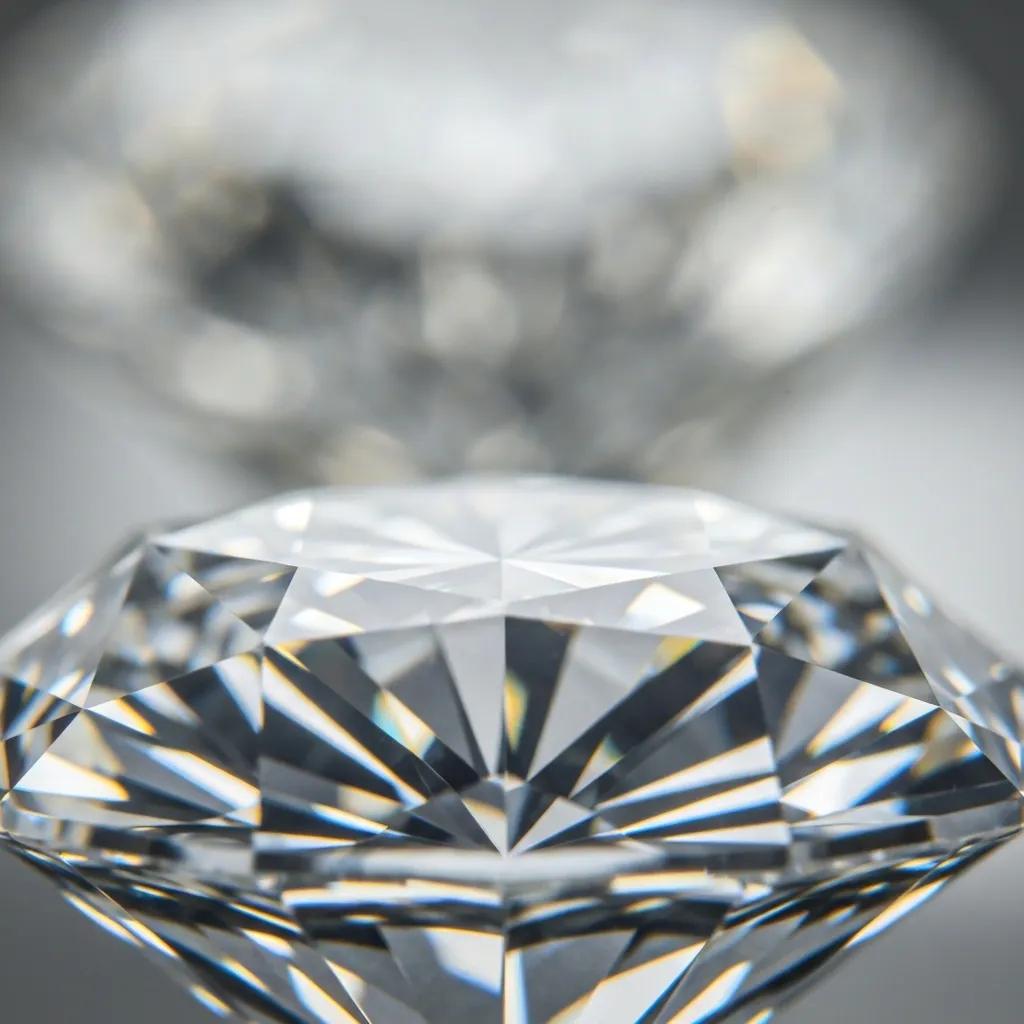
The cut grade is a sophisticated assessment of how light interacts with a diamond’s myriad facets, orchestrating its brilliance (the return of white light) and fire (the dispersion into spectral colours). Precisely engineered proportions and angles are crucial for optimising light reflection, thereby enhancing the diamond’s visual allure and perceived size.
Before we delve into the finer points, here’s a concise overview of the key proportions that shape a diamond’s performance:
Achieving the correct table and pavilion angles is paramount for unlocking maximum sparkle; conversely, suboptimal proportions can lead to light escaping, diminishing the diamond’s fire. This delicate interplay of angles and percentages forms the very essence of an ideal cut.
Decoding Diamond Colour: The GIA D-Z Scale Explained
Colour grading, as defined by the GIA D–Z scale, quantifies the absence of discernible body colour, with ‘D’ signifying absolute colourlessness and ‘Z’ indicating a noticeable light yellow or brown tint. Even the slightest variations in hue can significantly impact a diamond’s perceived transparency and its overall market value.
Opting for a near-colourless grade often results in a diamond that appears flawless to the naked eye, while offering substantial cost savings compared to its perfectly colourless counterparts.
Understanding Diamond Clarity: Identifying Inclusions and Blemishes
Clarity grades are determined by the presence of internal inclusions and external blemishes, which collectively influence a diamond’s transparency and brilliance. The GIA scale meticulously ranges from Flawless (FL) to Included (I3), with evaluations conducted under precise 10× magnification. Internal characteristics such as feathers, crystals, or clouds can impede light passage and, in some cases, affect the diamond’s structural integrity.
Common clarity characteristics include:
- Crystal inclusions: Minute mineral deposits appearing as tiny specks.
- Feathers: Internal fractures that may reach the surface.
- Clouds: Aggregations of pinpoint inclusions that create a hazy appearance.
The vast majority of discerning buyers opt for an “eye-clean” grade (typically VS2 or higher), where no inclusions are visible to the naked eye without magnification, thus preserving the diamond’s visual purity without incurring the premium associated with truly flawless stones.
Carat Weight: Its Influence on Diamond Size and Value Dynamics
Carat weight is the standard measure of a diamond’s mass, with one carat equivalent to 0.20 grams. While a larger carat weight naturally enhances a diamond’s visual presence, its price escalates disproportionately as it crosses significant weight thresholds, primarily due to the rarity of larger stones.
- A diamond weighing 0.90 ct often presents a visually similar size to a 1.00 ct stone under casual observation, yet is priced considerably lower.
- Exceeding popular carat milestones (such as 0.50 ct, 1.00 ct, or 2.00 ct) can dramatically increase the cost.
Achieving an optimal balance between carat weight and the other 4 Cs—cut, colour, and clarity—is key to securing the desired size without exceeding your allocated budget.
The Authority of Certification: How Reputable Organisations Validate Diamonds
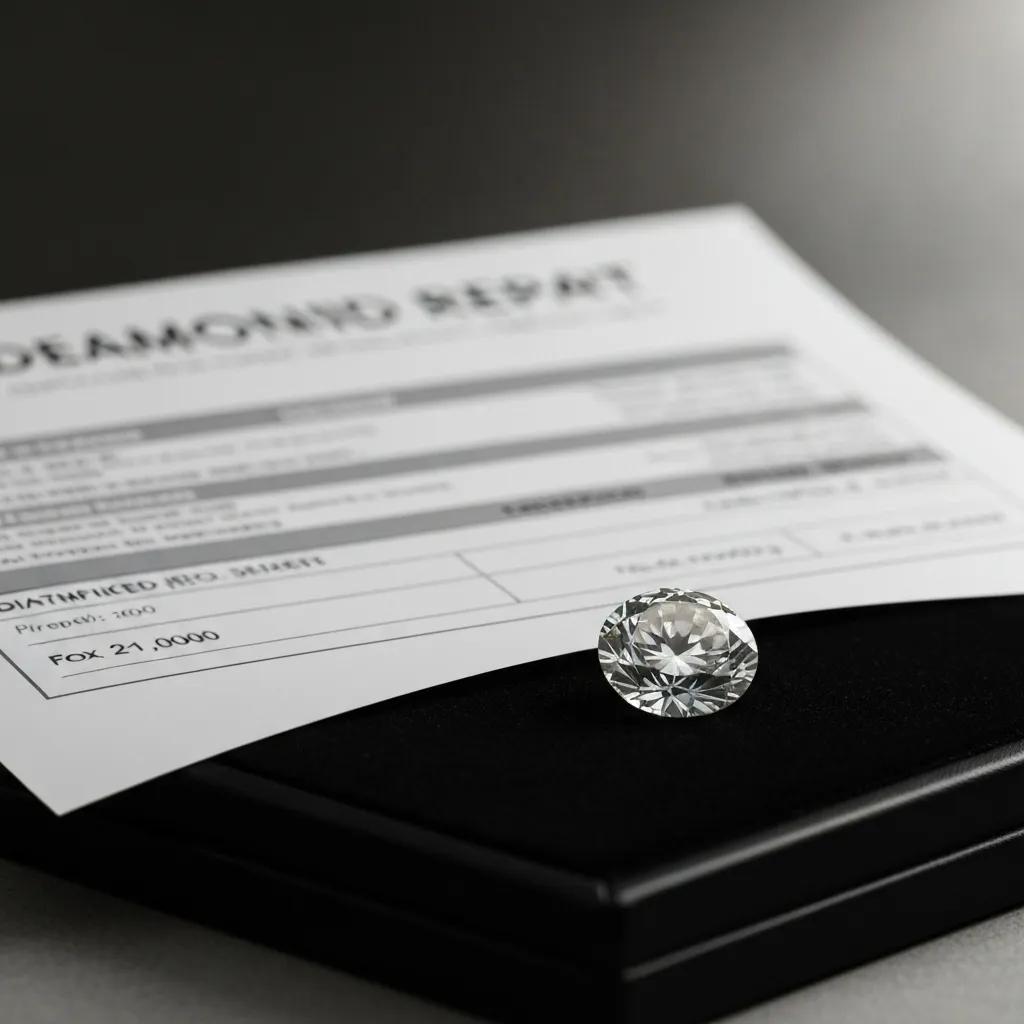
Independent certification provides an objective and impartial assessment of a diamond’s 4 Cs, fostering essential trust and ensuring price transparency in the market. Leading gemological laboratories adhere to standardised grading protocols, employ state-of-the-art instrumentation, and rely on the expertise of seasoned gemologists to issue comprehensive grading reports that accompany certified diamonds.
Navigating the GIA Diamond Grading Report: A Comprehensive Breakdown
A GIA report offers an exhaustive profile of a diamond, detailing every characteristic as observed under magnification:
- Report Number – A unique identifier, often laser-inscribed on the diamond’s girdle.
- Shape & Cutting Style – Confirms the diamond’s precise geometry and facet arrangement.
- Measurements – Exact dimensions provided in millimetres.
- Four Cs Summary – The official grades for Cut, Colour, Clarity, and Carat Weight.
- Comments – Additional notes regarding fluorescence, specific proportions, or other unique features.
- Clarity Plot – A detailed diagram illustrating the location and nature of inclusions.
Thoroughly understanding a grading report allows you to confirm that the diamond you receive precisely matches its certified specifications, thereby eliminating any potential for uncertainty.
GIA, The GIA Diamond Grading System (2024)
AGS Grading: A Focus on Cut and Light Performance Excellence
The American Gem Society (AGS) employs a unique 0–10 numeric scale for cut grading, where ‘0’ signifies an Ideal cut and ‘10’ denotes a Very Poor rating. The AGS places a particularly strong emphasis on the analysis of light performance, incorporating advanced metrics such as actual light return measurements and ASET (Angular Spectrum Evaluation Tool) imagery. This holistic approach directly correlates the cut grade with the diamond’s brilliance under real-world lighting conditions, offering an exceptionally precise evaluation of its sparkle.
AGS, AGS Diamond Grading System (2024)
The IGI’s Role in Diamond Certification, Especially for Lab-Grown Gems
The International Gemological Institute (IGI) is widely recognised for its expertise in certifying both natural and lab-grown diamonds. IGI applies the same rigorous 4 Cs criteria to synthetic stones, meticulously noting their specific growth method (whether Chemical Vapour Deposition – CVD, or High-Pressure High-Temperature – HPHT). Their detailed reports provide invaluable clarity for buyers considering the increasingly popular eco-friendly or budget-conscious lab-grown options, facilitating informed decisions across the entire spectrum of diamond types.
The Pinnacle of Perfection: Defining an Ideal Cut Diamond
An ideal cut diamond is meticulously proportioned to maximise the return of light, resulting in exceptional brilliance, captivating fire, and dynamic scintillation. This benchmark for perfection is derived from complex mathematical formulas designed to optimise the capture and reflection of light, making the diamond appear larger, more luminous, and strikingly vivid.
Marcel Tolkowsky: The Visionary Behind Ideal Cut Standards
Marcel Tolkowsky, a pioneering gemologist and mathematician, first published the definitive ideal cut proportions in 1919. His groundbreaking work, rooted in the principles of optical physics and extensive studies of human vision, established the critical angles and percentage relationships necessary to achieve peak light performance. Tolkowsky’s research laid the foundational blueprint for all subsequent ideal cut benchmarks in the diamond industry.
How Key Proportions Like Table Percentage and Pavilion Angle Shape Cut Grade
The precise proportions of a diamond dictate the intricate journey of light within its structure:
- A table percentage typically ranging from 54% to 58% strikes an optimal balance, enhancing the return of white light while simultaneously promoting vibrant fire.
- A pavilion angle approximating 40.6° is crucial for controlling internal reflection, effectively preventing light from escaping through the sides or bottom of the stone.
The meticulous refinement of these parameters ensures that the diamond delivers unparalleled sparkle without compromising its structural integrity or inherent beauty.
The Trifecta of Light Performance: Brilliance, Fire, and Scintillation
A diamond’s captivating light performance is a harmonious interplay of three distinct phenomena:
- Brilliance – The dazzling intensity of white light reflected back to the viewer’s eye.
- Fire – The mesmerising dispersion of white light into a spectrum of vibrant colours.
- Scintillation – The dynamic play of light and shadow, creating flashes and contrast as the diamond moves.
Together, these attributes define a diamond’s ultimate visual appeal, underscoring why the quality of its cut is of paramount importance.
Grading Lab-Grown Diamonds: Parity with Natural Counterparts
Lab-grown diamonds are subjected to the exact same rigorous grading criteria as their natural counterparts, ensuring a consistent and unbiased evaluation of the 4 Cs. Advanced synthesis techniques produce carbon crystals that gemologists assess with unwavering objectivity, irrespective of their origin.
Distinguishing Features in Grading: Lab-Grown vs. Natural Diamonds
While the fundamental 4 Cs—cut, colour, clarity, and carat weight—are applied equally, lab-grown diamond reports explicitly identify the method of creation (CVD or HPHT). Subtle differences in trace elements or growth patterns may be detectable under highly specialised instrumentation, but visually and structurally, these diamonds are indistinguishable to the naked eye and offer a delightfully accessible price point.
Trusted Certifications for the Lab-Grown Diamond Market
Both IGI and GIA are highly respected authorities for certifying lab-grown diamonds, with IGI often leading in the volume of reports issued for synthetic stones. Their certifications carry significant weight in the global marketplace, providing the same level of assurance and confidence that natural diamond grading offers.
The Impact of Lab-Grown Diamond Grading on Value and Consumer Choice
The transparency inherent in lab-grown diamond grading empowers consumers to make direct comparisons between natural and synthetic stones. The more accessible price points of lab-grown diamonds allow buyers to prioritise superior cut quality and larger carat weights without compromising on colour or clarity, thereby expanding the creative possibilities for engagement rings and bespoke jewellery designs.
Leveraging Diamond Grading Standards for Your Perfect Selection
Employing diamond grading standards as your guiding framework enables you to curate a diamond that perfectly aligns with your personal style, budget constraints, and the intended design of your jewellery. By understanding the inherent trade-offs among the 4 Cs, you can strategically optimise for the attributes that matter most to you: be it unparalleled sparkle, impressive size, or exceptional value.
Balancing the 4 Cs: A Personalised Approach to Diamond Selection
When crafting your ideal diamond:
- Prioritise an exceptional cut to maximise brilliance and sparkle.
- Select a near-colourless grade (G–J) for outstanding value and visual appeal.
- Aim for an eye-clean clarity grade (VS2 or higher) to ensure a flawless appearance.
- Choose the largest carat weight that fits comfortably within your budget, while still meeting your cut and clarity objectives.
This strategic, tiered approach ensures that every element of your investment is directed towards enhancing the diamond characteristics you value most.
The Significance of “Eye-Clean”: Achieving Visual Perfection in Clarity
An “eye-clean” diamond is one that exhibits no visible inclusions to a trained observer viewing it at a comfortable arm’s length. By focusing on clarity grades where inclusions are microscopic in effect (often VS2–SI1, depending on the diamond’s shape and facet arrangement), you can achieve a visually flawless appearance without the substantial premium associated with truly flawless grading.
Elevating Appreciation: How Grading Enhances Understanding of Craftsmanship and Design
A deep understanding of diamond grading reveals the meticulous craftsmanship involved in proportioning facets and the precision required for expert polishing, all of which amplify a diamond’s light performance. Appreciating this level of artistry fosters a more profound connection to unique jewellery designs and underscores why the certified diamonds featured at adc.com.au represent the pinnacle of both technical excellence and aesthetic vision.
Addressing Common Queries on Diamond Grading and Certification
Prospective diamond buyers frequently seek clarity on which laboratories command the highest trust, how to effectively interpret grading reports, and which grading systems best align with their specific objectives. Addressing these fundamental questions streamlines the path to confident and informed purchasing decisions.
The Premier Diamond Grading Laboratories and Their Esteemed Reputation
The Gemological Institute of America (GIA) and the American Gem Society (AGS) stand at the forefront of global diamond certification, renowned for their exceptionally rigorous standards, consistently repeatable grading protocols, and unparalleled contributions to gemological research. Their reports are universally recognised as the definitive benchmark for transparency, consistency, and market acceptance.
A Step-by-Step Guide to Reading and Interpreting a Diamond Certificate
Interpreting a diamond certificate involves a systematic approach:
- Verify the Report Number, ensuring it matches the inscription on the diamond’s girdle.
- Confirm the Four Cs Grades, aligning them with the diamond’s advertised specifications.
- Review Proportions and Comments, noting any details regarding fluorescence, polish, or symmetry.
- Examine the Clarity Plot to understand the location and nature of any inclusions.
- Cross-Reference Measurements with your specific design requirements or preferences.
Mastering this sequence ensures that the diamond you ultimately acquire precisely matches the certified quality and specifications.
GIA vs. AGS: Which Grading System Reigns Supreme?
The GIA is celebrated for its universal acceptance and extensive body of research, establishing a global standard for diamond grading. The AGS, conversely, offers a more specialised approach with its numeric cut scale and advanced light performance imaging, providing unparalleled precision in cut analysis. Your choice between GIA and AGS ultimately depends on whether absolute, worldwide consistency (GIA) or highly specialised cut analysis (AGS) better aligns with your personal priorities.
Essential Insights for Australian Diamond Buyers
Australian consumers benefit from a stable market, transparent import regulations, and access to diamonds certified by the world’s leading gemological laboratories. Within Australia, there’s a discernible preference for near-colourless diamonds with exceptional cuts, reflecting a desire for enduring elegance in engagement rings and wedding bands.
The Australian Market: Shaping Diamond Preferences and Pricing Dynamics
Australia’s sophisticated retail environment often favours contemporary diamond shapes and superior cut quality over sheer carat size. The competitive pricing for GIA-certified diamonds in Australia allows consumers to allocate their budget towards exceptional craftsmanship rather than simply maximising size.
Navigating Import Regulations and Certification in Australia
All imported diamonds destined for the Australian market must be accompanied by clear origin documentation and comply with the stringent requirements of the Kimberley Process, ensuring ethical sourcing. Certificates from reputable bodies such as GIA, AGS, or IGI are mandatory for all legally imported stones, providing crucial consumer protection and ensuring adherence to tax regulations.
Discovering Certified Diamonds with Trusted Grading in Australia
At adc.com.au, every diamond we offer is accompanied by an independent grading report from a leading authority—GIA, AGS, or IGI. Our meticulously curated collection encompasses both exquisite natural diamonds and innovative lab-grown options, providing you with the confidence to explore certified choices that meet your most exacting standards and align perfectly with your unique design vision.
A thorough understanding of diamond grading standards is your most powerful tool for selecting a stone that embodies brilliance, exceptional value, and timeless beauty. By mastering the nuances of the Four Cs, confidently interpreting certification reports, and aligning your choices with your budget and personal taste, you can navigate every step of your diamond acquisition journey with absolute assurance. Explore your perfect certified diamond at adc.com.au, where unparalleled craftsmanship, unwavering transparency, and exceptional sparkle converge.


