
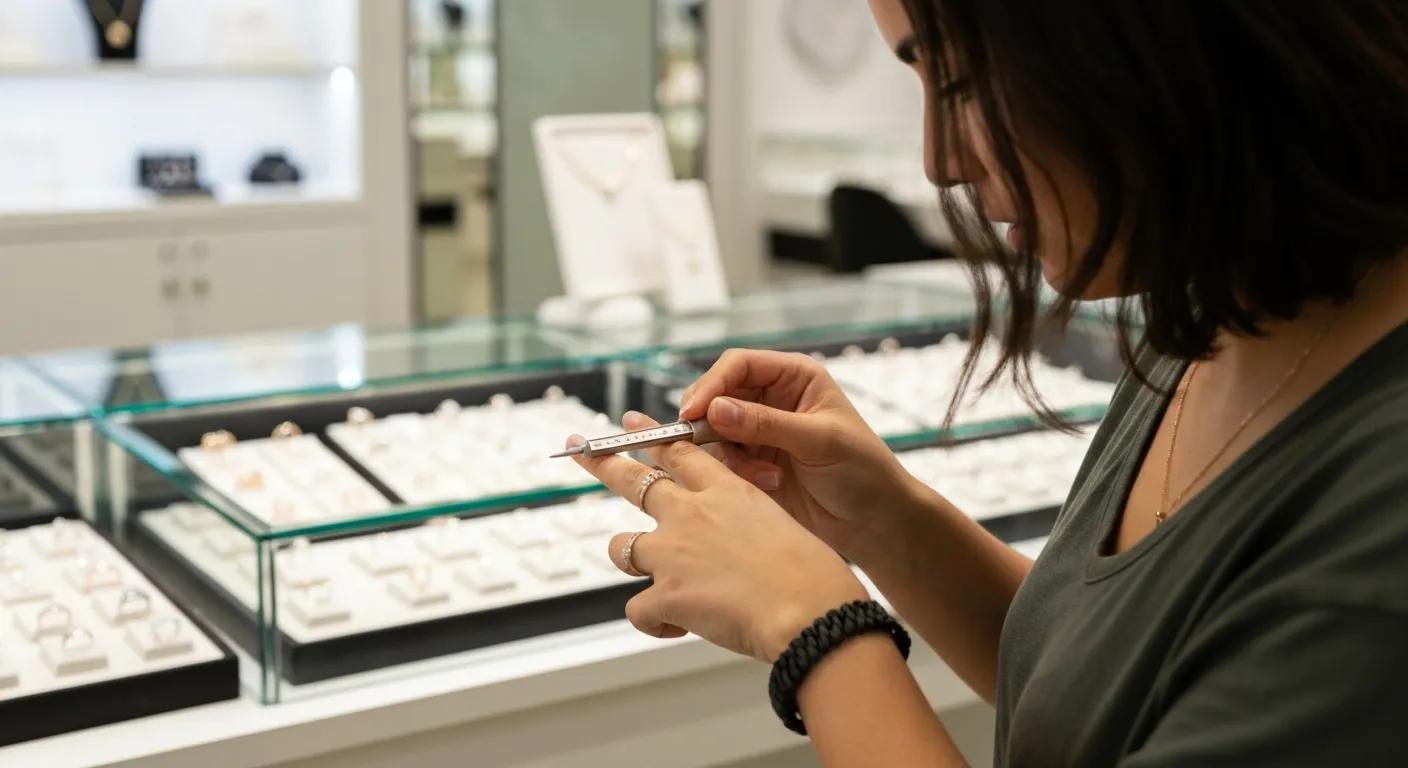
Mastering Ring Size at Home: Your Essential Australian Guide
Knowing your precise ring size from the comfort of your home means choosing jewellery that feels just right, promising years of wear and satisfaction. Say goodbye to returns and hello to perfect fits! If you’re beginning your search for a meaningful piece, our engagement ring collection offers a helpful starting point as you learn how sizing works. This guide will show you how to use a ring size chart like a pro, navigate the differences between UK, US, EU, and Australian sizing systems, and equip you with both easy DIY measurement techniques and the inside scoop on ADC’s professional services. You’ll discover:
- The ins and outs of ring sizing across different regions and what truly affects a comfortable fit.
- Step-by-step instructions for measuring your ring size accurately at home.
- ADC’s expert resizing services and how our process works.
- Key factors influencing resizing costs and limitations for various metals and styles in Australia.
- Essential tips for caring for your ring after resizing, plus how to find trusted local or remote service options.
By the time you’re done, you’ll feel completely confident in selecting or resizing any ring, knowing that ADC’s renowned craftsmanship and unwavering reliability are here to support you every step of the way.
Navigating UK, US, EU & AU Ring Sizes | Australian Diamond Company
Ring size systems are essentially the language we use to match a ring’s inner circumference to your finger’s measurement, ensuring a consistent fit no matter where you are. Grasping these scales and using a reliable ring size chart is your ticket to making accurate purchases, sending perfect gifts across borders, and minimising the need for resizing adjustments.
What Sets UK, US, EU, and Australian Ring Size Systems Apart?
The UK and Australian systems use letters (A-Z), the US opts for half-sizes (3-13½), and the EU measures in millimetres of inner circumference (44-76 mm). Each letter in the UK/AU system represents roughly a 1.25 mm increase in circumference, while US sizes change by about 0.8 mm. EU sizes are straightforward circumference measurements, ideal for those who prefer metric. These distinct units mean a UK size L is equivalent to a US 5½ and an EU 51.8 mm, highlighting the necessity of conversion tables or calculators for international orders to avoid any unwelcome surprises.
Delving deeper into average regional sizes and the factors that influence them will further sharpen your ability to choose the right system for your needs.
What Are the Typical Ring Sizes for Men and Women in Australia?
Average ring sizes in Australia offer a helpful starting point, reflecting common demographic and lifestyle variations:
- For women, sizes typically range from L-O (corresponding to an inner circumference of 51.8-56.5 mm).
- For men, sizes generally fall between T-V (an inner circumference of 65.1-68.1 mm).
- Engagement and wedding bands are often sized about half a size larger for maximum comfort.
These averages are invaluable for custom design consultations and can help you anticipate when professional resizing might be necessary.
Keep in mind that seasonal temperature shifts, the time of day, and even minor weight fluctuations can subtly alter your finger size, as we’ll explore next.
What Factors Can Influence Your Finger Size and Ring Fit?
Your finger’s circumference isn’t static; it can expand and contract due to a variety of factors:
- Temperature fluctuations can cause your finger to swell by up to 1 mm in warmer conditions.
- Fingers are usually at their smallest first thing in the morning and tend to swell as the day progresses.
- Factors like hydration levels, recent exercise, or changes in altitude can affect blood flow and joint thickness.
Being aware of these influences helps you pick the ideal time for measurement, significantly reducing the chance of ordering a ring that doesn’t fit quite right.
A 2010 study by E.S. Lewis investigated the reliability of finger circumference measurements, highlighting various factors that can impact accuracy.
Reliability of Finger Circumference Measurement for Ring SizingThe aim of this study was to assess the inter- and intra-rater reliability of finger circumference measurements and issues associated with various therapists assessing finger circumference. The study also aimed to identify factors affecting finger circumference measurements due to fatigue, soreness or changes in finger circumference measurements resulting from environmental or physiological factors.Finger circumference measurements: inter-and intra-rater reliability, ES Lewis, 2010
How to Use a Ring Size Conversion Chart for Perfect Accuracy?

A conversion chart is your best friend for cross-referencing UK, US, and EU/AU sizes with their corresponding inner diameter and circumference measurements, making direct comparisons effortless.
Simply match your measured finger circumference to the ‘Circumference (mm)’ column, and you’ll instantly see the corresponding UK, US, and EU sizes. This clarity eliminates guesswork and provides a solid foundation for both home measurements and professional resizing decisions.
Your Guide to Measuring Your Ring Size Accurately at Home
Achieving an accurate ring size measurement at home is all about using the right tools and techniques to capture your finger’s true inner circumference. This ensures a fit that’s both snug and comfortable, preventing the need for repeated resizing.
How to Measure Your Finger Using the String or Paper Method?
Start by gently wrapping a thin strip of paper or a non-stretchy string around the base of your finger. Mark where the paper or string overlaps, indicating a full circle. Then:
- Carefully lay the marked paper or string flat and measure its length in millimetres.
- Consult a conversion chart to find the ring size that matches your measurement.
- Repeat this process at least twice, at different times of the day, to ensure consistency.
This straightforward method delivers reliable results when executed with care, significantly reducing the chances of measurement errors before you order.
How to Measure an Existing Ring for Size?
If you have a ring that fits perfectly, measuring it offers a direct and accurate circumference reference:
- Place the ring on a flat surface and carefully align a ruler across its widest inner points.
- Measure the inner diameter in millimetres.
- Use a conversion chart to find the ring size that corresponds to this measurement.
Ensuring the ruler is perfectly centred is key to avoiding skewed readings and achieving an accurate size match, especially when you don’t have a dedicated ring sizer handy.
How to Use Printable Ring Sizers Correctly?
Printable ring sizers are a handy tool that mimics a physical measuring device, provided they are printed at the correct scale:
- Download the sizer and print it, making sure to verify that the scale reference bar measures exactly 10 mm.
- Carefully cut out the sizer and thread the end through the designated slot, wrapping it around your finger.
- Tighten the sizer until it feels comfortably snug, then read the indicated size directly from the sizer.
Proper printing and a quick check of the scale bar are essential for guaranteeing the precision you need, comparable to using a purchased ring sizer tool.
What Are Ring Sizer Tools and Where Can You Find Them in Australia?
Investing in a plastic or metal ring gauge is often the most accurate way to measure your size at home:
- Simple plastic belt-style sizers are readily available from most craft supply stores.
- More durable metal finger gauges can be purchased from specialised jewellery tool suppliers.
- For those who enjoy jewellery making, adjustable ring mandrels offer a versatile option.
Prices typically range from around AUD 5 for disposable slider sizers to AUD 30 for robust metal sets, all available through dedicated jewellery tool retailers.
Knowing your options for tools prepares you for seeking professional services if you require exceptionally precise measurements.
What Tips Ensure Accurate Home Ring Measurements?
Following these best practices will help you avoid common pitfalls:
- Always measure at room temperature to prevent your fingers from swelling due to heat.
- Be sure to measure the specific finger and hand you intend to wear the ring on, as your dominant hand is usually slightly larger.
- Take multiple readings throughout the day to get an average and account for any variations.
- Avoid pulling the measuring tape or string too tight; aim for a fit that feels snug but comfortable.
Consistent technique and a keen awareness of environmental factors will yield measurements you can rely on before you even consider professional resizing.
Research by M. Peters in 2002 explored human finger dimensions, offering valuable insights into patterns that can influence ring fit.
Human Finger Length and Extent Patterns for Ring FitThe study investigated patterns of finger length and distal finger extent in humans, noting differences between hands and sexes. It highlighted that the right hand exhibits a smaller index finger and a larger hand size, with the average length of the middle fingers on both the right and left hands being a key factor in males.Finger length and distal finger extent patterns in humans, M Peters, 2002
Expert Ring Resizing Services Offered by ADC in Australia
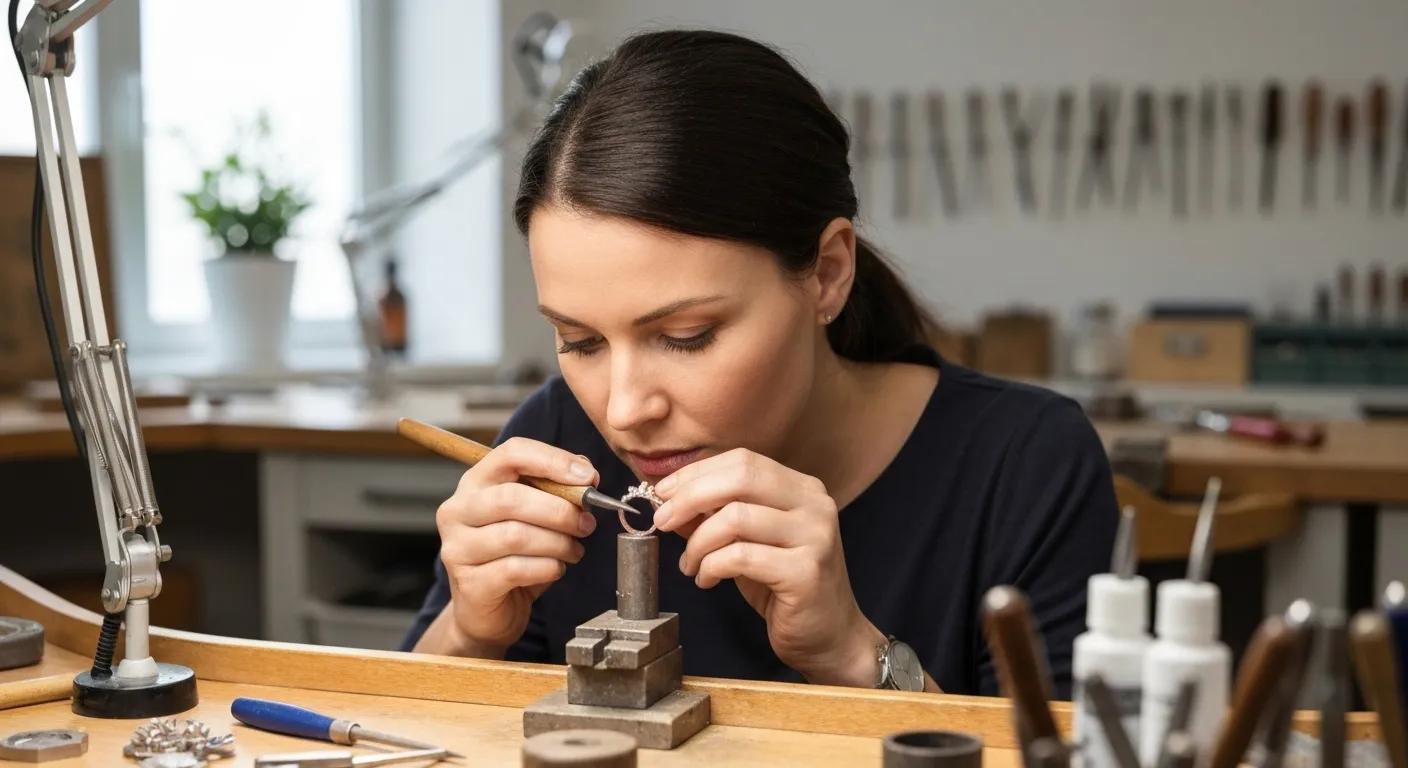
At ADC, we offer expert ring resizing services that blend precision, security, and the utmost care for your jewellery’s aesthetic integrity, ensuring every adjustment meets our exacting quality standards.
Why Entrust Your Ring Resizing to a Professional Jeweller?
A seasoned jeweller provides benefits that simply can’t be matched by DIY adjustments:
- Perfectly matched metals and seamless solder work for an invisible finish.
- Meticulous preservation of any hallmarks, engravings, or delicate gemstone settings.
- Guaranteed structural integrity and the backing of a professional warranty.
Choosing professional craftsmanship eliminates the risks associated with potential band warping or loosening of precious stones.
What Is ADC’s Seamless Ring Resizing Process, from Consultation to Collection?
ADC’s streamlined workflow ensures complete transparency and exceptional quality at every stage:
- We begin with an initial measurement and a thorough consultation to discuss the desired size change and its feasibility.
- A detailed inspection follows, assessing the metal type, ring style, and the security of any gemstone settings.
- Our expert jewellers then expertly size the ring up by adding calibrated metal or size it down through precise cutting and rejoining.
- The ring is then meticulously polished, finished, and any original hallmarks are restored.
- Finally, you’ll have a customer fitting and collection, ensuring your complete satisfaction.
This structured approach ensures your expectations are perfectly aligned with the exquisite craftsmanship you receive.
What Are the Key Differences Between Sizing Up and Sizing Down a Ring?
Sizing up a ring involves skillfully adding a precisely matched segment of metal and blending the solder lines so they’re virtually invisible. Sizing down, on the other hand, requires removing a section of the ring before rejoining and refining the band. Each technique demands distinct solder properties and finishing methods to maintain a uniform appearance and ensure the ring’s strength. For significant size adjustments, ADC may suggest alternative solutions, such as custom-fit ring guard inserts.
How Does ADC Guarantee Quality and Safety During Resizing?
ADC’s commitment to quality is upheld through our state-of-the-art workshops and highly qualified goldsmiths:
- We exclusively use low-stress solder alloys that are meticulously matched to the original metal’s karat.
- Every gemstone undergoes rigorous inspection before and after any heating processes.
- We maintain digital documentation of each work stage, ensuring full traceability and supporting our warranty.
This unwavering dedication guarantees that your resized jewellery retains its original beauty and enduring durability.
Factors Influencing Ring Resizing Costs and Feasibility in Australia
The cost and practicality of resizing a ring are influenced by several factors, including the metal type, the complexity of the design, and the presence of gemstones or engravings. These elements dictate the time, materials, and skill required for a perfect result.
How Do Different Metal Types Affect Resizing Cost and Process?
The unique characteristics of each metal dictate its malleability, the compatibility of alloys, and the finishing techniques needed:
These variations reflect both the inherent cost of the materials and the technical labour involved, allowing us to provide transparent price estimates.
Understanding these metal-specific factors naturally leads to assessing style-related challenges next.
If you’d like a deeper look at how different alloys influence durability, colour and long-term wear, our gold alloy comparison guide explains why metal quality can vary significantly between jewellers.
Which Ring Styles Present More Challenges for Resizing?
While plain bands and simple solitaire rings allow for straightforward soldering, more intricate designs can introduce significant constraints:
- Eternity rings, by their nature, lack an uninterrupted shank where metal can be added.
- Pave and channel settings carry a risk of gemstone destabilisation during the heating process.
- Tension-set designs rely on precise spring force, making them impractical to resize.
Identifying these style limitations helps us guide you towards realistic resizing options and potential alternative solutions.
How Do Gemstones and Engravings Impact Resizing Options?
Gemstones vary considerably in their heat sensitivity and the security of their settings:
- Harder stones, such as diamonds, can typically withstand standard solder temperatures.
- Softer stones like opals and pearls require specialised cold-setting techniques to prevent cracking.
Engravings on the inner band may become distorted when metal is added or removed. This often necessitates re-engraving after resizing to restore the inscription’s original clarity and legibility.
Carefully factoring in gemstones and inscriptions is crucial for ensuring a durable and aesthetically consistent final result.
Which Rings Are Generally Unsuitable for Resizing, and What Are the Alternatives?
Certain ring designs are inherently difficult or impossible to resize using conventional methods:
- Fully set eternity bands cannot accommodate the addition of metal.
- Tension-mounted rings risk losing their structural integrity if altered.
- Intricate filigree or micromosaic patterns can be easily damaged by heat.
Alternative solutions include fitting custom liners, adding sizing beads to the inner band, or even creating an entirely new band that faithfully replicates the original design.
These insights will prepare you for the final considerations regarding cost in Australia.
What Are the Estimated Ring Resizing Costs in Australia?
Our pricing is tailored to the specific metal type, the extent of the size change required, and the overall complexity of the design:
Our transparent pricing empowers you to make informed decisions, balancing your budget, desired timeline, and the unique demands of your ring’s design.
Caring for Your Ring After Resizing: Essential Post-Service Care
Proper care following resizing is crucial for protecting the integrity of each join and preserving the metal’s lustrous finish, ensuring your resized jewellery remains beautiful and durable for years to come.
What Are the Best Cleaning and Polishing Practices for Resized Rings?
Regular, gentle maintenance will keep your resized band looking pristine:
- Clean your ring gently with warm, soapy water and a soft brush.
- Avoid using ultrasonic cleaners on rings that feature delicate or fragile gemstones.
- Utilise jeweller-approved polishing cloths to restore and maintain the metal’s shine.
Consistent, gentle cleaning prevents the buildup of lotions and debris that can obscure solder seams and dull the metal’s surface.
Why Is Rhodium Plating Important for White Gold Rings Post-Resizing?
White gold rings are typically treated with rhodium plating to achieve their signature bright white finish and to protect the underlying alloy. When a ring is resized, the process can expose the slightly yellowish base metal. Re-plating restores a uniform, brilliant colour and enhances scratch resistance. For optimal results, industry standards recommend re-plating every 12-18 months, depending on how often the ring is worn.
Maintaining the rhodium plating is key to preserving the ring’s visual consistency and its resistance to corrosion.
How Can You Preserve the Longevity and Shine of Your Resized Jewellery?
Incorporating these simple daily habits will help extend your ring’s brilliance:
- Always remove your rings before engaging in strenuous household chores or swimming in chlorinated pools.
- Store your jewellery individually in soft-lined boxes or pouches to prevent scratches.
- Schedule periodic professional inspections to ensure gemstone settings remain secure and plating is in good condition.
By combining proper cleaning techniques, diligent plating maintenance, and mindful wear, you can ensure your resized ring remains a cherished heirloom for generations.
Frequently Asked Questions About Ring Sizing and Resizing
Each year, countless Australians seek guidance on ring size chart conversions and resizing costs. Common concerns often revolve around the accuracy of home measurements, differences between men’s and women’s sizes, typical timeframes, and the feasibility of resizing certain styles. Addressing these key questions will provide you with the clarity and confidence needed before making any purchase or service decision.
How Do You Figure Out Your Ring Size at Home?
To determine your ring size at home, measure your finger’s circumference using a non-stretchy string or a printable ring sizer, then consult a ring size chart to find the corresponding size. Taking multiple measurements at different times of the day will help ensure the most reliable size determination for a seamless ordering experience.
Are Ring Sizes Different for Men and Women?
Yes, ring sizes typically differ between men and women due to average variations in finger circumference. In Australia, women commonly wear UK sizes L-O, while men usually opt for sizes T-V, reflecting broader anatomical trends that inform standard size charts.
How Long Does It Take to Resize a Ring?
Professional resizing typically takes between one to three business days for standard gold or silver bands. More complex pieces, such as platinum rings or those with intricate settings, may require up to a week to allow for meticulous soldering, finishing, and polishing.
Can Rings with Engraved Messages Be Resized?
Rings featuring inner-band engravings can indeed be resized, though the process may partially affect the existing text. Professional re-engraving services are available to restore inscriptions to their original clarity once the resizing is complete.
How Much Does It Cost to Resize a Ring in Australia?
Resizing costs in Australia generally range from approximately AUD 40 for simple silver bands to AUD 350 for complex platinum or multi-gemstone designs. Most standard adjustments fall between AUD 60 and AUD 120, depending on the metal type and the extent of the size change required.
What Types of Rings Are Hard to Resize?
Rings that are particularly challenging to resize include fully set eternity bands, tension-mounted designs, and highly intricate styles like filigree or pave settings. These often lack continuous metal sections or involve delicate stone-setting techniques that make alteration difficult.
Understanding these common queries is the first step towards finding expert assistance nearby.
Where Can You Find Expert Jewellery Ring Resizing Services Near You in Australia?
Professional resizing services offer both convenience and exceptional quality, whether you prefer the personal touch of an in-store appointment or the ease of remote assistance. Our goal is to ensure a precise fit without any compromise.
How to Locate ADC’s Jewellery Stores Offering Resizing Services?
ADC’s select jewellery boutiques, located in major Australian cities, are equipped with dedicated resizing departments staffed by master goldsmiths. You can consult our local store listings or contact your nearest ADC outlet directly to confirm in-store resizing availability and operating hours.
What Should You Expect During an In-Store Ring Resizing Appointment?
During your appointment at ADC, you can expect a precise measurement of your finger, a thorough inspection of your ring’s metal and gemstones, a clear and detailed quote, an estimated timeline for completion, and expert guidance on aftercare. Having the opportunity to view the workshop area and meet your dedicated jeweller fosters a sense of trust and transparency throughout the entire resizing process.
How Does ADC Support Online Customers with Ring Resizing?
ADC’s remote resizing service provides a seamless solution for customers outside our physical store locations. You can securely ship your ring to us, follow our detailed measurement instructions, and receive your resized piece back via insured courier. Our comprehensive packaging guidelines and ongoing customer support ensure a convenient experience without sacrificing the professional quality you expect from ADC.
Experience the ultimate confidence that comes from accurate measurements, expert resizing, and meticulous aftercare. By mastering at-home techniques, understanding regional sizing standards, and entrusting your treasured pieces to ADC’s expert services, you can secure rings that fit flawlessly and endure as cherished keepsakes. For personalised advice or to schedule your resizing consultation, connect with ADC’s jewellery specialists and if you’re ready to explore styles that pair perfectly with your new size, browse our engagement rings Australia range for inspiration.


