
Modern Princess Cut Diamonds: Your Definitive Guide to Buying, Comparing, and Styling
Explore why the princess cut diamond stands as the premier modern square choice and how the Australian Diamond Company’s expertly curated selection empowers your purchasing journey. Many couples find it challenging to balance exceptional brilliance, budget constraints, and the protection of delicate corners, but expert guidance can simplify this process. This comprehensive guide delves into the defining characteristics and history of the princess cut, applies the essential 4Cs to this contemporary shape, navigates the world of engagement ring settings, examines key price influencers, compares popular diamond silhouettes, offers advice on sourcing loose stones within Australia, and reveals inspiring styling ideas beyond traditional rings. By merging insightful technical details with practical, actionable advice, you’ll gain the confidence to select, compare, and style a princess cut diamond that embodies timeless elegance and outstanding value.
What Defines a Princess Cut Diamond and Its Enduring Popularity?
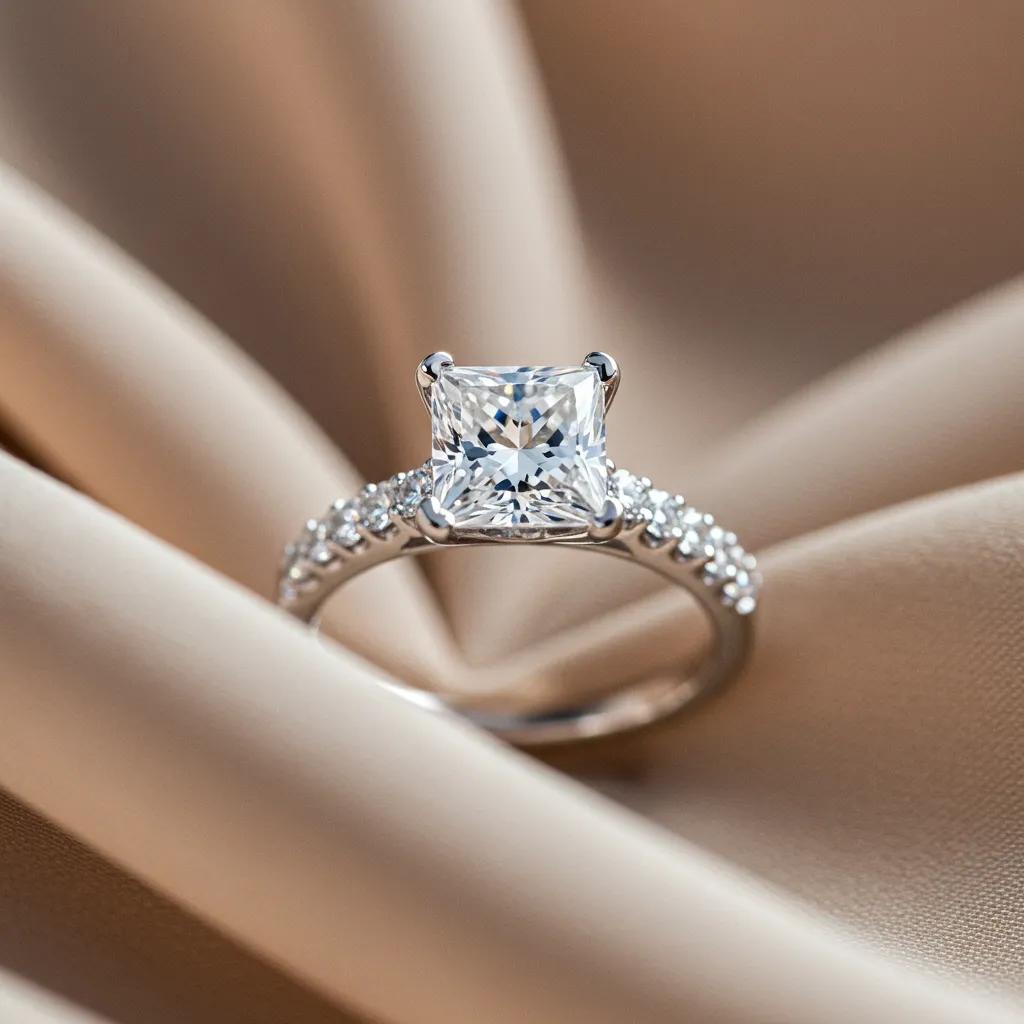
A princess cut diamond is a square or rectangular modified-brilliant diamond meticulously designed to maximise light return through its distinctive facet pattern, delivering exceptional fire and brilliance for contemporary jewellery. This precise facet arrangement generates intense sparkle, making it the perfect choice for engagement rings that artfully blend modern geometry with classic radiance. Understanding its unique attributes is the crucial first step in selecting the perfect princess cut, naturally leading into a discussion of its defining shape, its historical evolution, and its lasting appeal.
What are the defining characteristics of a princess cut diamond’s shape and facets?
Princess cuts typically feature between 50 and 76 facets, arranged in a striking chevron-like pattern on the pavilion and a clean, square table on the crown. This design achieves a harmonious balance of brightness, fire, and scintillation. The facet geometry expertly channels light through the pointed corners and across the broad table to maximise brilliance. For instance, a 1.00-carat princess cut with a depth of approximately 70 percent and a table of around 70 percent will exhibit captivating flashes of white light and vibrant coloured fire, enhancing its presence on the finger while maintaining a sleek, contemporary outline. These precise proportions directly influence the diamond’s sparkle, naturally connecting to considerations of cut quality.
How has the princess cut diamond evolved historically?
First introduced in the 1960s as the “profile” cut and later refined in the 1980s into its current square-cornered form, the princess cut diamond has ascended to become the second most sought-after engagement ring shape globally. Its creators aimed to preserve the exceptional brilliance of a round brilliant diamond while minimising waste from the rough stone, a goal this modification-brilliant design successfully achieved. As consumer preferences shifted towards angular, architectural silhouettes in the early 2000s, the princess cut’s crisp lines and modern aesthetic solidified its status, paving the way for the diverse range of setting styles available today, which we will explore shortly.
What makes princess cut diamonds a modern and valuable choice?
Princess cut diamonds offer a compelling combination of efficient yield from rough stones, often 20–30 percent higher than round brilliants, and a contemporary square form that perfectly complements minimalist and avant-garde settings. This superior yield advantage translates into a more attractive price per carat while maintaining exceptional brilliance. Consequently, buyers benefit from a larger visual size, vibrant sparkle, and striking geometric appeal at competitive price points, seamlessly leading into our next discussion on the 4Cs for ensuring quality.
How Do the 4Cs Apply to Modern Princess Cut Diamonds?
Applying the universally recognised 4Cs, cut, clarity, colour, and carat, ensures that your chosen princess cut diamond delivers maximum brilliance, purity, and a sound return on investment. Evaluating how each of these attributes interacts with the princess cut’s unique geometry clarifies which grades optimise its performance, guiding you towards GIA-certified stones that offer both aesthetic excellence and certified authenticity.
What cut quality factors significantly impact a princess cut diamond’s brilliance?
For princess cuts, cut quality is primarily determined by depth, table dimensions, symmetry, and polish. Ideal depth percentages typically range from 68 to 75 percent, with table dimensions between 65 and 75 percent, to optimise total internal reflection. Precise facet alignment and high polish grades are essential for achieving uniform light distribution and strong white brilliance. These proportions dictate how effectively a princess cut diamond channels light, reinforcing the critical importance of certification standards, which we will discuss later.
Which clarity grades are most suitable for princess cut diamonds?
Opting for a clarity grade of VS2 or higher generally guarantees an eye-clean appearance in most princess cuts, as any inclusions located near the corners are less likely to be noticeable when protected by prongs or settings. Inclusions within SI1 stones can be perfectly acceptable if they are small and positioned away from the diamond’s centre. For example, a VS2 princess cut graded by the GIA will present a visually clean appearance under 10x magnification and maintain its sparkle, underscoring the vital role of reputable grading laboratories.
What colour grades are best suited for princess cut diamonds to achieve an optimal appearance?
Princess cuts truly shine with near-colourless grades, such as G through I, as the square profile can reveal subtle warmth more readily than round brilliants. Pairing a G-grade princess cut with white or rose gold settings can enhance its apparent whiteness, while a platinum mount beautifully showcases even higher grades like D through F. Selecting the ideal colour grade ensures the diamond’s inherent crystalline fire remains the captivating focal point, leading us directly into the essential requirements for certification.
Why is GIA certification indispensable for princess cut diamonds?
GIA certification is paramount for establishing trust and verifying a diamond’s 4Cs according to the world’s most rigorous grading standards. A GIA report meticulously confirms cut parameters, provides a clarity plot, specifies the colour grade, and details the carat weight, creating a transparent and reliable basis for comparison and valuation. Certified princess cut diamonds from the Australian Diamond Company proudly carry this essential credential, enabling confident purchases and facilitating seamless insurance appraisals.
How to Select the Perfect Princess Cut Diamond Engagement Ring?
Choosing the ideal setting for a princess cut diamond involves carefully balancing your aesthetic preferences, the need for secure protection for its pointed corners, and complementary metal choices. By understanding popular styles and effective protective design elements, you can ensure your ring offers lasting brilliance and exceptional durability.
What are the most popular engagement ring settings for princess cut diamonds?
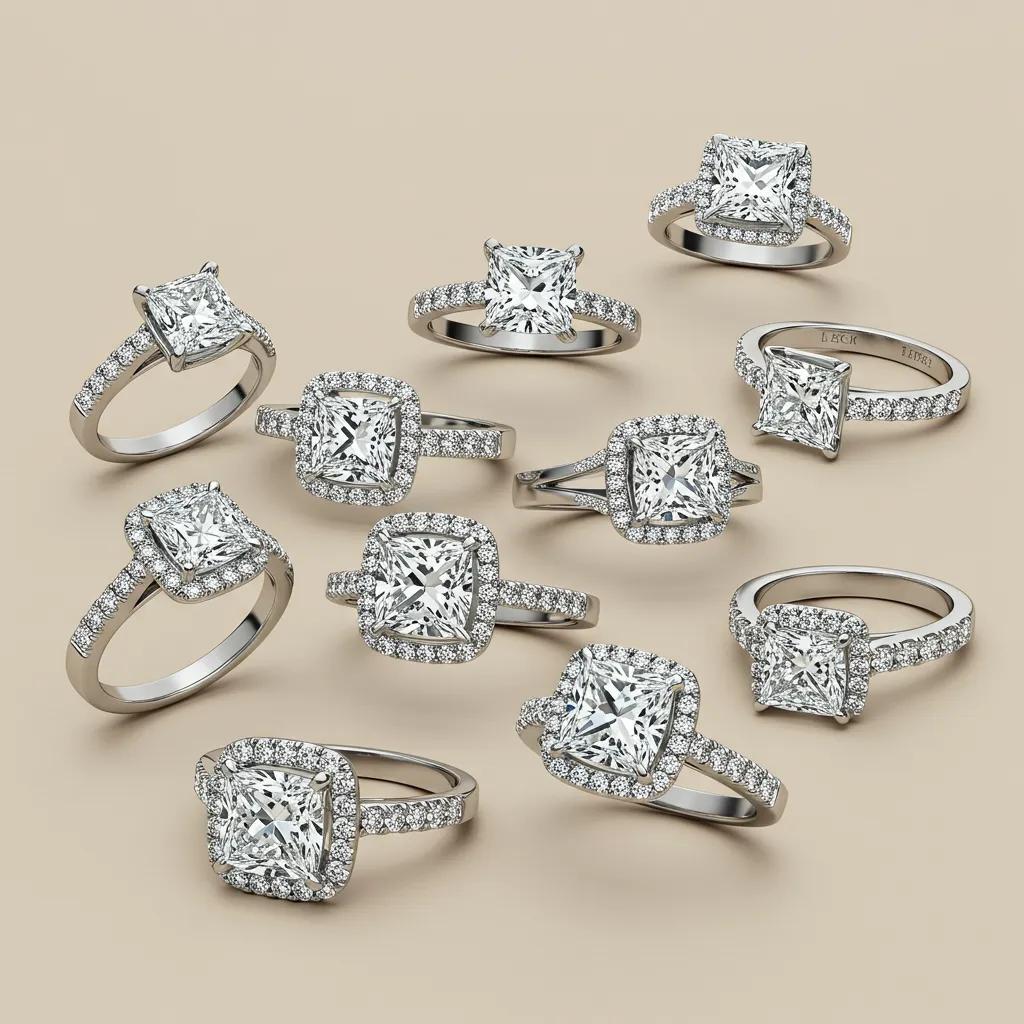
Engagement rings featuring a princess cut diamond are most commonly found in four distinct and beloved styles:
- Solitaire settings offer a minimalist aesthetic, placing the entire focus on the diamond’s square proportions and maximising its exposure to light.
- Halo settings artfully surround the centre stone with smaller pavé diamonds, significantly amplifying its perceived size and overall brilliance.
- Trilogy settings feature accent stones positioned on either side of the main diamond, creating balanced symmetry and adding captivating extra sparkle.
- Bezel settings encase the diamond within a sleek metal rim, presenting a modern appearance with enhanced protection for the stone.
Each of these styles beautifully accentuates the princess cut’s distinctive geometry and provides a seamless transition to the crucial consideration of corner security.
How do settings effectively protect the delicate corners of princess cut diamonds?
Protection for the delicate corners of a princess cut diamond primarily relies on strategic prong placement and thoughtful bezel design. Four-prong settings, particularly those featuring V-shaped prongs, expertly cradle each pointed corner, significantly preventing chipping and enhancing overall durability. Alternatively, flush or channel bezels fully envelop the corners in metal, offering superior safeguarding during daily wear. Selecting the appropriate protective feature is key to ensuring the princess cut retains its crisp, defined outline over time, naturally leading into the important decision of metal selection.
Which metal types best complement princess cut diamond rings?
Gold alloys, such as 18 ct white gold and rose gold, and platinum each offer distinct advantages:
- White gold, with its rhodium plating, effectively brightens near-colourless princess cuts.
- Rose gold provides a warm, inviting contrast that beautifully complements G–I colour grades.
- Platinum’s inherent whiteness enhances D–F grades and offers exceptional wear resistance.
Matching the metal choice to the diamond’s colour grade and your lifestyle needs completes the selection process, setting the stage for a thorough assessment of price factors.
What Are the Key Price Factors and Value Considerations for Princess Cut Diamonds?
Understanding the primary price drivers, carat weight, shape efficiency, and certification, is essential for buyers seeking to secure optimal value. Evaluating these factors within the context of the princess cut’s unique yield advantages reveals why this particular shape often presents a larger visual appearance at a lower premium.
How does carat weight influence the price and perceived size of princess cut diamonds?
While carat weight directly impacts the price per carat, the diamond’s visual size is also significantly shaped by its length-to-width ratio. A 1.20 carat princess cut with a 1.00 ratio appears perfectly square and often looks larger than a round brilliant diamond of equivalent weight. Buyers can strategically prioritise slight variations in the ratio to enhance finger coverage without substantially altering the cost, clearly demonstrating how yield efficiency contributes to superior value.
Why are princess cut diamonds frequently more affordable than round brilliant diamonds?
The princess cut is renowned for maximising rough diamond yield, achieving up to 80 percent compared to approximately 50 percent for round brilliants, allowing suppliers to pass these savings directly onto consumers. This exceptional yield efficiency lowers the price per carat while still preserving a modified-brilliant facet pattern that rivals the sparkle of traditional round cuts. The resulting cost differential makes them an attractive option for buyers seeking both impressive size and captivating scintillation, seamlessly linking to the crucial role of certification in confirming quality.
The strategic marketing implications of the 4Cs are a significant consideration within the diamond industry.
The 4Cs of Diamonds: Marketing and Strategy… The new strategy for the 4Cs aims to transition from mass marketing, the … The theory of the 4Cs has garnered considerable attention in marketing … In summary, the theory of the 4Cs stifles initiative and …The Future Improvement of Darry Ring and its” only” Marketing Strategy, Unknown Author, 2015
Certification from esteemed bodies like the GIA or AGS is fundamental to underpinning market value by guaranteeing grade consistency and grading accuracy. Certified stones inherently command higher resale potential and benefit from transparent pricing structures. A GIA-certified princess cut diamond provides meticulously documented cut proportions, clarity plots, and colour grades, significantly enhancing its liquidity and bolstering consumer confidence.
How Do Princess Cut Diamonds Compare to Other Popular Diamond Shapes?
Direct comparisons reveal that each distinct diamond silhouette offers a unique balance of brilliance, durability, and price. Mapping these attributes clearly helps buyers align their aesthetic preferences and practical priorities when choosing between princess, round brilliant, cushion, and radiant cuts.
This comparative overview highlights that the princess cut delivers brilliance nearly on par with round diamonds at a more accessible price point, effectively guiding the decision-making process towards suitable shapes and reinforcing the significant value advantages previously detailed.
Where and How to Confidently Purchase Loose Princess Cut Diamonds?
Purchasing loose princess cut diamonds offers unparalleled freedom to customise your setting, meticulously inspect certification details, and compare stones side-by-side. A confident buying journey integrates transparent grading practices, trusted sourcing channels, and market insights specifically relevant to Australia.
What are the key benefits of buying loose princess cut diamonds?
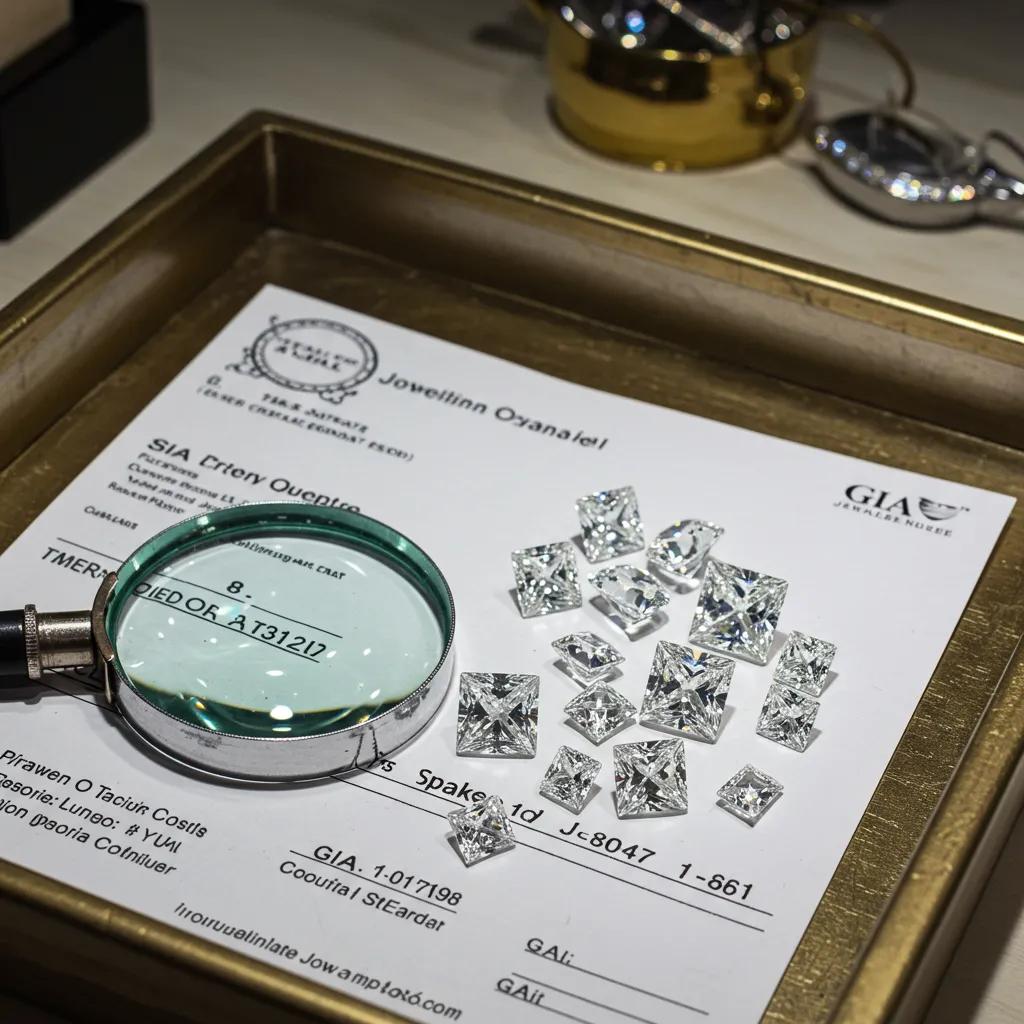
Acquiring loose stones provides several distinct advantages:
- Customisation allows you complete control over the ring design and metal choices.
- Inspection enables you to personally examine cut proportions, clarity plots, and fluorescence under magnification.
- Comparison lets you evaluate multiple diamonds based on their 4C grades before finalising your setting selection.
These advantages empower informed decisions, naturally leading into the essential verification steps that follow.
How can you effectively verify the quality and authenticity of loose princess cut diamonds?
To verify authenticity and quality, follow these essential steps:
- Carefully review the GIA or AGS report and meticulously match the laser inscription on the diamond’s girdle.
- Inspect the diamond’s proportions and facet symmetry using a professional gem-grade loupe.
- Confirm that the diamond’s weight and precise measurements align perfectly with the details provided in its certification.
These diligent steps safeguard your investment and build unwavering trust in your chosen retailers, naturally leading into important considerations for the Australian market.
What should Australian buyers be aware of when sourcing princess cut diamonds locally?
Australia’s diamond trade operates under strong regulatory oversight and features a dynamic import market that prioritises ethical sourcing. Local jewellers frequently collaborate with reputable international suppliers to offer GIA-certified loose princess cut diamonds. Being aware of regional pricing nuances, estimated shipping times, and applicable GST implications ensures smooth transactions and access to premium aftercare services.
How to Style Princess Cut Diamond Jewellery Beyond Engagement Rings?
Princess cut diamonds lend themselves beautifully to earrings, pendants, and coordinated jewellery ensembles, adding a distinctive geometric flair to a wide range of accessories. Exploring these versatile applications expands your appreciation for how square brilliance can elevate both everyday wear and special occasion looks.
What are the most popular styles for princess cut diamond earrings?
Princess cut diamond earrings make a statement in several popular styles:
- Stud earrings deliver focused, captivating sparkle directly at the earlobe.
- Drop earrings artfully combine square centre stones with elegant baguette or round diamond accents.
- Hoop earrings are beautifully set with sequential princess cuts, creating a continuous line of brilliant sparkle.
These styles masterfully balance modern aesthetics with exceptional light performance, seamlessly segueing into options for pendants.
How should one choose pendants featuring princess cut diamonds?
When selecting a pendant, consider the following:
- Solitaire settings elegantly highlight the diamond’s square facets against a polished metal backdrop.
- Halo pendants are encircled by smaller round pavé diamonds, significantly enhancing the perceived size of the centre stone.
- Bar or channel settings create sophisticated linear designs, often incorporating multiple princess cut diamonds.
These thoughtfully chosen designs integrate seamlessly into layered necklaces and contribute to an overall look of everyday elegance.
How can you coordinate princess cut diamond jewellery for contemporary looks?
Blend princess cut pieces with mixed-metal chains and minimalist gemstone accents to achieve a truly contemporary styling. Pair delicate square stud earrings with fine tennis bracelets and stackable rings to create cohesive geometric harmony. This sophisticated approach underscores the cut’s remarkable versatility and brings this guide to a close by reinforcing its core brilliance and inherent value.
Princess cut diamonds masterfully combine architectural elegance, enduring sparkle, and significant value advantages, making them suitable for a wide spectrum of preferences and budgets. By understanding facet proportions, the 4Cs, and essential setting protections, you can confidently select a princess cut engagement ring that perfectly balances brilliance and durability. Comparing different diamond shapes reveals how these square modified brilliants deliver performance nearly equivalent to round diamonds at more accessible price points. Furthermore, sourcing loose stones within Australia offers the advantages of customisation and trusted certification. Styling beyond engagement rings showcases the princess cut’s remarkable adaptability for earrings, pendants, and coordinated ensembles, ensuring you achieve modern, timeless jewellery that truly reflects your personal vision.


