
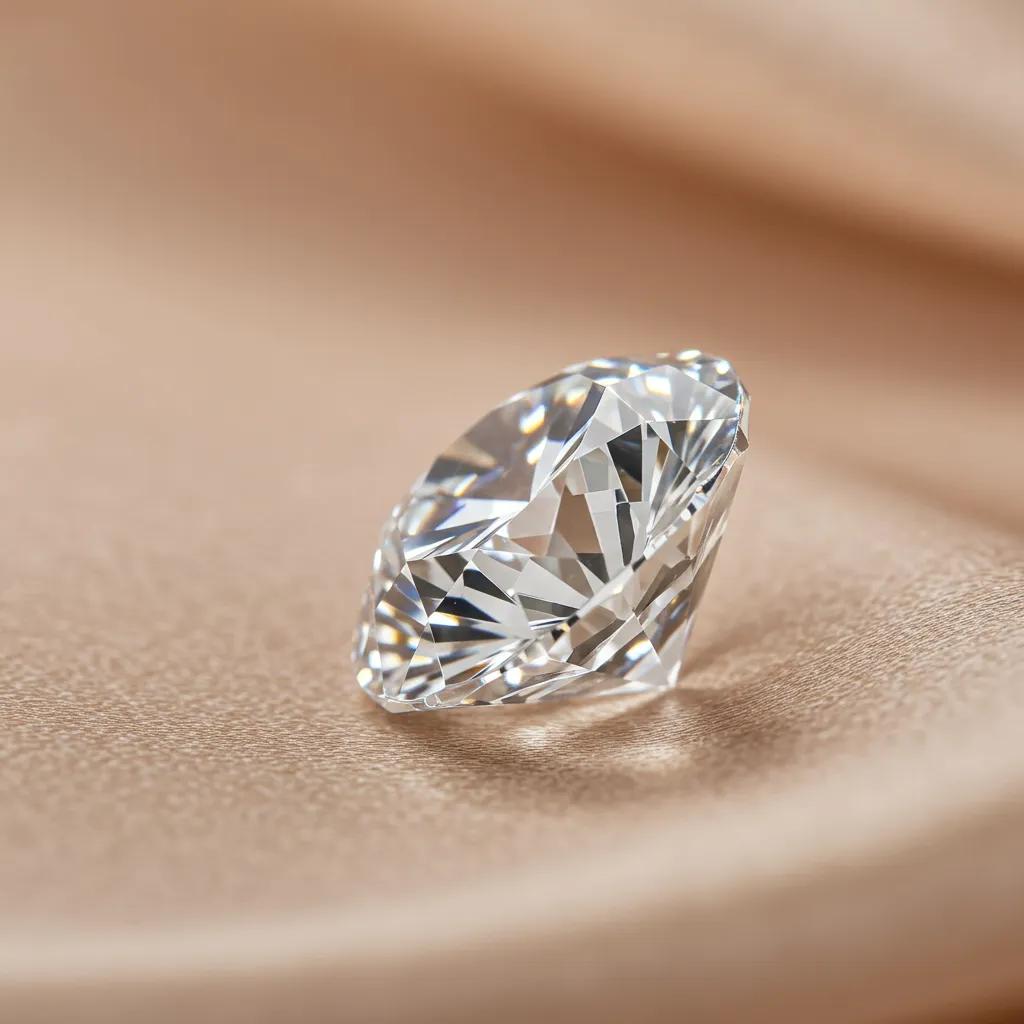
Lab Created Diamonds Certification Guide | Australian Diamond Company
Lab created diamonds are real diamonds grown in controlled laboratory conditions using high-pressure high-temperature (HPHT) or chemical vapor deposition (CVD) methods, producing the same carbon crystal lattice and optical properties as natural diamonds. If you would like to see how this technology looks in finished jewellery, explore our lab grown diamonds to compare certified pieces and lab grown diamond engagement rings. This guide explains how synthetic diamond manufacturing processes work, how lab-grown diamonds compare to mined stones, how certification verifies the 4Cs, and how buyers can evaluate cost, sustainability, and resale considerations. Many buyers struggle to balance ethics, budget, and long-term value when shopping for engagement rings or loose stones; lab grown diamonds offer an alternative that addresses those pain points by delivering identical physical properties at lower prices and with clearer provenance. The article maps the subject across eight major areas: definitions and comparisons, HPHT vs CVD growth, certification and the 4Cs, pricing and resale, ethical and environmental factors, fancy color lab diamonds, and industrial applications beyond jewelry. Throughout, we use current research and market observations (as of 2025), explain technical concepts plainly, and provide actionable shopping checklists for selecting certified lab-grown diamonds and affordable lab-grown diamond engagement rings. Read on to learn how each synthesis method impacts appearance, what to look for on a certificate, and practical next steps for purchasing or inspecting certified loose stones and finished pieces.
What Are Lab Created Diamonds and How Do They Compare to Natural Diamonds?
Lab created diamonds are gem-quality carbon crystals produced in a laboratory that match natural diamonds in hardness, refractive index, and chemical composition. The growth mechanism, either HPHT or CVD, rearranges carbon into the same tetrahedral lattice that gives diamonds their hardness and optical behavior, delivering the same sparkle and durability as mined stones. This parity yields tangible benefits: lower price per carat, conflict-free provenance, and broader availability of sizes and fancy colors, which makes lab-grown diamonds attractive for engagement rings and loose stone purchases. Understanding these attributes helps shoppers weigh trade-offs like resale expectations and perceived rarity versus the ethical and price advantages lab-grown stones provide. The next subsections drill into the precise definition, direct differences with natural diamonds, consumer benefits, and how lab diamonds compare to simulants such as moissanite and cubic zirconia.
What Defines a Lab Created or Synthetic Diamond?
A lab created or synthetic diamond is a crystalline form of carbon with the same diamond crystal lattice as natural diamond, formed in a controlled laboratory environment rather than underground over geological time. The defining mechanism is the ordered tetrahedral bonding of carbon atoms; HPHT and CVD provide the physical or chemical conditions to replicate that structure from a seed crystal. These diamonds display the same physical properties: hardness (Mohs 10), high thermal conductivity, and a refractive index that delivers equivalent brilliance, so visual identification without instruments is difficult. Under magnification, growth-related features such as metallic flux inclusions (HPHT) or layered growth patterns (CVD) can appear, and graders may note growth method indicators on reports. Recognizing these growth markers helps consumers understand provenance while appreciating that the essential diamond entity, carbon lattice, is identical in lab-grown and natural stones.
How Do Lab Created Diamonds Differ from Natural Diamonds?
The core difference between lab created diamonds and natural diamonds is origin: lab diamonds are manufactured in months, whereas natural diamonds form over millions of years geologically. This origin difference affects rarity and market perception, producing significantly lower price points for lab-grown stones with otherwise comparable 4C grades. Inclusions and growth features differ: natural stones often show characteristic mineral inclusions and irregular growth, while lab stones may exhibit metallic flux remnants or growth plate patterns tied to the synthesis method. Resale dynamics also diverge: natural diamonds historically retain higher long-term secondary-market value due to rarity and established collector demand, while lab-grown diamonds currently experience steeper initial depreciation despite strong retail demand. Understanding these contrasts informs buyer priorities: if provenance and long-term resale are most important, natural diamonds may edge ahead; if ethics and value per appearance matter more, lab-grown diamonds are often preferable.
What Are the Benefits of Choosing Lab Created Diamonds?
Choosing lab created diamonds delivers clear benefits in affordability, ethical sourcing, and design flexibility, enabling buyers to purchase larger or higher-color/clarity stones at the same budget. Production scale and shorter creation timelines mean consistent supply, which translates into lower price-per-carat and broader availability of fancy shapes and colors compared with mined equivalents. The conflict-free provenance of lab-grown diamonds removes many concerns about mining-related human rights or ecological disruption, supporting consumer preferences for transparent supply chains and sustainable purchasing. Additionally, lab-grown diamonds allow designers and consumers to experiment with larger centers, unique fancy color tones, or bespoke settings without the price premium that natural fancy diamonds command. These practical advantages make lab-grown diamonds compelling for engagement rings, loose stones, and fashion jewelry where visual impact and traceability are priorities.
How Do Lab Created Diamonds Compare to Other Diamond Simulants?
Lab-grown diamonds are true diamonds, while simulants like moissanite and cubic zirconia are different materials that mimic diamond appearance but differ in composition and performance. On hardness, lab-grown diamonds equal natural diamonds (Mohs 10), moissanite rates about 9.25, and cubic zirconia is softer and more prone to abrasion, which affects longevity. Optical properties also differ: moissanite has higher birefringence and a different fire profile; cubic zirconia presents higher dispersion but less durability and clarity retention over time. Simulants are often much less expensive and appropriate for costume jewelry or size experiments, but for durability, refractive fidelity, and long-term wear, particularly in engagement rings, lab-grown diamonds are the superior choice. When deciding between a lab-grown diamond and a simulant, prioritize intended use, budget, and desired longevity.
- The practical takeaway: lab-grown diamonds replicate natural diamond performance, while simulants are lower-cost alternatives with distinct durability and optical trade-offs.
- For buyers seeking lifelong wear, choose lab-grown diamonds; for short-term fashion pieces, simulants may suffice.
- Understanding these material differences informs selection of settings, maintenance routines, and expected lifespan for the piece.
This comparison lays the foundation for understanding how synthesis choices like HPHT and CVD shape the stone’s features, which we examine next.
How Are Lab Created Diamonds Made: Understanding HPHT and CVD Processes
Lab created diamonds are produced mainly by two methods: HPHT (High Pressure High Temperature) which mimics natural pressure/temperature conditions, and CVD (Chemical Vapor Deposition) which deposits carbon atom-by-atom from a gas phase, each delivering distinct growth mechanisms and benefits. HPHT uses extreme pressure and heat to transform carbon or a metal flux around a seed crystal, producing crystals that often show metallic inclusions and can benefit from post-growth color treatments. CVD grows diamond layers in a plasma reactor where hydrocarbon gases break down and carbon atoms assemble on a seed, typically yielding layered growth features and controllable color with lower metal contamination. These mechanistic differences affect clarity patterns, color tendencies, and measurable growth signatures that graders and specialized instruments can detect, guiding buyers who prioritize certain visual or structural attributes. The following subsections provide stepwise descriptions of each process, a technical comparison table of typical parameters, and an explanation of how process choice influences final stone quality and treatment needs.
What Is the HPHT Diamond Synthesis Process?
HPHT synthesis recreates natural diamond-forming conditions by applying very high pressure and temperature to carbon sources around a seed crystal, forcing carbon into the diamond lattice. In practice, a seed is placed in a press with a carbon source and metal flux; under ~5–6 GPa and ~1,300–1,600°C, carbon dissolves in the flux and precipitates onto the seed to grow a diamond crystal over days to weeks. HPHT stones often reveal metallic flux inclusions or characteristic growth features that can be identified by labs, and color can sometimes be improved through subsequent HPHT treatment to reduce brown tones. The process advantages include relatively fast growth rates and cost-effective bulk production, while the main downsides are potential metallic inclusions and the need for post-growth processing to achieve desired color grades. Understanding HPHT’s steps helps buyers interpret certificate notes and evaluate whether post-growth treatments were disclosed.
How Does the CVD Process Create Lab Diamonds?
CVD growth creates diamond by decomposing a hydrocarbon gas mixture in a plasma reactor so that carbon atoms deposit onto a diamond seed, building crystalline layers atom-by-atom. A CVD chamber uses microwave, hot filament, or plasma generation to break methane/hydrogen gases into reactive species that diffuse to the seed and incorporate into the diamond lattice at controlled temperatures around 700–1,200°C. CVD diamonds can show layered growth patterns and require careful control of gas chemistry to manage color and impurity incorporation; post-growth annealing is sometimes used to alter color or remove defects. This method provides precise control over purity and the ability to produce large-area, high-quality single-crystal plates important for both gem and industrial uses. CVD’s predictable deposition mechanism impacts clarity and color in ways that purchasers and graders can track on certification reports.
What Are the Key Differences Between HPHT and CVD Diamonds?
HPHT and CVD differ in growth environment, defect types, and treatment needs, which affect price and typical use cases. HPHT uses extreme pressure and metallic flux, which can leave identifiable metallic inclusions and often requires specific post-growth heat treatments to improve color, while CVD tends to produce layered growth with fewer metallic inclusions and allows finer control of impurities. In market terms, HPHT may deliver quicker volume per run and certain color outcomes after treatment, while CVD is favored for purity and consistency in high-clarity or specialty applications and for producing substrates for industrial demands. Grading labs may note method indicators, and buyers should consider how each method’s typical defects or treatments influence appearance, longevity, and value. These differences inform selection of stones depending on priorities like untreated color, inclusion types, or industrial application suitability.
How Do These Processes Impact Diamond Quality and Appearance?
The synthesis method influences clarity patterns, color tendencies, and the likelihood of post-growth treatments, all of which translate into perceptible visual and market effects. HPHT-grown stones may require color-improving treatments and can carry metallic flux inclusions that affect clarity grades, while CVD stones may present layered growth zoning and require annealing to optimize color or remove defects. Cut and polishing strategies also adjust based on growth-related strain and inclusion distribution to maximize brilliance and minimize visible imperfections. For buyers, knowing the growth method helps anticipate potential treatments disclosed on certificates, informs realistic expectations for clarity and color at given price points, and guides inspection for characteristic inclusions or growth textures. This technical context sets up how certification captures these attributes, which we address next.
How Is Lab Diamond Certification Done and Why Is It Important?
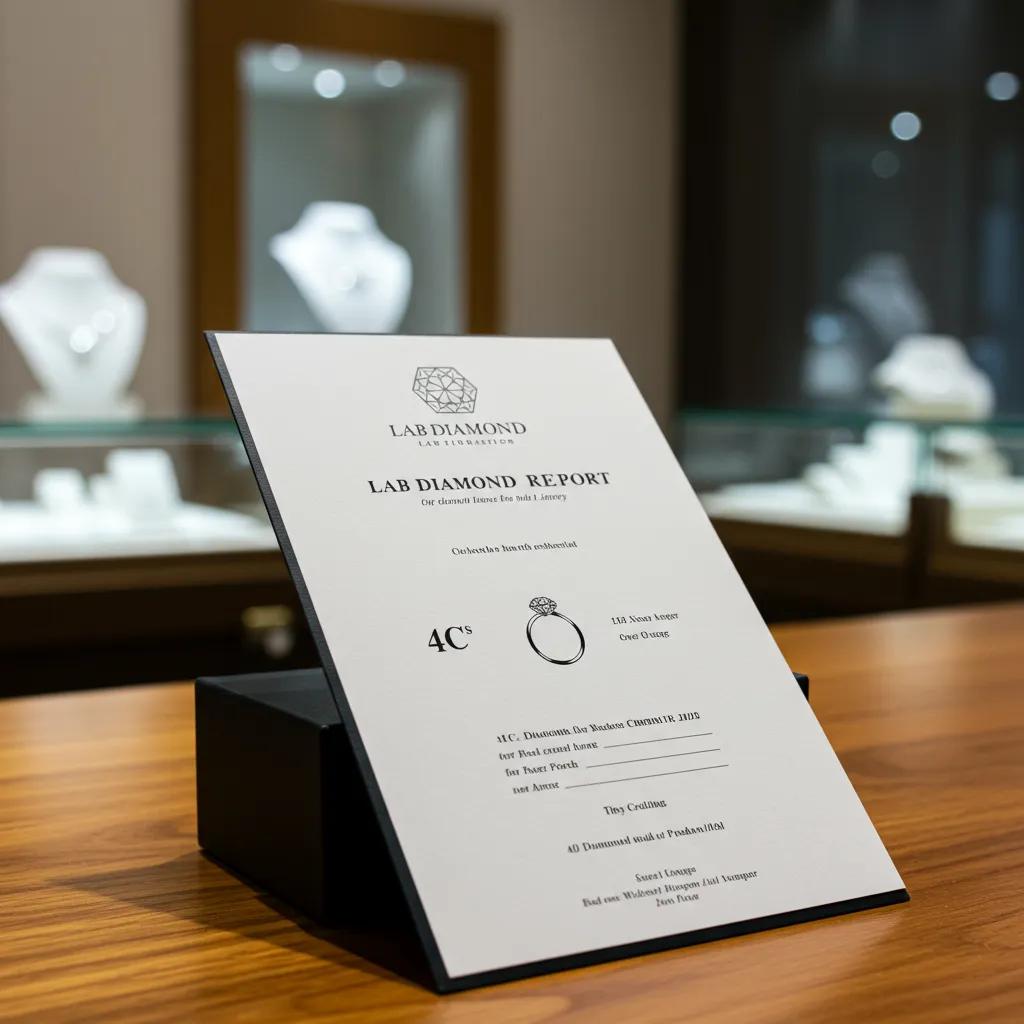
Certification for lab-grown diamonds is conducted by gemological laboratories that evaluate the 4Cs, note growth method indicators, and document any treatments to provide objective assurance of quality and provenance. Major labs apply standardized grading protocols for cut, color, clarity, and carat weight while including observations about origin (lab-grown vs natural) and growth-related features; a clear, complete report is a buyer’s primary trust instrument. Certification matters because it quantifies appearance attributes that drive pricing, supports insurance and resale, and reveals disclosures, such as HPHT treatment or CVD growth patterns, that affect consumer expectations. When reviewing lab reports, buyers should verify the lab name, 4C grades, plotted clarity characteristics, disclosure of growth method and treatments, and any mapping or certificate images that accompany product pages. The following subsections outline key certifiers, the 4Cs as applied to lab-grown diamonds, how certification shapes value, and a buyer checklist for reading reports.
Which Organizations Certify Lab Created Diamonds?
Several established gemological labs evaluate lab-grown diamonds, each with its procedures for reporting the 4Cs, origin, and treatments, and buyers often rely on GIA, IGI, GCAL, and AGS for authoritative grading. GIA is known for consistent methodologies and clear origin disclosure when applicable, while IGI commonly appears on retail lab-grown stones and provides detailed plotting and images. GCAL emphasizes measurement accuracy and tolerance statements that can assist in independent verification, and AGS focuses on cut quality, offering rigorous cut grading useful for buyers prioritizing optical performance. Each lab frames findings slightly differently: some include method indicators or more detailed plotting, so comparing report formats helps buyers choose trusted documentation for resale and insurance purposes. Knowing which certifier issued a report helps interpret the grading details and relative market trust.
What Are the 4Cs and How Are They Graded in Lab Diamonds?
The 4Cs, Cut, Color, Clarity, and Carat, define a diamond’s graded attributes: cut determines light performance; color measures body hue; clarity records internal and surface features; and carat quantifies weight. Cut grading evaluates facet proportions and symmetry to estimate brilliance and fire, with higher cut grades commanding premiums; color uses a scale (D–Z for whites) to indicate absence of hue, and clarity applies a scale (FL to I3) to reflect visibility of inclusions under magnification. For lab-grown diamonds, graders use the same 4C frameworks as for natural diamonds but also note growth method indicators and treatments that may affect color or clarity. Buyers should understand how each C influences price and appearance, often prioritizing cut first for visual sparkle and balancing color/clarity trade-offs to get optimal face-up performance per budget.
- Cut often yields the greatest visible impact on beauty and should be prioritized when choosing a setting.
- Color and clarity trade-offs can be optimized depending on shape and mounting to enhance perceived size and brilliance.
- Certification ensures these aspects are measured consistently for both lab-grown and natural stones.
How Does Certification Affect Lab Diamond Value and Trust?
Certification serves as an objective trust signal that standardizes quality descriptors and provides documented provenance, which influences retail pricing, insurability, and resale prospects. A comprehensive lab report from a widely recognized lab typically increases buyer confidence and can justify higher asking prices compared with ungraded stones, while incomplete or absent origin/treatment disclosures reduce market trust and can depress resale. While lab-grown diamonds tend to start with lower retail prices than natural diamonds, a strong certificate from a reputable lab narrows the pricing gap and eases transactions on secondary markets. Verifying certificates through lab databases or report numbers and ensuring the report includes images, plotted characteristics, and method disclosure are practical steps buyers can take to protect value and avoid surprises at resale or insurance appraisal.
What Should You Look for in a Lab Diamond Certification Report?
When reviewing a lab-grown diamond report, check for explicit origin disclosure (lab-grown vs natural), the 4C grades, plotted clarity characteristics, presence of certificate images, any treatments noted, and method indicators such as HPHT or CVD signatures. Confirm measurements and proportions, inspect the plotted inclusion map for clarity distribution, and verify that the certificate explicitly states any post-growth treatments or enhancements. Red flags include missing origin disclosure, vague treatment statements, or absence of plotted diagrams, each of which warrants further seller clarification or independent verification. Using the certificate checklist streamlines decision-making and reduces risk when selecting certified lab-grown diamonds or engagement ring settings.
What Is the Cost and Value of Lab Created Diamonds Compared to Natural Diamonds?
Lab created diamonds generally cost less per carat than comparable natural diamonds because of manufacturing economies, predictable supply, and shorter production timelines, while long-term value retention remains a developing market dynamic. Price drivers remain the 4Cs: cut, color, clarity, and carat, along with certification, brand, and market demand, but the baseline wholesale cost for lab-grown diamonds tends to be substantially lower than mined equivalents. Resale markets for lab-grown diamonds are still maturing in 2025, with secondary prices often lower relative to natural diamonds, though strong certification and brand channels can improve trade-in or resale prospects. Practical shopping strategies, filtering marketplaces for cut and certificate filters, prioritizing face-up performance, and comparing price-per-carat for specific 4C combinations, help buyers find affordable lab-grown diamond engagement rings without sacrificing visible beauty.
How Are Lab Diamond Prices Determined?
Lab diamond prices are determined by the 4Cs, certification lab, shape, and market supply-demand dynamics; the same grading criteria that govern natural diamonds drive pricing but with a different baseline wholesale curve. Cut quality and carat weight exert large influences on price per carat, with certificates from reputable labs commanding premiums that reflect buyer trust. Market factors, production scale of HPHT and CVD facilities, changing consumer preferences, and year-to-year pricing volatility, also shift retail pricing, making up-to-date comparisons essential when shopping. In practice, buyers should compare certified stones with identical 4C grades and review price-per-carat differentials to spot value opportunities.
Why Are Lab Created Diamonds More Affordable?
Lab-grown diamonds are more affordable because they eliminate mining overhead, accelerate production timelines, and benefit from manufacturing scale economies, reducing the cost of raw supply. Controlled laboratory environments and industrial-scale reactors allow predictable outputs, while the absence of geological rarity means cost structures are tied to manufacturing efficiency rather than scarce natural formation. Additionally, shorter supply chains and the capacity to produce specific sizes or colors on demand lower distribution and sourcing premiums. These cost drivers combine to make lab-grown diamonds an efficient value proposition for buyers focused on size or quality per budget.
Do Lab Created Diamonds Hold Their Value Over Time?
Resale and long-term value for lab-grown diamonds remain less established than for natural diamonds, with secondary market prices influenced by evolving demand, certification, and brand channels; natural diamonds historically hold value better due to rarity and collector perception. Current resale scenarios in 2025 show variable offers depending on cut, certificate, and the buyer’s channel, retail buyback programs or trade-in policies differ widely across sellers and marketplaces. Buyers concerned about value retention should prioritize strong certification, keep original documentation, and consider brand resale policies to maximize secondary market outcomes. For many purchasers, the primary value lies in upfront affordability and aesthetic quality rather than guaranteed long-term appreciation.
How Can You Find Affordable Lab Diamond Engagement Rings?
Finding affordable lab-grown diamond engagement rings involves prioritizing cut and face-up appearance, accepting minor trade-offs in color or clarity where they are less visible, and using marketplace filters to compare price-per-carat for specific shapes. Practical steps include selecting efficient shapes (e.g., oval or cushion) that appear larger per carat, choosing near-colorless grades when mounted in yellow or rose gold, and focusing on excellent to very good cuts to maximize sparkle. Look for product pages that include certificate images, 4Cs breakdown, and clear return/verification policies so you can confirm grading post-purchase. Using these strategies helps buyers locate affordable lab-grown diamond engagement rings while ensuring the chosen stone performs well visually.
- Filter for certified stones and compare price-per-carat.
- Prioritize cut and setting to maximize perceived size and brilliance.
- Verify certificates and inspect plotted diagrams when available.
After evaluating price and certificates, many buyers proceed to verify ethical and environmental claims, which we cover next.
Why Are Lab Created Diamonds Considered Ethical and Sustainable?
Lab created diamonds are often viewed as ethical and sustainable because they remove or reduce mining-related social and ecological harms, provide clearer chain-of-custody, and enable manufacturers to adopt renewable energy and emissions-reduction measures. The controlled laboratory origin simplifies provenance verification, reducing exposure to conflict-related issues that historically affected some mined supply chains. However, sustainability claims vary by production method, HPHT and CVD have different energy profiles, and the environmental impact depends on electricity sources, plant efficiency, and carbon mitigation strategies. Assessing ethical and sustainability credentials requires scrutiny of traceability practices, energy sourcing, and whether producers publicly disclose emissions or adopt renewable energy, which helps consumers separate substantive claims from marketing.
How Do Lab Diamonds Ensure Conflict-Free Sourcing?
Lab-grown diamonds ensure conflict-free sourcing through documented laboratory origin, internal chain-of-custody records, and disclosure practices that trace stones from reactor to retailer, reducing the risk of illicit or conflict-linked materials entering inventory. Manufacturers and supply chain partners can implement traceability systems and audits that verify origin and handling, while certification reports and product-level documentation further support provenance claims. Buyers should request documentation and inquire about supply-chain transparency and auditing practices to validate conflict-free assertions. Clear provenance links directly to buyer confidence and aligns material choice with ethical purchasing priorities.
What Is the Environmental Impact of Lab Diamond Production?
The environmental impact of lab diamond production centers on energy consumption and associated carbon emissions, which vary by method: HPHT tends to be energy- and pressure-intensive, while CVD’s energy footprint depends on reactor efficiency and run time, with both benefiting substantially from renewable electricity adoption. Recent 2025 analyses show that when facilities source renewable energy or use high-efficiency reactors, the carbon footprint of lab diamonds can be materially lower than the aggregate environmental impact of mined diamonds, which includes excavation, transport, and land disturbance. That said, exact comparisons depend on facility energy mix, local grid intensity, and process efficiencies, so independent emissions data or third-party verification offers the most reliable sustainability evidence. Consumers should request emissions disclosures or statements about renewable energy sourcing to assess environmental claims.
Sustainable Alternative: Lab-Grown Diamonds in India
Lab-grown diamonds present a sustainable alternative to deep-seated diamond mining by simulating natural conditions to produce the precious stones above ground in a span of six weeks. The emergence of lab-grown diamonds in Surat and its potential repercussions are examined in this article. The paper describes the technological process by which lab-grown diamonds are produced by simulating the underground natural diamond formation process through the application of high pressure and heat to diamond embryos in plasma reactors. This allows for up to a 30% reduction in the cost of diamond production compared to conventional mining methods. Nevertheless, energy demands give rise to concerns regarding sustainability.
Sustainable Sparkle: The Emergence and Impact of Lab-Grown Diamonds in India’s Diamond Capital, AS George, 2024
The environmental impact of lab diamond production is a key consideration, with energy consumption and carbon emissions varying significantly by method and energy source, underscoring the importance of renewable energy adoption for true sustainability.
How Are Brands Promoting Sustainability in Lab Diamonds?
Brands promote sustainability in lab-grown diamonds through measures such as sourcing renewable electricity for reactors, publishing carbon accounting, using recyclable packaging, and supporting traceability or offset programs that reduce net emissions. These initiatives are frequently presented as part of brand sustainability communications and help differentiate producers that invest in low-carbon operations. Buyers evaluating sustainability should ask specific questions about renewable energy credits, on-site renewable sourcing, and third-party verification to distinguish meaningful commitments from generic claims. Transparency and measurable targets increase credibility and enable consumers to align purchases with their environmental values.
Why Is Ethical Sourcing Important to Consumers Today?
Ethical sourcing matters increasingly because modern buyers prioritize transparency, human rights, and environmental stewardship when making significant purchases like engagement rings, where provenance contributes to perceived value and moral comfort. Market trends in 2025 show a clear preference among many buyers for conflict-free materials and lower-impact options, making ethical claims a competitive attribute for retailers and producers. For consumers, ethical sourcing aligns purchases with personal values and reduces reputational and moral risk associated with opaque supply chains. Asking targeted questions about origin, certification, and energy sourcing empowers buyers to make informed choices consistent with their priorities.
What Are Fancy Color Lab Created Diamonds and Their Unique Appeal?
Fancy color lab created diamonds are intentionally produced to exhibit strong colors, such as pink, blue, yellow, and green, through controlled growth conditions or post-growth treatments, offering vivid hues at much lower prices than similarly colored natural diamonds. These colored stones are appealing because lab synthesis enables doping, growth-parameter adjustments, or irradiation/annealing protocols to induce or enhance color, delivering consistent and striking tones for jewelry applications. Because natural fancy color diamonds are rare and expensive, lab-grown colored diamonds broaden access to high-saturation colors and creative design options without the same price barrier. The next subsections describe production mechanisms, list available colors and their causes, and compare lab-grown fancy colors with their natural counterparts in price and rarity.
How Are Fancy Color Lab Diamonds Produced?
Fancy color lab diamonds are produced via controlled doping during growth, specialized gas chemistries in CVD reactors, or post-growth treatments such as irradiation and annealing that alter defect centers and color centers in the lattice. For example, boron doping can introduce blue hues, while nitrogen aggregation or specific growth conditions can yield yellow tones; irradiation followed by annealing can produce pinks and other vivid colors. Production parameters, dopant type, concentration, growth temperature, and subsequent thermal treatments, are tuned to achieve desired saturation and stability. These controlled approaches allow predictable color outcomes and make lab-grown fancy colors more available and affordable compared with natural fancy diamonds.
What Colors Are Available in Lab Created Fancy Diamonds?
Lab-created fancy colors commonly include pink, blue, yellow, green, and sometimes orange or violet, with color causes ranging from dopants like boron (blue) to vacancy and defect center engineering that produces pinks and greens. Availability and saturation vary by production technique: some colors are more readily produced via CVD doping, while others require post-growth irradiation and annealing to stabilize the hue. Relative rarity and price follow color demand and production complexity, blue and intense pinks tend to command higher premiums, while yellows and greens may be more accessible. Designers leverage these colors in bespoke settings and fashion-forward engagement rings that emphasize color as the primary stylistic element.
How Do Fancy Color Lab Diamonds Compare to Natural Colored Diamonds?
Fancy color lab-grown diamonds typically offer vastly more accessible pricing and greater availability than natural colored diamonds, while presenting comparable visual appeal and durable color stability when produced and treated appropriately. Natural fancy colors remain rarer and often command substantial premiums due to scarcity and collector demand, whereas lab-grown colored stones democratize access to vivid hues for mainstream jewelry. Ethical and sustainability considerations also favor lab-grown fancy colors because they avoid mining-related impacts and provide transparent traceability. For buyers prioritizing vivid color at attainable prices, lab-grown fancy diamonds are an attractive alternative to natural fancy stones.
What Are the Industrial Applications of Lab Created Diamonds Beyond Jewelry?
Synthetic diamonds have extensive industrial and technological applications due to extreme hardness, high thermal conductivity, chemical stability, and tunable electronic properties, serving roles in cutting, optics, electronics, and advanced research. Lab-produced diamonds, especially CVD plates and engineered diamond films, are used for cutting and drilling tools, optical windows, heat spreaders, and emerging quantum and semiconductor devices that exploit diamond’s unique properties. These industrial uses benefit from the ability to tailor purity, doping, and crystal orientation in the lab, enabling components such as diamond heat sinks, protective coatings, and substrates for high-power electronics. The following subsections enumerate common applications, highlight performance advantages, and note several emerging innovations that leverage synthetic diamond capabilities.
How Are Lab Diamonds Used in Technology and Industry?
Lab diamonds are used in machining and cutting tools, optical elements like diamond windows and lenses, thermal management components such as heat spreaders, and in quantum/semiconductor research where single-crystal diamond hosts color centers and defect-based qubits. In machining, diamond abrasives and tool tips exploit unmatched hardness for precision cutting; in optics, CVD diamond windows provide durability and transparency in harsh environments; and in electronics, diamond’s thermal conductivity aids heat dissipation in high-power components. Researchers also use diamond-hosted nitrogen-vacancy centers for sensitive magnetometry and quantum sensing applications. These concrete industrial deployments show how synthetic diamonds extend far beyond jewelry into high-value technical uses.
What Advantages Do Lab Diamonds Offer for Industrial Use?
Lab diamonds offer unparalleled hardness, excellent thermal conductivity, chemical inertness, and the ability to be doped or grown with custom properties, providing performance advantages over alternative materials in demanding applications. Thermal conductivity of diamond exceeds most metals and ceramics, enabling efficient heat spreading in electronics; mechanical durability extends tool life in machining; and optical clarity across broad spectra suits high-performance windows and lenses. Additionally, production control enables consistent, reproducible components tailored to engineering specifications, which improves yield and reliability for industrial manufacturers. These performance metrics make synthetic diamond an enabling material across sectors that require extreme material properties.
Are There Emerging Innovations in Lab Diamond Applications?
Emerging innovations include diamond-based quantum sensors and qubits, diamond semiconductors for high-voltage electronics, biomedical devices leveraging diamond’s biocompatibility, and advanced optics for extreme environments, each benefiting from refined CVD growth and doping techniques. Quantum applications exploit defect centers to create stable, room-temperature qubits and magnetometers, while semiconductor research explores leveraging diamond’s wide bandgap for efficient power electronics. Biomedical uses may include diamond-coated implants and microelectromechanical systems that require durable, inert surfaces. These innovations point to growing commercial scalability as production technologies evolve and industry demand expands.
- For buyers and practitioners, these industrial capabilities highlight the broader technological value of synthetic diamonds beyond gem markets.
- The ability to tailor properties in-lab accelerates adoption in high-growth technological fields.
Lab-created diamonds therefore present a broad and evolving landscape of applications that complement their established role in jewelry and pave the way for advanced industrial uses. When you are ready to move from research to a real piece, explore our lab grown diamonds to compare certified stones and lab grown diamond engagement rings that balance ethics, budget and long term wear.


