
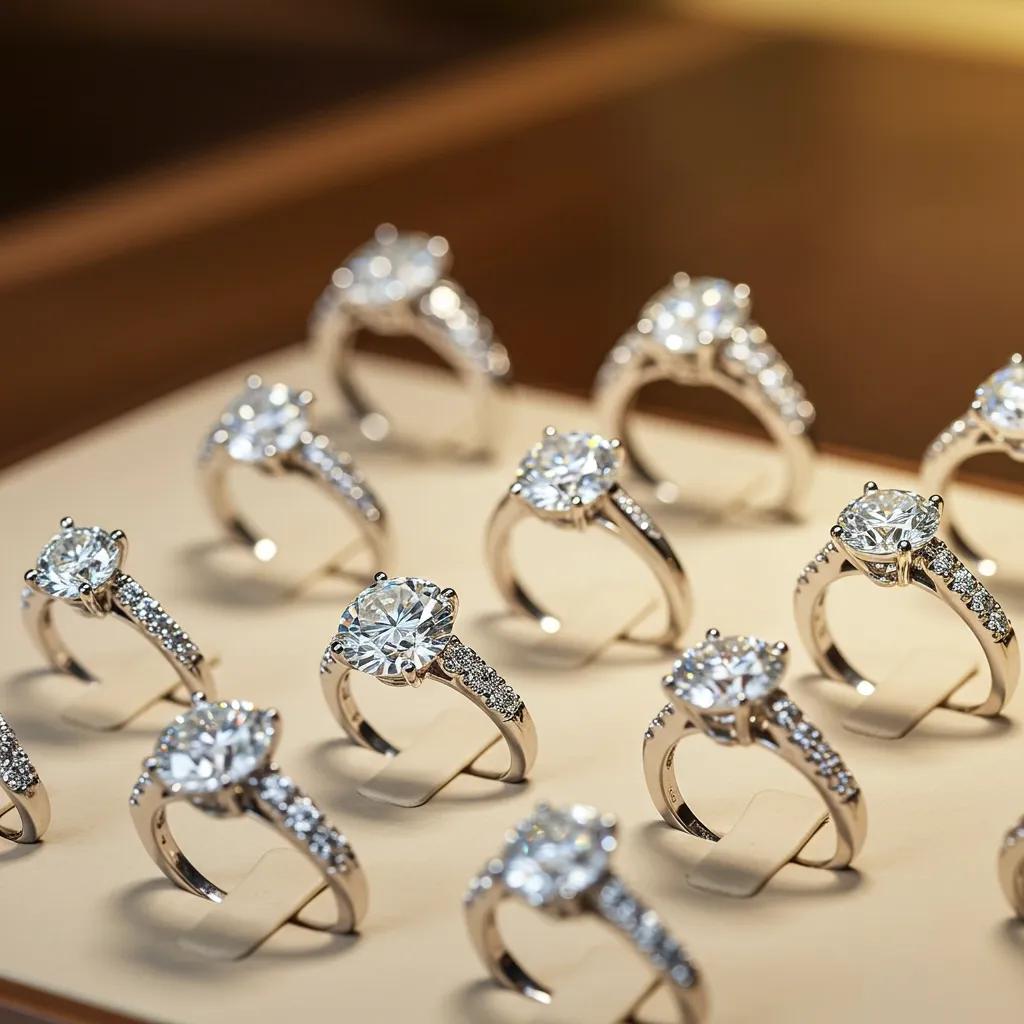
Choosing, Styling & Care of Diamond Rings: Australian Diamond Company
A diamond ring, featuring a faceted diamond centerpiece set in a beautifully crafted band, offers profound symbolic meaning and undeniable aesthetic appeal. If you’d like to see how these principles look in real designs, browse our engagement rings to compare styles, settings, and diamond options as you read. This comprehensive guide will equip you with the knowledge to select, style, and maintain the perfect diamond ring tailored to your desires. You’ll delve into the science behind the 4Cs – cut, color, clarity, and carat – understand how shape and setting influence perceived size and sparkle, explore metal options including ethical choices, and learn essential care routines to keep your ring dazzling for years to come.
Many shoppers find it challenging to harmonize budget, appearance, and lifestyle needs when choosing diamonds. This article provides clear decision-making frameworks and practical checklists to simplify that process. We cover an array of diamond shapes, detailed pros and cons of various settings, the distinctions between natural and lab-grown diamonds, emerging engagement ring design trends for 2025, and step-by-step guidance for cleaning and inspection. Throughout, you’ll find straightforward definitions, actionable advice for shoppers, and clear explanations of optical phenomena like brilliance, scintillation, and fire, empowering you to confidently evaluate diamonds for your ring. The following sections are structured around the key decisions you’ll make: the 4Cs, shape selection, settings, origin comparisons, trending styles, metal choices, and care and maintenance.
Understanding the Diamond 4Cs: The Foundation of Value
The diamond 4Cs – cut, color, clarity, and carat – are the fundamental characteristics that define a diamond’s appearance and worth. Each ‘C’ is assessed against specific industry standards, and collectively, they dictate how a diamond interacts with light. Cut is paramount, dictating the return of light and creating brilliance, fire, and scintillation through the precise arrangement of facets. Color refers to the absence of body tint, influencing the diamond’s perceived whiteness, especially against different metal backdrops. Clarity assesses internal and surface imperfections, impacting transparency and sparkle. Carat is the unit of weight, directly correlating to a diamond’s size and price. Grasping how these four attributes interplay is crucial for buyers to prioritize what matters most for visual appeal versus budget, and it lays the groundwork for understanding diamond certifications and making informed comparisons.
The following sections offer detailed explanations of each ‘C’ and practical advice for balancing them when selecting a diamond for your ring.
The Art of Diamond Cut: Unlocking Brilliance
Diamond cut refers to a diamond’s proportions, symmetry, and polish, and it is the primary factor determining its light performance. When a diamond is cut with excellent proportions, it maximizes brilliance (the overall return of white light), fire (the dispersion of light into spectral colors), and scintillation (the sparkle and play of light as the diamond moves). Poor proportions cause light to escape, diminishing its visual impact. For round brilliant diamonds, prioritizing cut quality often yields the most significant difference in sparkle for diamonds of similar color and clarity grades. When reviewing a cut grade on a certificate, pay close attention to the proportions and any notes on light performance; this naturally leads into considerations of color and how cut can enhance or mask body tint.
Diamond Color: Appearance and Value Interplay
Diamond color is graded on a scale from D (completely colorless) to Z (noticeable yellow or brown tint). Color significantly affects perceived whiteness, particularly in larger stones and when set in contrasting metals. The visibility of color is influenced by the diamond’s shape and the chosen metal; white metals like platinum and white gold best showcase colorless grades, while yellow or rose gold can effectively mask lower color grades, making near-colorless stones appear warmer. In terms of value, higher color grades command higher prices. However, buyers can often achieve excellent value by selecting near-colorless grades (G–I) for rings set in yellow or rose gold, or when opting for exceptionally well-cut stones. Understanding how metal and setting interact with color is key to making a balanced selection that prioritizes visual impact over mere certificate grades.
A quick checklist for common buyer trade-offs between cut and color:
- Prioritize Cut: Opt for a superior cut to maximize sparkle, even if the color grade is slightly lower.
- Match Metal to Color: Choose yellow or rose gold to affordably enhance the appearance of lower color grades.
- Consider Size: Larger carat weights make color more apparent; adjust your expectations accordingly.
These considerations naturally lead into clarity, focusing on which inclusions are acceptable for an eye-clean appearance.
Diamond Clarity: Understanding Imperfections
Clarity measures the presence of internal inclusions and external blemishes, graded from FL (Flawless) down through IF, VVS, VS, SI, to I. These characteristics affect both price and the potential for visible imperfections. Inclusions can range from microscopic crystals to larger fissures, and their type, size, and location determine their visibility and potential impact on durability. Practical advice: many diamonds in the VS–SI range appear eye-clean in common engagement ring sizes, especially when inclusions are small and located away from the center, offering excellent value. Always examine clarity plots and request images or loupe views, as clarity grading influences both resale perception and long-term aesthetic appeal. Understanding clarity helps strike a balance between price and perfection as you prepare to select carat weight and shape.
Carat Weight: Measuring Size and Scale
Carat is a unit of weight, with one carat equaling 200 milligrams. It directly correlates to a diamond’s mass rather than its diameter; two diamonds of the same carat weight can appear different in size depending on their cut and shape. Perceived size, or spread, is influenced by diameter and proportions. For instance, shallow, wider cuts often appear larger face-up than deep cuts of the same carat weight. The price-per-carat increases significantly at popular weight milestones (e.g., 1.00 ct). Consequently, buyers can often achieve substantial savings by selecting a diamond slightly below a landmark weight while maintaining a similar visual presence. Understanding how carat, cut, and shape interact is essential for prioritizing attributes based on budget and desired visual impact.
A grasp of carat weight and perceived size provides a practical framework for balancing the 4Cs in real-world shopping scenarios.
Balancing the 4Cs: Your Personalized Approach
Achieving the ideal balance of the 4Cs involves prioritizing the attribute that most significantly contributes to your desired look. Typically, cut is prioritized for maximum sparkle, followed by carat for presence. Color and clarity are then adjusted to ensure an eye-clean appearance within your budget. A straightforward decision framework: (1) determine your target visual size, (2) select the best available cut within your budget, (3) choose a clarity grade that is eye-clean at your chosen carat and shape, and (4) select a color grade that complements your intended metal. For example, style-focused shoppers might prioritize cut and colorlessness, while budget-conscious shoppers might focus on carat and accept near-colorless grades with eye-clean clarity. Utilize certification reports from reputable labs like GIA, IGI, or AGS to verify the 4Cs and facilitate side-by-side comparisons.
The table below offers a concise reference for comparing the 4Cs and provides practical guidance for buyers.
This table clarifies how to weigh each ‘C’ and naturally leads into shape considerations, which significantly influence perceived size and overall style.
Exploring Diamond Shapes: Style and Perception
A diamond’s shape dictates its facet arrangement, influencing its light performance, perceived size, and the ring’s overall aesthetic. Shape choice also impacts how a diamond interacts with its setting and its susceptibility to scratches or chips. The round brilliant remains the most sought-after shape due to its optimized light return, while fancy shapes – such as princess, cushion, oval, emerald, and pear – offer a diverse range of aesthetics and visual spread. Certain shapes, like ovals, pears, and marquises, appear larger face-up for the same carat weight due to their elongated outlines. Step cuts, such as emerald and Asscher, emphasize clarity and elegant geometric facets over intense sparkle. Your shape selection should align with your personal style, hand proportions, and the compatibility with your chosen setting to achieve a harmonious visual balance.
Round Brilliant vs. Fancy Shapes: Distinctive Characteristics
The round brilliant diamond is meticulously engineered with a symmetrical facet pattern designed to maximize brilliance, delivering superior light return for its carat weight. Fancy shapes offer unique characteristics: the princess cut provides a modern, square silhouette with vibrant fire; the cushion cut blends rounded corners with large facets for a romantic, vintage feel; oval and pear shapes elongate the finger and maximize face-up spread; emerald and Asscher cuts are step cuts that highlight clarity and sophisticated elegance rather than intense scintillation. Buyers should match shape to their lifestyle and aesthetic preferences: active individuals might prefer bezel protection for pointed shapes, while those seeking maximum sparkle often gravitate towards round brilliant or well-cut cushions. The choice of shape naturally informs subsequent decisions regarding setting and metal selection.
The table below compares popular diamond shapes, their visual traits, and styling recommendations.
Diamond Shapes That Appear Largest: Maximizing Visual Impact
Shapes with elongated outlines and shallower tables, such as oval, marquise, and pear, tend to exhibit greater face-up spread and therefore appear larger than round or deep-cut diamonds of equivalent carat weight. The length-to-width ratio plays a crucial role in perceived size; a longer ratio increases the visual footprint but can alter the overall aesthetic. While shallow cuts can enhance spread, they may compromise light performance. Buyers seeking to balance size and sparkle should carefully evaluate proportions. Selecting a shape that maximizes spread while maintaining acceptable light return is an effective strategy for achieving the desired visual size without overspending on carat weight.
How Diamond Shapes Influence Ring Style and Setting Choices
A diamond’s shape significantly influences which settings best complement and protect it. Round brilliants are ideal for prong settings that maximize light exposure, while pear and marquise shapes benefit from protective prongs or bezels at their vulnerable points. Step cuts, like emerald and Asscher, are beautifully showcased in bezel or channel settings that emphasize their geometric facets. Accent stones and band styles also interact dynamically with shape; tapered side stones complement elongated shapes, while straight side stones suit squarer cuts. Durability is another key consideration: pointed shapes require secure prongs to prevent chipping, and larger tables on step cuts necessitate higher clarity grades. Harmonizing shape and setting ensures both aesthetic cohesion and long-term wearability.
2025 Trends in Diamond Shapes: What’s New?
The engagement ring landscape in 2025 is characterized by a blend of timeless elegance and personalized touches. While classic solitaire and hidden halo designs continue to captivate, three-stone settings, vintage-inspired motifs, and mixed-metal accents are gaining considerable traction. Metal trends show a renewed appreciation for yellow and rose gold, often paired with diamonds that exhibit warmer tones, alongside the enduring popularity of platinum for its durability and pristine white finish. Customization options, including intricate engraving, mixed-metal combinations, and unique accent stones, are increasingly shaping buyer choices as personalization becomes a key differentiator. These trends suggest practical approaches: consider pairing vintage-inspired shapes with textured bands and leverage metal choice to either emphasize or subtly mask diamond color according to your preference.
Diamond Ring Settings: Style, Security, and Sparkle
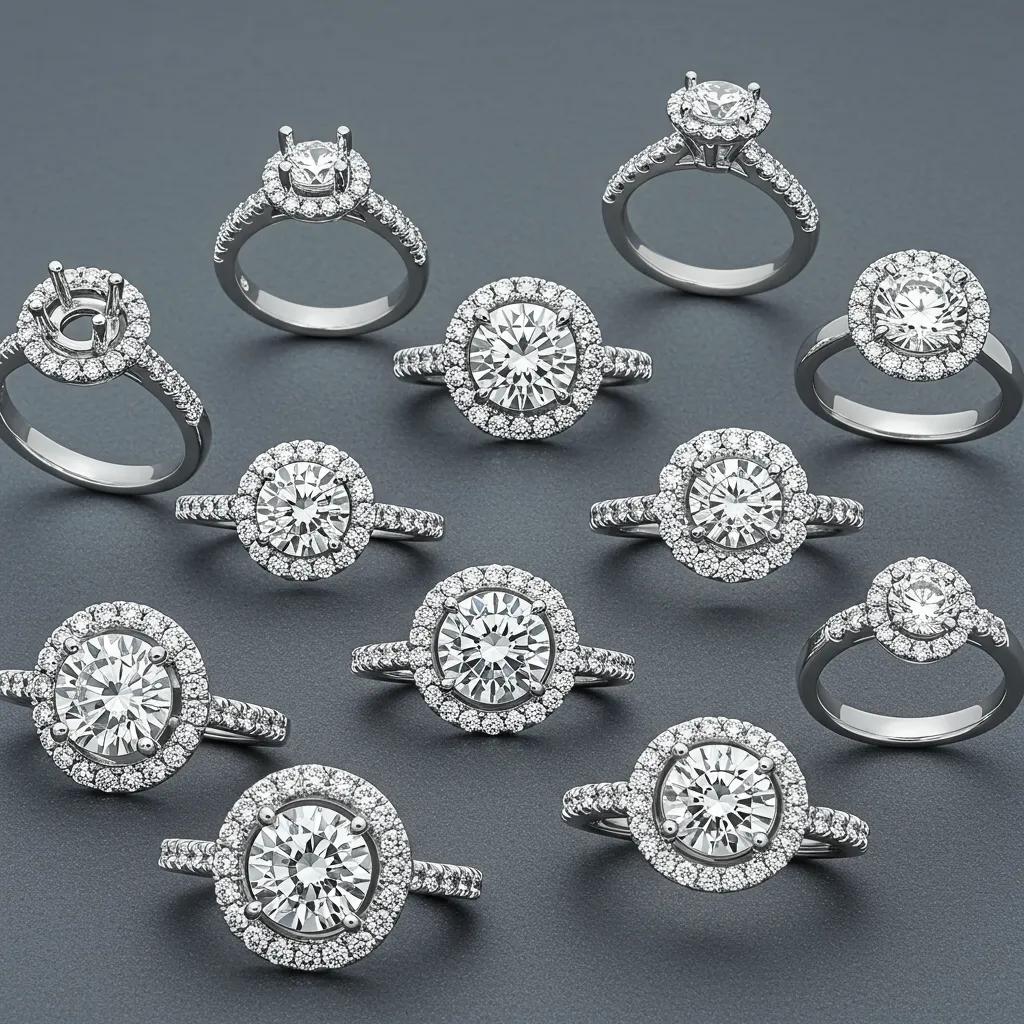
Ring settings are crucial as they determine how a diamond is secured, how much light it receives, and its overall protection during wear. Popular settings include solitaire, halo, pavé, bezel, three-stone, and vintage styles, each offering distinct advantages and considerations. Solitaire settings maximize the center stone’s visibility and light exposure; halo and pavé settings enhance perceived size and sparkle; bezel settings provide excellent protection and a low profile, ideal for active lifestyles; three-stone and vintage settings convey rich symbolic narratives and intricate detailing. Choosing the right setting involves balancing your desired visual effect with practical durability for everyday wear. Let’s explore specific settings and their unique roles.
The Solitaire Setting: A Timeless Showcase
A solitaire setting utilizes minimal metal, typically prongs, to elevate and showcase the center diamond, maximizing light entry and drawing all attention to the stone itself. Variations like cathedral or tapered shanks can subtly alter the ring’s silhouette and perceived size without adding visual clutter. Solitaire rings are exceptionally versatile, accommodating a wide range of metals and diamond shapes, and are generally easy to clean and maintain due to their open design. For buyers who wish to highlight the diamond’s intrinsic qualities – its brilliance and cut – a well-executed solitaire remains an enduring and elegant choice. This classic choice naturally leads into how halo and pavé settings can amplify perceived size.
Halo and Pavé Settings: Amplifying Brilliance and Size
Halo settings encircle the center diamond with a constellation of smaller stones, significantly enhancing its perceived size and overall sparkle. Pavé settings feature a continuous surface of tiny diamonds set closely together along the band, creating a luminous, shimmering effect. These settings offer a dramatic increase in visual impact and can make more modest center stones appear substantially larger, providing excellent value for budget-conscious shoppers. However, they require more frequent cleaning to maintain their luster and may be more susceptible to wear on the smaller accent stones. Buyers who desire maximum visual drama for a given carat weight often favor these settings, which then transition into considerations for three-stone and vintage designs.
Three-Stone and Vintage Settings: Symbolism and Character
Three-stone rings traditionally symbolize the past, present, and future, combining two accent stones with a central diamond to create a layered meaning and intricate visual appeal. Vintage settings draw inspiration from historical eras, incorporating elements like milgrain (tiny beaded edges), intricate engraving, and unique profiles to offer distinct character and exceptional customization potential. These designs appeal strongly to buyers seeking narrative depth and heirloom quality, often allowing for the incorporation of meaningful accent stones or cherished family gems. Consider how these symbolic and design motifs influence your customization choices and metal selections as you explore durability and maintenance aspects.
Settings: Impact on Durability and Sparkle
Open settings, such as prong settings, maximize sparkle by allowing maximum light entry, but they also leave the diamond more exposed to potential knocks and snagging. Conversely, protective settings like bezels trade a slight reduction in light entry for superior stone security and a lower profile. The chosen setting affects cleaning frequency and potential repair needs; delicate pavé settings require regular inspection for loose accent stones, whereas bezels primarily need occasional polishing. For active lifestyles, low-profile and protective settings significantly reduce the risk of damage. For rings intended as statement pieces, open settings are often preferred to maximize optical performance. Carefully weighing the balance between sparkle and protection will help you determine the most suitable setting for daily wear, leading directly to recommendations for active individuals.
Settings Ideal for Active Lifestyles
For individuals with active lifestyles, bezel, low-profile prong, and flush settings offer the greatest protection by minimizing exposed edges and securing the stone closer to the ring band. Factors such as metal hardness, shank thickness, and secure prong tips also contribute to enhanced durability; platinum and certain gold alloys demonstrate superior resistance to deformation under daily stress. Practical care tips include removing rings during strenuous manual activities, using protective gloves when necessary, and opting for settings specifically designed to minimize snagging. These protective choices naturally integrate with metal selection and maintenance routines discussed later.
Natural vs. Lab-Grown Diamonds: A Comparative Look
Natural and lab-grown diamonds share identical chemical, physical, and optical properties, differing primarily in their origin, market perception, price dynamics, and sometimes the specifics of their certification. Both can be excellent choices, depending on individual buyer priorities. Natural diamonds are formed through geological processes over millions of years and possess a rarity-driven value. Lab-grown diamonds are created in controlled laboratory environments, offering significant price advantages and traceable manufacturing processes. Considerations such as ethical sourcing and environmental impact often play a role in decision-making, and certification reports should clearly state the diamond’s origin to ensure transparency. This comparison helps buyers decide whether aesthetic parity, cost-effectiveness, or traceability aligns best with their values.
Key Distinctions: Natural vs. Lab-Grown Diamonds
Natural diamonds are products of Earth’s geological processes over eons, while lab-grown diamonds are synthesized in sophisticated reactors that replicate the conditions of natural diamond formation. Both are crystalline carbon structures exhibiting identical hardness and optical behavior. Market perception varies: natural diamonds are associated with traditional rarity and may hold a stronger resale preference, whereas lab-grown diamonds typically offer lower retail prices for comparable physical characteristics. Visually, high-quality lab-grown and natural diamonds are often indistinguishable to the naked eye, making certification and clear disclosure paramount for buyer confidence. These distinctions naturally lead into discussions about ethical sourcing and how certifications address these concerns.
Ethical Sourcing: A Growing Consideration
Ethical sourcing encompasses guarantees of conflict-free origins, robust traceability programs, and the use of recycled metals to minimize environmental impact. Buyers should actively seek documentation and supplier transparency when evaluating ethical claims. Certifications from independent bodies or detailed chain-of-custody data can help verify origin and supply-chain practices. Pairing recycled metals with ethically sourced stones not only lowers the ecological footprint but also aligns with increasing consumer demand for responsible jewelry. Evaluating ethical sourcing criteria is integral to deciding between natural or lab-grown options based on personal values and market availability.
Price Differences and Value Perspectives
Lab-grown diamonds generally retail at lower price points per carat compared to comparable natural diamonds, reflecting differences in rarity and market dynamics. This price gap can fluctuate based on diamond size, quality, and prevailing market conditions in 2025. Natural diamonds often maintain a stronger long-term resale perception due to their inherent scarcity. Conversely, lab-grown diamonds are valued for their cost-efficiency and ethical appeal. Buyers should weigh investment goals against aesthetic priorities: if long-term resale value is a primary concern, natural diamonds may be the preferred choice; if maximizing visual value at a lower cost is the objective, lab-grown diamonds present a compelling alternative. Understanding these price dynamics is crucial for reviewing certifications and timing your purchase.
Research indicates that consumer preferences for lab-grown diamonds are not significantly dictated by age, but rather by shared values such as eco-friendliness and affordability.
Lab-Grown Diamonds: Sustainable and Ethical Alternatives
Lab-grown diamonds will see the transformation of the global gem industry: a shift toward sustainable and ethical alternatives to natural diamonds. This study examines the impact of age on various factors interacting with consumer perceptions, beliefs, and motivations toward lab-grown diamonds. The study adopts a quantitative approach for the testing of hypotheses in determining whether there exists an association between age and aspects like familiarity, quality and appearance opinions, purchase motives, and open-mindedness towards the industry revolution. Findings The analysis of weak and statistically insignificant relationships across the tested variables showed that attitudes towards lab-grown diamonds are not significantly determined by age. These results suggest that consumer preferences are more aligned with shared values and attributes of the product, like eco-friendliness and affordability, rather than demographic factors.
New Era of Lab Grown Diamond, J Vidani, 2024
Certification and Grading of Lab-Grown Diamonds
Major grading laboratories document the carat, cut, color, and clarity of lab-grown diamonds, typically indicating their origin on the reports. Reputable labs adhere to transparent testing protocols and include clear origin disclosure fields. Key certification fields to examine are identical to those for natural diamonds (carat, cut, color, clarity), but it is essential to ensure the report explicitly states ‘lab-grown’ status to avoid any ambiguity. Verifying the lab-grown origin and the credibility of the grading laboratory empowers buyers to make informed comparisons and choices between natural and lab-grown diamonds. This focus on certification transitions smoothly into discussions about trends and style considerations for engagement rings.
The production of lab-grown diamonds offers a more sustainable and cost-effective alternative to traditional mining, though energy consumption remains a consideration.
Sustainable Sparkle: The Rise of Lab-Grown Diamonds
Lab-grown diamonds present a sustainable alternative to deep-seated diamond mining by simulating natural conditions to produce the precious stones above ground in a span of six weeks. The emergence of lab-grown diamonds in Surat and its potential repercussions are examined in this article. The paper describes the technological process by which lab-grown diamonds are produced by simulating the underground natural diamond formation process through the application of high pressure and heat to diamond embryos in plasma reactors. This allows for up to a 30% reduction in the cost of diamond production compared to conventional mining methods. Nevertheless, energy demands give rise to concerns regarding sustainability.
Sustainable Sparkle: The Emergence and Impact of Lab-Grown Diamonds in India’s Diamond Capital, AS George, 2024
Engagement Ring Styles and Trends for 2025
Engagement ring styles in 2025 artfully blend timeless silhouettes with a strong emphasis on personalization. While solitaire and hidden halo designs continue to be highly sought after, three-stone settings, vintage-inspired motifs, and mixed-metal accents are experiencing a notable surge in popularity. Metal trends reveal a renewed interest in yellow and rose gold, often paired with diamonds exhibiting warmer tones, alongside the continued preference for platinum due to its exceptional durability and pristine white finish. Customization options, including intricate engraving, mixed-metal combinations, and unique accent stones, are increasingly shaping buyer choices as personalization emerges as a key differentiator. These stylistic trends offer valuable insights for both selection and practical design considerations for engagement and bridal jewelry.
Timeless Appeal: Solitaire and Hidden Halo Rings
Solitaire rings offer a minimalist aesthetic that places the focus squarely on the center stone, adapting effortlessly to a wide range of styles and metals. This versatility makes them ideal for future resizing or redesigns. Hidden halo designs subtly enhance the perceived size and sparkle of the center diamond without the overt presence of a traditional halo, striking a balance between classic and contemporary appeal. Both designs are highly flexible in terms of pairing with wedding bands and accommodate a diverse array of diamond shapes and metals, contributing significantly to their enduring popularity. Their adaptability and understated visual presence make them reliable long-term choices for couples prioritizing timeless style.
Unique Charm: Three-Stone and Vintage-Inspired Rings
Three-stone rings offer a unique way to communicate narrative symbolism and allow for creative stone pairings, such as incorporating colored accent stones, tapered side stones, or harmonizing shapes for a truly custom feel. Vintage-inspired rings are distinguished by their use of milgrain, filigree, and intricate engraving, which add texture and period character. These elements support deep personalization and enhance heirloom potential. Such designs often showcase exceptional craftsmanship and provide an opportunity to integrate sentimental stones, resonating strongly with buyers seeking meaningful, story-driven pieces. These characteristics naturally lead into discussions about metal trends and how material choices reinforce the desired aesthetic.
Trending Metals: Platinum, Gold, and Rose Gold
Platinum remains a premier choice for its exceptional durability and naturally white finish, which beautifully complements colorless diamonds. Yellow and rose gold are experiencing a resurgence in popularity, prized for their warm tones and vintage appeal. Metal choice significantly impacts maintenance: white gold often requires periodic rhodium plating to maintain its bright white sheen, while platinum develops a unique patina over time but resists wear exceptionally well. Allergy considerations and the desire to complement the diamond’s color also inform selection; warmer metals can enhance the appearance of lower color grades, whereas white metals accentuate colorless stones. These prevailing trends influence how buyers pair metals with specific shapes and settings to align with current 2025 preferences.
The Influence of Customization on Modern Engagement Rings
Customization, encompassing elements like mixed metals, engraved details, bespoke halos, and unique accent stones, empowers buyers to create rings that authentically reflect their personal narratives and practical needs. Customization timelines and associated costs can vary significantly, so planning well in advance is essential to ensure timely delivery for proposals or anniversaries. When opting for custom work, it is crucial to seek trusted certification for the diamonds and maintain clear communication regarding metal sourcing and finishing to guarantee the final piece meets both quality and ethical expectations. Custom options serve as the culmination of earlier decisions regarding the 4Cs, shape, and setting, ensuring a cohesive and deeply personal final design.
Choosing the Right Metal for Your Diamond Ring
Selecting the appropriate metal for a diamond ring involves balancing aesthetics, durability, maintenance requirements, and ethical considerations. Popular choices include platinum, white gold, yellow gold, rose gold, and recycled metals. Platinum offers superior durability and a naturally white finish that enhances colorless diamonds, while gold alloys provide warm tones and lighter weight options. Recycled metals significantly reduce environmental impact and align with ethical sourcing preferences. Your metal choice should reflect your desired look, anticipated wear patterns, and any potential allergy concerns, ensuring the ring remains both beautiful and practical for daily wear.
The comparison table below is designed to assist buyers in weighing the properties and best applications of various metals.
Platinum, White Gold, and Yellow Gold: Key Differences
Platinum is denser and inherently more durable than gold alloys, and it naturally retains its white color without the need for plating. White gold, conversely, is an alloy typically plated with rhodium to achieve a bright white finish, which may require periodic reapplication. Yellow gold offers a traditional warm tone and generally requires less surface maintenance. Price differences are primarily driven by metal purity and rarity; platinum typically commands a premium, making the choice dependent on budget, aesthetic preference, and tolerance for maintenance. Understanding these material properties is fundamental to practical cleaning and long-term care considerations.
Metal Choice: Impact on Durability and Maintenance
A metal’s hardness directly influences its resistance to scratches and the ease with which it can be resized. Platinum is more forgiving over time, while softer gold alloys may scratch more readily but can be effectively re-polished. Resizing considerations also vary; some metals are easier to resize or solder without altering their appearance. Cleaning routines depend on the metal’s finish and the ring’s setting; for instance, intricate vintage metalwork can trap dirt and necessitate more frequent professional cleaning. These maintenance implications should be weighed alongside lifestyle factors and care preferences when selecting a metal.
The Advantages of Recycled and Ethically Sourced Metals
Recycled metals significantly reduce the demand for new mining, thereby lowering environmental impact, while offering comparable physical properties to newly mined metals. Certifications and transparent sourcing statements are crucial for verifying recycled content. Buyers prioritizing traceability or a reduced environmental footprint should request documentation or inquire about supplier practices. Stylistically, recycled metals are available in all familiar alloys (platinum, gold), meaning ethical choices need not compromise design options. This focus on ethical metals naturally connects to practices for long-term care and inspection.
Caring for Your Diamond Ring: Maintenance Essentials
Proper care for a diamond ring involves a combination of safe at-home cleaning, scheduled professional inspections, proactive strategies to prevent common repairs, and mindful storage to preserve its brilliance and structural integrity. Regular cleaning effectively removes oils and grime that can dull sparkle; professional inspections are vital for checking prong wear, loose stones, and overall structural soundness. Common repairs include prong retipping, re-polishing, and resizing adjustments. Prevention strategies focus on selecting protective settings, avoiding exposure to harsh chemicals, and removing rings during heavy manual labor. Establishing a routine of gentle cleaning and annual professional inspection will significantly prolong the life and enhance the appearance of any diamond ring.
The practical cleaning checklist and inspection cadence below will help you protect your cherished jewelry.
- Weekly Home Cleaning: Use warm water, mild soap, and a soft brush, especially for open settings.
- Avoid: Harsh chemicals (like bleach or chlorine) and ultrasonic cleaners for certain delicate settings.
- Professional Inspection: Schedule at least once annually, or sooner if prongs feel loose.
- Storage: Keep rings in individual soft pouches or compartmentalized jewelry boxes to prevent scratches.
Best Practices for At-Home Diamond Ring Cleaning
A safe and effective home cleaning routine involves using warm water, a gentle dish soap, and a soft-bristled brush to remove oils and dirt, while strictly avoiding abrasive or chemical cleaners that could damage metals and accent stones. Briefly soak the ring, gently brush around the setting, rinse thoroughly in warm water, and pat dry with a lint-free cloth. For intricate pavé or vintage settings, a soft brush and a slightly longer soak can help dislodge debris. It is advisable to avoid ultrasonic cleaners for rings with loose stones or certain fragile accent settings; when in doubt, consult a professional. Proper home cleaning significantly enhances sparkle and reduces the need for more intensive professional restoration.
Frequency of Professional Ring Inspections
Professional inspections are recommended at least annually to assess prong integrity, check for loose stones, and identify any signs of wear. Prompt inspection should be sought immediately following any significant impact, if you notice visible stone movement, or if a stone is lost. Jewelers will meticulously check prong tightness, shank integrity, and overall stone security, and can perform necessary services like retipping prongs or re-setting stones before more serious damage occurs. The frequency of inspections may need to increase for individuals with very active lifestyles or for rings featuring numerous small accent stones. Scheduling routine inspections facilitates early detection of potential issues and aligns with recommended cleaning practices.
Common Ring Repairs and Damage Prevention
Common repairs include prong retipping, stone tightening, re-polishing, and sizing adjustments. Prevention strategies emphasize choosing protective settings, avoiding exposure to harsh chemicals, and removing rings during strenuous manual activities. Recognizing early warning signs—such as visible prong wear, stones that shift noticeably, or the ring catching on fabrics—prompts timely service that can avert more significant damage or loss. Regular maintenance, secure settings, and mindful daily habits collectively reduce the frequency of repairs and extend the ring’s lifespan. These prevention strategies are directly linked to smart storage and travel precautions.
The Importance of Proper Ring Storage
Store rings individually in soft pouches or compartmentalized boxes to prevent metal-to-metal contact and avoid scratching bands or accent stones. Avoid simply tossing rings loosely into jewelry dishes, as this increases the risk of abrasion. For travel, utilize a padded jewelry case with individual slots to keep pieces secure and minimize movement. Maintain moderate humidity levels and avoid extreme temperature fluctuations, which can accelerate metal fatigue or loosen adhesives used with certain accent stones. Thoughtful storage preserves the ring’s polish and reduces the likelihood of needing repairs, effectively concluding the maintenance sequence covered in this guide.
For buyers ready to make a selection, certified options and customisation services are readily available. As a next step, explore our engagement rings, wedding bands, and diamond rings that offer certified stones, flexible metal and setting choices, and ethical sourcing options. This information-rich approach empowers you to apply the principles of the 4Cs, shape and setting guidance, and care routines to choose a ring that aligns with your aesthetic preferences, budget, and lifestyle.


