
Why Where and How Your Ring Is Made Matters
When most people shop for an engagement ring, the attention naturally goes to the diamond, the design, and the price. What is often overlooked is how the ring itself is manufactured and where it is made.
Two rings may look almost identical in a display case, yet be fundamentally different in construction, durability, and craftsmanship.
At Australian Diamond Company (ADC) , rings are designed and manufactured very differently from jewellery produced in large international factories. The difference comes down to engineering standards, material quality, craftsmanship, and local production.
Understanding these differences helps explain why some rings last a lifetime while others begin to show wear much sooner.
Local Craftsmanship: Jewellery Made On-Site at Australian Diamond Company
One of the biggest differences between Australian Diamond Company and mass-produced jewellers is where the jewellery is actually made.
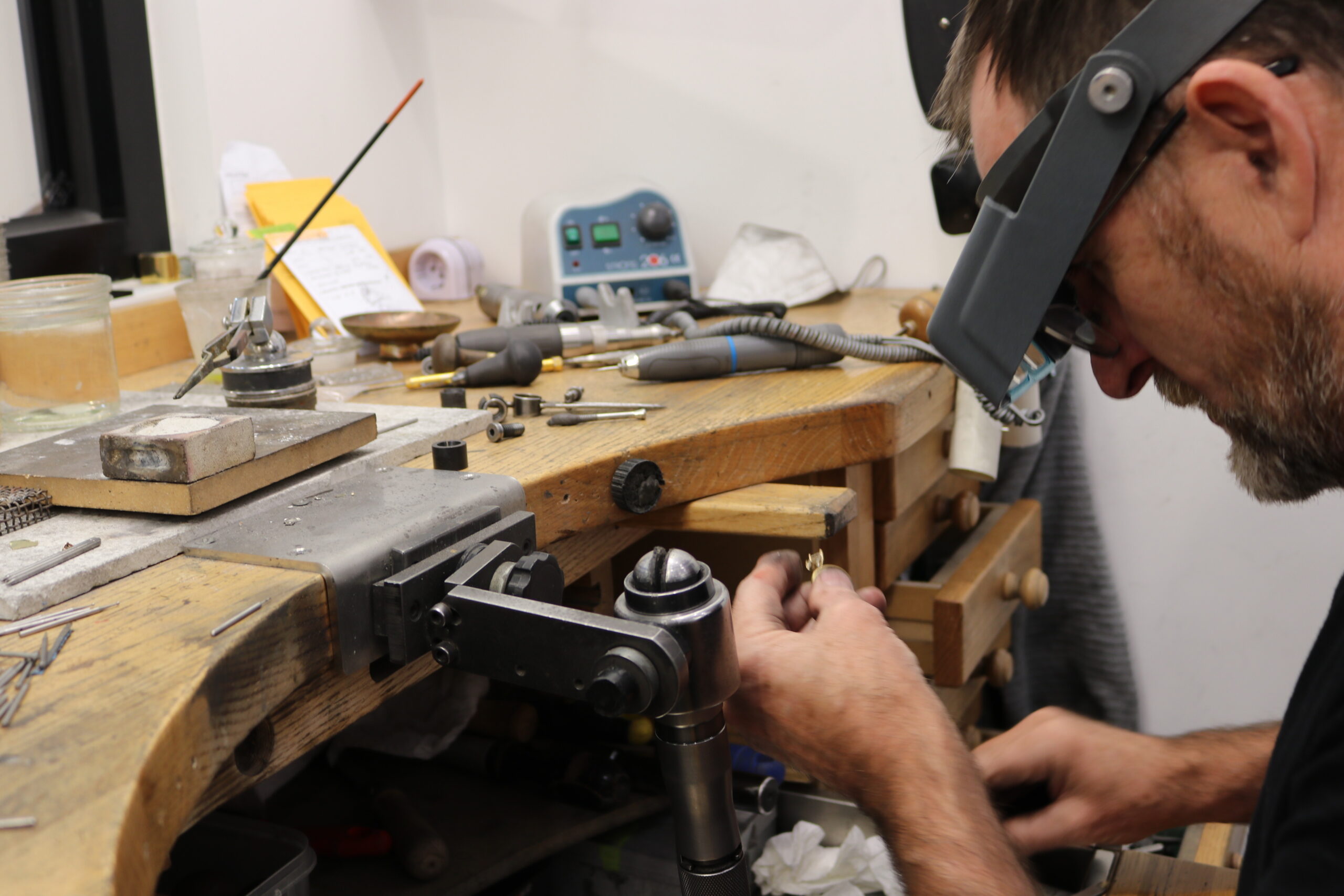
At ADC, jewellery is designed and manufactured on site in our Melbourne workshop. Customers visiting the showroom can see the workshop where jewellers craft and finish pieces.
This approach provides several advantages.
Complete Quality Control
Because production happens on site, ADC maintains full control over:
- metal quality
- manufacturing standards
- finishing quality
- stone setting precision
Nothing is outsourced to anonymous overseas factories.
Direct Collaboration Between Designer and Jeweller
When jewellery is made in-house, the designer and the jeweller can work together throughout the process.
This allows adjustments to be made during production to ensure:
- correct structural balance
- ideal proportions
- optimal diamond placement
Transparency for Customers
Customers can see the workshop where their jewellery is created. This level of transparency is rare in the jewellery industry, where many retailers simply sell products manufactured elsewhere.
At Australian Diamond Company , the ring is not just sold locally. It is crafted locally.
How Mass-Produced Jewellery Is Typically Made
Many jewellery retailers operate differently.
The majority of engagement rings sold globally are produced through large overseas manufacturing facilities.
The process usually follows this structure:
- A ring is designed using CAD software.
- A wax model is 3D printed.
- Multiple wax models are placed into a mould.
- Molten metal is poured into the mould to cast many rings simultaneously.
- Rings are polished and shipped internationally to retailers.
This allows companies to produce large volumes of identical rings quickly and cheaply.
However, the focus of this system is efficiency and cost control, not craftsmanship.
By contrast, Australian Diamond Company builds each piece through a more controlled, workshop-driven process, where individual jewellers refine and finish each ring.
Minimum Metal Thickness: The Structural Foundation of a Ring
One of the most important differences between Australian Diamond Company rings and mass-produced rings is metal thickness.
An engagement ring is exposed to constant stress from:
- gripping objects
- accidental knocks
- everyday hand movement
If the metal structure is too thin, the ring may bend or distort.
Structural Standards at Australian Diamond Company
ADC rings are designed with durability in mind. This includes careful consideration of:
- minimum band width
- adequate metal thickness
- reinforced structural areas
These structural decisions help ensure the ring retains its shape for decades.
Cost-Driven Thickness in Mass Production
Large-scale manufacturers often reduce metal thickness because gold and platinum are expensive materials.
Even a small reduction in thickness can significantly lower manufacturing costs when thousands of rings are produced.
The result can be rings that:
- bend more easily
- lose shape over time
- require structural repairs years later
At Australian Diamond Company , rings are engineered to prioritise longevity rather than minimal metal weight.

Alloy Quality: Why Not All Gold Is the Same
Another significant difference between ADC jewellery and factory-made jewellery is the composition of the metal alloys used.
Pure gold is soft, so it must be mixed with other metals to create a durable alloy.
For example:
MetalGold Content : 18k Gold = 75% gold |14k Gold = 58.5% gold
The remaining metals influence:
- hardness
- durability
- colour
- long-term wear resistance
Alloy Choices in Mass Production
Large factories often prioritise alloys that:
- cast easily
- cool quickly
- reduce manufacturing costs
These alloys may include higher levels of metals such as copper or nickel.
Lower quality alloy formulations can result in:
- softer metal
- faster surface wear
- potential discolouration
Alloy Standards at Australian Diamond Company
At Australian Diamond Company, alloy quality is selected to maximise durability and stability.
This ensures:
- stronger metal structure
- better polish retention
- improved long-term performance
These differences are often invisible initially but become noticeable after years of wear.
Metal Density: Cast Jewellery vs Hand-Worked Jewellery
The manufacturing method also affects metal density and strength.
Cast Metal in Mass-Produced Jewellery
When jewellery is cast in moulds, molten metal cools rapidly. This process can produce:
- microscopic air pockets
- irregular grain structure
- lower density metal
These small defects are known as porosity.
Porosity can weaken the metal and make it more susceptible to long-term wear.
Hand-Worked Metal at Australian Diamond Company
Jewellers at Australian Diamond Company use techniques that involve shaping and refining metal through manual processes such as:
- rolling
- forging
- shaping
These processes compress the metal structure, increasing density and strength.
The result is jewellery with greater structural integrity and durability.
Hand Setting Diamonds vs Factory Settings
Another important difference between ADC rings and mass-produced jewellery is how diamonds are set.
Stone Setting in Factory Jewellery
Mass-produced jewellery often uses settings designed for speed.
This can include:
- shallow stone seats
- minimal metal around diamonds
- rapid setting processes
While efficient, this can increase the likelihood of diamonds loosening over time.
Hand Setting at Australian Diamond Company
At Australian Diamond Company, diamonds are individually hand set by experienced jewellers.
Each diamond seat is carefully cut for the specific stone.
The diamond is then secured by shaping metal over the stone with precision tools.
This ensures:
- accurate diamond fit
- strong metal support
- maximum long-term security
Hand setting is one of the reasons ADC rings maintain their integrity for decades.
Hand Finishing: The Final Step in Craftsmanship
Another defining difference between Australian Diamond Company jewellery and factory jewellery is the finishing process.
Factory Finishing
Mass-produced jewellery typically receives:
- quick machine polishing
- minimal manual inspection
- limited refinement of edges and surfaces
This can result in less refined details.
Hand Finishing at Australian Diamond Company
Jewellers at ADC spend significant time refining each piece by hand.
This includes:
- shaping prongs precisely
- smoothing internal edges for comfort
- refining symmetry and polish
Hand finishing produces jewellery that looks more refined and feels better to wear.
Common Issues with Mass-Produced Rings
Customers who purchase factory-made jewellery sometimes experience issues years later.
These can include:
Bent Bands
Thin metal can distort under daily wear.
Loose Diamonds
Lightweight settings may lose their grip over time.
Faster Metal Wear
Lower density metal may wear down more quickly.
More Complex Repairs
Thin metal structures may require rebuilding rather than simple repairs.
At Australian Diamond Company, rings are engineered to minimise these risks from the start.
Why Local Craftsmanship Matters
Producing jewellery locally provides advantages that mass production cannot easily replicate.
At Australian Diamond Company, local manufacturing means:
- closer quality supervision
- better craftsmanship control
- the ability to customise each design
- transparency for customers
Customers can see the workshop where their jewellery is created, reinforcing the authenticity and craftsmanship behind each piece.
This level of transparency is rarely possible with jewellery manufactured overseas.
Final Thoughts
Many engagement rings appear similar when viewed in a display case. However, the differences in construction and manufacturing methods can be substantial.
The key distinctions between Australian Diamond Company rings and mass-produced jewellery include:
- locally crafted jewellery produced in the ADC workshop
- stronger structural design and metal thickness
- higher quality alloy compositions
- hand-set diamonds
- meticulous hand finishing
These factors contribute to jewellery designed not just for appearance, but for long-term durability and lifetime wear.
At Australian Diamond Company, every ring reflects a philosophy that values craftsmanship, engineering, and transparency.
Because when a ring is meant to last a lifetime, how and where it is made truly matters.
Q&A
Question: Why does where and how a ring is made matter? Short answer: Two rings can look alike but be very different beneath the surface. When jewellery is crafted locally at Australian Diamond Company (ADC), the team controls every stage—design, material selection, manufacturing, stone setting, and finishing. This results in better structural engineering, tighter quality standards, and real transparency (you can see the workshop). In contrast, many mass-produced rings prioritise speed and cost, which can compromise durability and long-term performance.
Question: How is ADC’s production different from mass-produced jewellery, and what does that mean for strength? Short answer: Mass-produced rings are typically designed in CAD, 3D-printed in wax, and cast in large batches overseas—an efficient, cost-focused system. Casting at scale can introduce porosity (tiny air pockets) and irregular grain structures that lower metal density and weaken the piece over time. ADC builds each piece in a workshop setting where jewellers roll, forge, and shape metal by hand, compressing its structure for higher density and greater durability. Individual refinement at every step prioritises craftsmanship over volume.
Question: Why is metal thickness such a big deal in ring durability? Short answer: Engagement rings endure daily stress from gripping, knocks, and routine hand movement. If critical areas are too thin, the band can bend, lose shape, or require structural repairs. Large factories often reduce thickness to save on gold or platinum across thousands of units. ADC engineers rings with minimum band widths, adequate thickness, and reinforced areas so the ring maintains its form and strength for decades.
Question: What does “alloy quality” mean, and how do choices differ between ADC and mass production? Short answer: Pure gold is soft, so it’s mixed with other metals to create a durable alloy—18k gold is 75% gold, while 14k is 58.5% gold. The remaining metals determine hardness, colour, and wear resistance. Mass production often favours alloys that cast easily and cheaply (sometimes with higher copper or nickel), which can lead to softer metal, faster wear, and potential discolouration. ADC selects alloys for durability and stability, delivering stronger structure, better polish retention, and superior long-term performance.
Question: How do ADC’s stone setting and finishing practices improve longevity? Short answer: Factory settings are often designed for speed—shallow seats and minimal metal can allow stones to loosen over time. At ADC, each diamond is hand set: the seat is cut for the exact stone, and the surrounding metal is shaped precisely for a secure fit. Hand finishing further refines prongs, smooths internal edges for comfort, and perfects symmetry and polish. Together, these practices enhance diamond security, wearing comfort, and the ring’s long-term integrity—helping prevent issues like loose stones, bent bands, and accelerated wear.


