
Brilliant Round Cut Diamonds: Your Definitive Guide to Selection and Understanding
Brilliant round cut diamonds are the epitome of precision craftsmanship, meticulously engineered to maximise light return and deliver unparalleled sparkle in every piece of jewellery. Whether you’re exploring engagement ring settings or admiring ADC’s 3 ct Total Tennis Bracelet, grasping the essence of what makes a round brilliant diamond so special is crucial for selecting the perfect stone that aligns with your style and budget. If you want to understand how the perfect diamond is chosen, our diamond buying guide provides a clear overview of the key qualities to look for before comparing individual stones. This comprehensive guide will illuminate how a round brilliant cut is defined, how the renowned 4 Cs influence its quality, the significance of certification, the captivating Hearts and Arrows phenomenon, how to choose your ideal engagement ring style, the distinctions between natural and lab-grown diamonds, and essential care techniques to maintain your jewellery’s enduring brilliance. By the end, you’ll possess the confidence to navigate shape choices, grading reports, setting options, and maintenance practices, ensuring your investment in a round brilliant diamond offers lasting beauty and value.
What Defines Brilliant Round Cut Diamonds and Their Enduring Popularity?
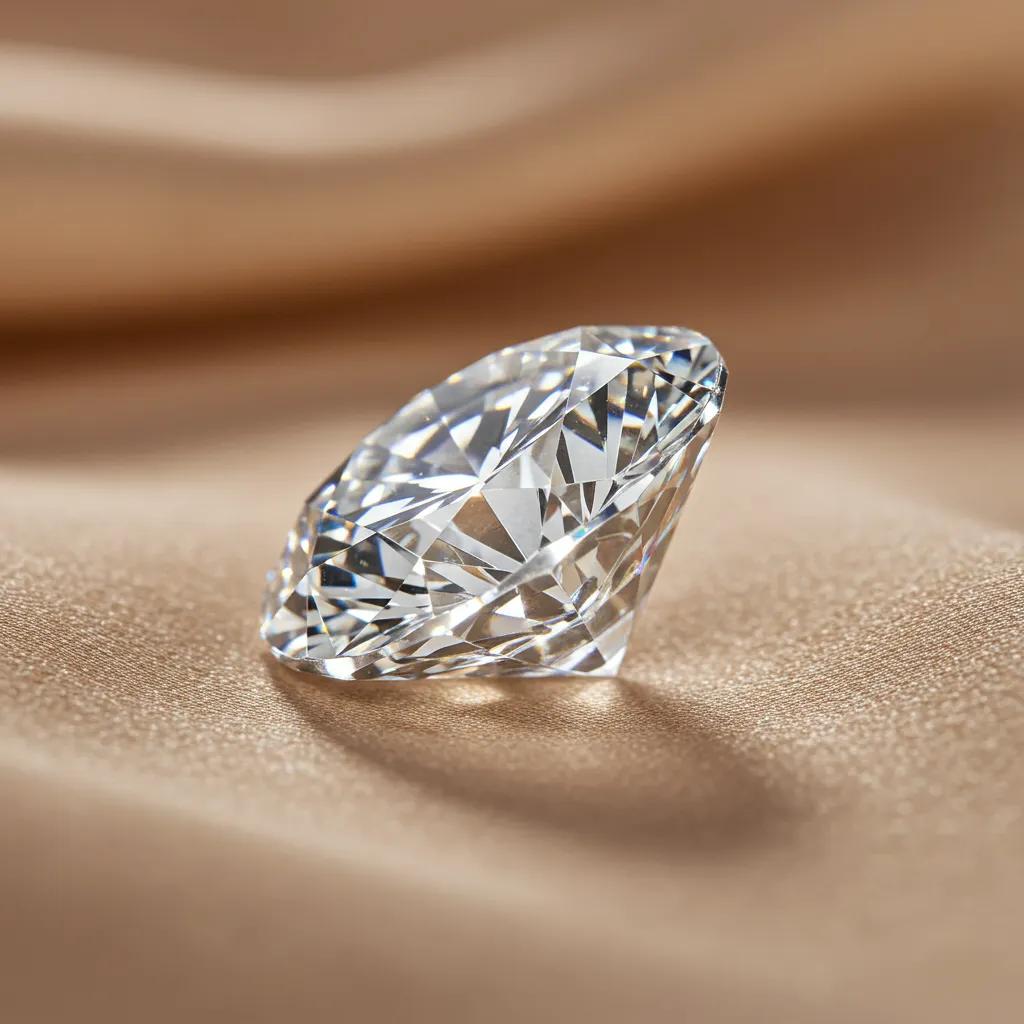
A round brilliant cut diamond is a gemstone expertly shaped into a near-perfect circle and precisely faceted to optimise brilliance, fire, and scintillation. Conceived in the early 20th century, its signature 57 or 58 facets are calibrated to capture and reflect light through the crown, resulting in exceptional sparkle. Its widespread popularity is attributed to its universal appeal, seamless compatibility with any setting style, and superior light performance that enhances both solitaire rings and elegant tennis bracelets. As the most favoured diamond shape among consumers, round brilliant diamonds constitute approximately 75 percent of all diamonds sold, making them the premier choice for engagement jewellery in Australia. Beyond their aesthetic allure, the well-established grading criteria and extensive availability of round brilliant diamonds facilitate confident purchasing decisions, allowing you to compare stones based on cut, colour, clarity, and carat weight with ease and assurance.
What Characterises a Round Brilliant Cut Diamond?
A round brilliant cut diamond is distinguished by its precise facet arrangement, typically 57 facets if the culet is pointed or 58 if a culet facet is present, and its carefully engineered proportions. Each facet plays a vital role in refracting and reflecting light: the table and crown facets allow light to enter and disperse, the pavilion facets redirect light back towards the observer, and the girdle provides structural integrity. This symmetrical configuration optimises brilliance and fire by harmonising light return with dispersion. The meticulous precision in angles and ratios ensures that a round brilliant diamond exhibits maximum sparkle, establishing it as the benchmark for cut quality across all gemological laboratories.
Foundations for Grading the Quality ofRound BrilliantCut DiamondsOur interviews also confirmed that, in addition to brightness, fire, and scintillation…A foundation for grading the overall cut quality of round brilliant cut diamonds, Unknown Author, 2004
Why Is the Round Brilliant Cut the Most Coveted Diamond Shape?
The preeminence of the round brilliant cut is rooted in its unparalleled light performance, timeless aesthetic, and versatile compatibility with all ring and bracelet designs. Its symmetrical outline and meticulously planned facet pattern deliver superior brilliance compared to other shapes, creating an immediate and captivating visual impact. Consumers highly value its enduring popularity, recognising that a round brilliant shape consistently holds its resale value and market recognition. Its clean lines complement classic solitaire rings as well as contemporary halo and three-stone settings, while pieces like a total tennis bracelet showcase countless round brilliants in fluid, graceful motion. This fusion of visual spectacle and design adaptability solidifies the round brilliant as the definitive cut for significant jewellery pieces.
How Does the Anatomy of a Round Brilliant Diamond Influence Its Sparkle?
The intricate anatomy of a round brilliant diamond, comprising the table, crown, girdle, pavilion, and culet, directly dictates how light behaves within the stone and, consequently, its sparkle. The table facet’s width governs the amount of light that enters, while the angles of the crown and pavilion meticulously control light refraction and its return path. A well-proportioned crown directs light into the pavilion, where precise pavilion angles then channel this light back up through the crown facets. The girdle’s thickness contributes to durability without hindering light flow, and the culet facet, if present, prevents light from escaping through the bottom. Collectively, these elements create an optimal light pathway that maximises brilliance, fire, and scintillation, resulting in a diamond that appears vibrantly alive with sparkle from every perspective.
How Do the 4 Cs Shape the Quality of Round Brilliant Diamonds?
The appearance and value of every round brilliant diamond are fundamentally determined by the 4 Cs (Cut, Colour, Clarity, and Carat Weight) which serve as the universal standards for grading. Cut dictates the diamond’s light performance and overall brilliance; colour assesses its inherent hue or lack thereof; clarity measures the presence of internal inclusions and surface blemishes; and carat weight influences its perceived size and price. By carefully evaluating each “C” in balance, buyers can identify stones that offer optimal sparkle, minimal colour tint, eye-clean clarity, and the desired size within their budget. Understanding the interplay of these criteria ensures you select a round brilliant diamond that perfectly aligns with both your aesthetic aspirations and financial parameters.
What Constitutes Diamond Cut Quality and How Does It Affect Brilliance?
Diamond cut quality refers to the precision of facet angles, symmetry, and polish that collectively govern how light travels within the stone. A higher cut grade signifies proportions that are very close to the “ideal” range, maximising the reflection of light back to the observer’s eye rather than allowing it to escape through the bottom or sides. Diamonds with Excellent or Ideal cuts exhibit the greatest brilliance and fire, whereas lower grades sacrifice sparkle to achieve a larger visible size. Gemological laboratories assess cut quality using sophisticated light performance models and precise proportion measurements, empowering buyers to compare stones based on objective brilliance metrics.
Modelling the Appearance and Brilliance ofRound BrilliantCut Diamonds… was considered to be the brilliance of a polished round brilliant diamond. (Tolkowsky did … existing cut grading systems are based on Tolkowsky’s research. We believe that diamond cut, …Modeling the appearance of the round brilliant cut diamond: An analysis of brilliance, Unknown Author, 1998
What Are the Ideal Proportions for a Round Brilliant Diamond?
Below is a comparison of industry-recommended proportions for an ideal round brilliant diamond, which are essential for achieving optimal light performance and sparkle.
How Does Diamond Colour Influence the Appearance of Round Brilliant Diamonds?
Diamond colour grading spans from D (completely colourless) to Z (possessing a noticeable light yellow or brown tint). Colourless grades (D–F) display no discernible hue, allowing for pure light reflection, while near-colourless grades (G–J) offer an excellent balance of value and visual appeal, typically appearing white in most settings. Beyond grade J, faint tints become more apparent, particularly when set in white metals. Harmonising the colour grade with the setting metal, such as H–I in platinum or G–H in yellow gold, can effectively mask slight tints and maintain a bright, dazzling appearance. Selecting the appropriate colour grade is pivotal in influencing the perceived purity and brilliance of a round brilliant diamond.
What Clarity Grades Should You Consider for a Round Brilliant Diamond?
Clarity assesses the presence of internal inclusions and surface blemishes that might affect light passage. Grades range from Flawless (meaning no inclusions are visible under 10× magnification) down to Included (I1–I3). For many round brilliant diamonds, VS1–SI1 grades offer an eye-clean appearance, where no inclusions are visible to the naked eye without magnification, while providing better value than Flawless or VVS grades. Buyers seeking premium clarity may choose VVS2 or VS1 to minimise even microscopic flaws, but for the majority of wearers, an eye-clean SI1 or SI2 provides exceptional sparkle at a more accessible price point.
How Does Carat Weight Relate to Size and Value in Round Brilliant Diamonds?
Carat weight is a measure of a diamond’s mass, with 1 carat equivalent to 0.2 grams. However, the perceived size of a diamond is also influenced by its spread and proportions. A well-cut diamond with ideal proportions will appear larger face-up than a heavier stone with less efficient cut grading. Carat weight significantly increases a diamond’s price, with higher-weight stones commanding substantial premiums. For instance, a 1.0 ct round brilliant often costs less per carat than a 2.0 ct stone of identical quality. Balancing carat weight with cut, colour, and clarity allows buyers to maximise visual impact without disproportionately impacting their budget.
Why Is Certification Essential for Brilliant Round Cut Diamonds?
Certification provides an independent, detailed report on a diamond’s 4 Cs and other critical attributes, guaranteeing its authenticity and quality. Certified diamonds are meticulously graded by expert gemologists adhering to strict, standardised protocols, offering transparent information regarding cut grade, colour, clarity, carat weight, proportions, polish, and fluorescence. This objective verification empowers confident comparison of stones from various vendors and safeguards buyers against misrepresentation. For round brilliant diamonds, certification from reputable laboratories is fundamental to establishing trust and ensuring value retention, particularly for significant jewellery investments.
What Are the Most Reputable Diamond Certification Laboratories for Round Brilliant Diamonds?
- Gemological Institute of America (GIA): Esteemed for its consistent grading standards and unparalleled global recognition.
- American Gem Society (AGS): Celebrated for its rigorous cut grading methodology, employing a numerical scale that prioritises light performance.
- International Gemological Institute (IGI): Provides comprehensive reports and services for both natural and lab-grown diamonds.
How Do Certification Reports Help You Verify Diamond Quality?
Certification reports meticulously document every crucial diamond attribute, including cut proportions, colour grade, clarity characteristics, fluorescence, polish, and symmetry. Detailed diagrams precisely map the location of inclusions, while numerical grades and descriptive comments explain any unique features. Buyers rely on these reports to confirm that a diamond precisely matches its advertised specifications and to facilitate an equitable comparison between multiple stones. These reports also serve as official documentation for insurance purposes and potential resale, reinforcing the diamond’s authenticity and assured quality.
GIA’s Symmetry Grading Thresholds forRound BrilliantCut Diamonds… grading symmetry for round brilliant cut diamonds. Facet-related symmetry characteristics, and the manner in which multiple characteristics combine, may also affect the symmetry grade, …Gia’s Symmetry Grading Boundaries For Round Brilliant Cut Diamonds., Unknown Author, 2011
What Should You Look For in a GIA Certified Round Diamond?
A GIA report for a round brilliant diamond will detail:
- Cut Grade: Aim for Excellent or Very Good for optimal brilliance and sparkle.
- Table & Depth Percentages: Ensure they fall within ideal ranges (typically 54–59 percent table; 59–62.6 percent depth).
- Colour Grade: D–J, selected based on your budget and the chosen setting metal.
- Clarity Grade: VS1–SI1 for a reliably eye-clean appearance.
- Polish & Symmetry: Look for Excellent or Very Good to confirm precise facet alignment.
- Fluorescence: None to faint is generally preferred to avoid any potential haziness.
Verifying these specific attributes confirms the diamond’s performance and inherent value, guiding you towards a secure and satisfying purchase.
What Is the Hearts and Arrows Phenomenon in Round Brilliant Diamonds?
The Hearts and Arrows phenomenon is a distinctive optical symmetry pattern that becomes visible when viewed through specialised viewers. It reveals eight perfectly symmetrical hearts when observed from the pavilion side and eight sharp arrows when viewed from the crown. This pattern is a direct indicator of exceptional cutting precision, where all facets are aligned within extremely tight tolerances. Diamonds exhibiting the Hearts and Arrows effect deliver superior light return and a unique, uniform visual pattern, reflecting the highest level of craftsmanship. Collectors and connoisseurs highly prize these stones for their striking visual appeal and the inherent guarantee of ideal cutting standards.
What Does the Hearts and Arrows Pattern Signify for Diamond Quality?
A clearly discernible Hearts and Arrows pattern is a strong indication that the facet angles, facet alignment, and girdle symmetry conform to the most stringent “ideal cut” proportions. This precise geometric arrangement maximises light reflection and minimises light leakage, resulting in uniform flash patterns and vivid scintillation. Diamonds displaying this phenomenon are consistently graded with top cut ratings and often command premium prices due to the advanced skill and meticulous attention required for their creation.
How Can You Identify a Hearts and Arrows Diamond?
Identifying a Hearts and Arrows diamond requires a specialised Hearts and Arrows viewer, a tool that combines a light source with filters to clearly reveal the optical symmetry. When viewed under this tool, a perfectly cut diamond will display:
- Crown View: Eight distinct arrow shapes radiating outwards from the centre.
- Pavilion View: Eight perfectly formed heart shapes arranged around the culet area.
- Uniform Brightness: Consistent contrast between light and dark areas within each symbol.
Why Are Hearts and Arrows Diamonds Rare and Highly Valued?
The creation of a Hearts and Arrows pattern demands exceptional skill and the use of high-precision cutting equipment, which inevitably leads to greater rough wastage and significantly extended labour times. Consequently, fewer than 1 percent of all round brilliant diamonds achieve this remarkable level of optical symmetry. Their inherent rarity, coupled with the guaranteed ideal light performance they offer, justifies their higher market value. Connoisseurs seeking the ultimate in diamond brilliance and pattern precision often prioritise Hearts and Arrows diamonds as the definitive benchmark of cutting excellence.
How Do You Select the Perfect Round Brilliant Engagement Ring Style?
Choosing an engagement ring style is a personal journey that involves harmonising your individual taste, lifestyle, and desired light performance. Round brilliant diamonds are exceptionally versatile and look stunning in a wide array of settings, from the understated elegance of classic solitaires to the intricate beauty of halo and pavé designs, each influencing the ring’s sparkle, silhouette, and durability. Understanding how different settings interact with light and provide protection for the diamond will help you select a style that not only accentuates its brilliance but also suits your daily life. Balancing aesthetic preferences with practical considerations ensures your ring remains both breathtaking and enduring.
f you want to see how different settings affect the sparkle and overall look of round diamonds, our guide on best engagement ring settings for round diamonds explains how to highlight brilliance, protect the stone, and complement your style.
What Are the Most Popular Round Brilliant Engagement Ring Settings?
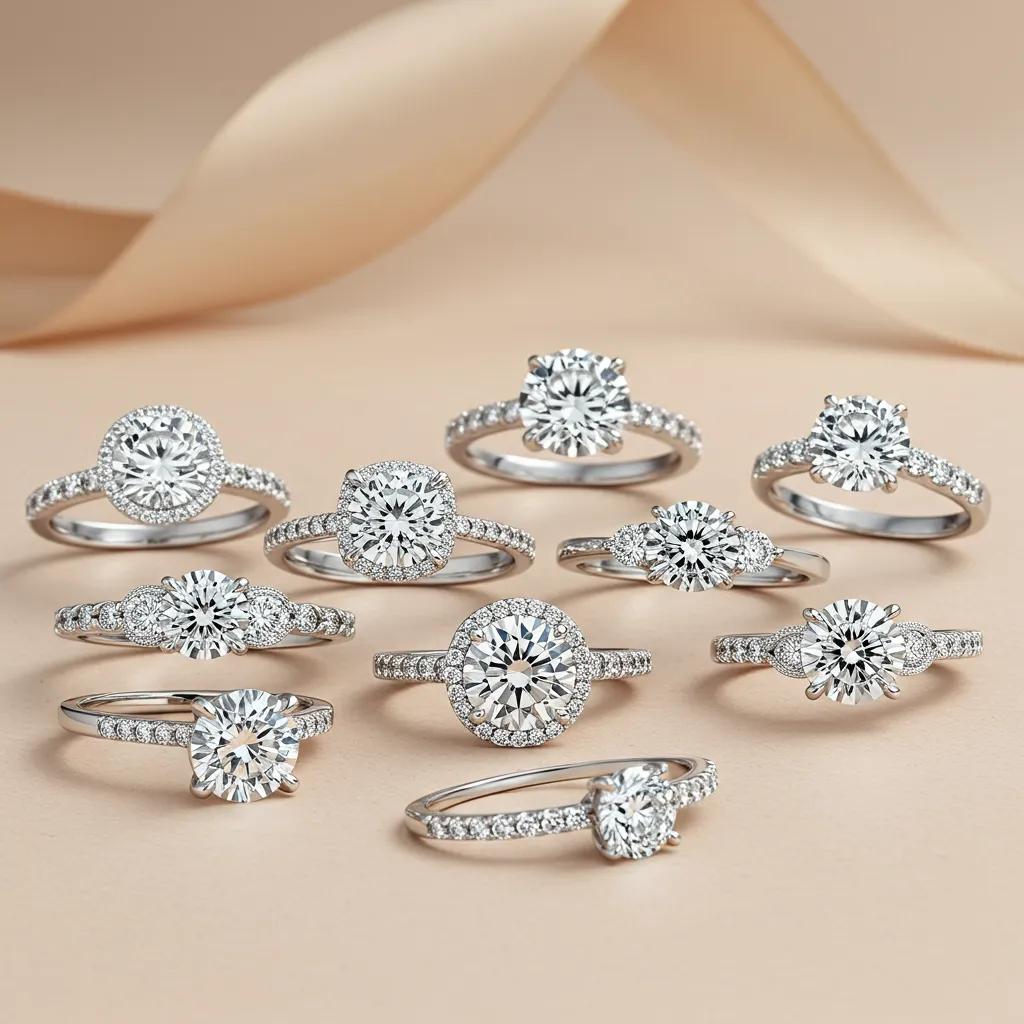
- Solitaire: Features a single, prominent diamond set on a plain or subtly tapered band for timeless sophistication.
- Halo: A central diamond encircled by a halo of smaller stones, amplifying its perceived size and sparkle.
- Three-Stone: Showcases three round brilliant diamonds, often symbolising past, present, and future.
- Pavé: Characterised by a band densely encrusted with micro-diamonds, creating a continuous, shimmering surface.
How Do Different Settings Enhance the Brilliance of Round Cut Diamonds?
Settings significantly influence how light interacts with a diamond through the strategic placement of metal, the inclusion of accent stones, and the overall structural design:
- Solitaire: Allows unobstructed access for light to enter the crown facets, maximising brilliance.
- Halo: The surrounding smaller stones reflect additional light towards the central diamond, enhancing its fire and sparkle.
- Three-Stone: The side diamonds act like mirrors, contributing to the overall intensity of the ring’s fire.
- Pavé: The multitude of small diamonds creates a dazzling bed of light that beautifully complements the main stone.
What Factors Should You Consider When Selecting a Setting for Your Round Brilliant Diamond?
When making your setting selection, carefully evaluate these key aspects:
- Durability: Opt for lower profiles and protective prong settings if you lead an active lifestyle.
- Style Preferences: Choose a design that aligns with your personal aesthetic, whether classic or contemporary.
- Metal Type: White gold or platinum can enhance a diamond’s brightness; yellow gold can beautifully complement near-colourless stones.
- Maintenance Needs: Intricate designs may require more frequent cleaning and professional inspections.
Thoughtfully balancing these factors with your sparkle aspirations will lead to a ring that is both dazzling and built to last.
What Are the Differences Between Natural and Lab-Grown Round Brilliant Diamonds?
Natural diamonds are formed over billions of years deep within the Earth’s mantle under immense pressure and heat. In contrast, lab-grown diamonds are created by replicating these precise conditions in a controlled laboratory environment, typically within a matter of weeks. Both types share identical chemical compositions and crystal structures, but their origins influence their price, availability, and ethical considerations. Understanding these distinctions empowers buyers to make an informed choice between the rarity of natural diamonds and the affordability of lab-grown options, without compromising on brilliance or durability.
How Do Lab-Grown Round Brilliant Diamonds Compare in Quality and Price?
Lab-grown round brilliant diamonds possess the same optical and physical properties as their natural counterparts and are often graded by the same reputable laboratories. They typically cost 20 – 40 percent less than natural diamonds, allowing for the selection of larger sizes or higher clarity grades within the same budget. Advances in growth technology have minimised variations in colour and clarity, making lab-grown diamonds an appealing and cost-effective alternative for budget-conscious buyers who prioritise exceptional sparkle and size.
What Certifications Apply to Lab-Grown Diamonds?
Leading gemological institutes, including IGI and GIA, issue dedicated lab-grown diamond reports that clearly specify the diamond’s origin, growth method, and 4 Cs. These certificates serve to distinguish lab-grown stones from natural ones, ensuring complete transparency. Certification guarantees buyers adherence to consistent grading standards and prevents any potential misrepresentation, thereby supporting informed purchasing decisions.
How Does Ethical Sourcing Influence Your Choice Between Natural and Lab-Grown Diamonds?
Concerns regarding ethical sourcing, such as the assurance of conflict-free supply chains and a reduced environmental footprint, play a significant role in diamond purchasing decisions. Lab-grown diamonds offer a guaranteed absence of conflict involvement and generally require fewer resources to produce. Natural diamonds, when sourced under the Kimberley Process, provide regulated assurances of being conflict-free. Buyers prioritising maximum ethical transparency may lean towards lab-grown options, while those who value geological rarity might prefer natural stones accompanied by certified responsible sourcing documentation.
How Should You Care for and Maintain Your Brilliant Round Cut Diamond Jewellery?
Proper care is essential for preserving the brilliance and pristine condition of your brilliant round cut diamond jewellery, ensuring it continues to sparkle for generations. Regular cleaning, secure storage, and periodic professional inspections are key to addressing common issues such as accumulated dirt, loose settings, and accidental damage. By adhering to straightforward maintenance practices, your diamond jewellery will retain its radiance and structural integrity through everyday wear and special occasions alike.
What Are the Best Practices for Cleaning Round Brilliant Diamond Jewellery?
To safely and effectively clean your diamond pieces:
- Submerge your jewellery in a solution of warm water and mild dish soap for approximately 20 minutes.
- Gently use a soft-bristled brush to clean the facets and settings.
- Rinse thoroughly under warm running water and carefully pat dry with a lint-free cloth.
While ultrasonic cleaners can be suitable for durable jewellery, they should be avoided for delicate or treated stones. Consistent home cleaning will restore your jewellery’s brilliance and prepare it for occasional professional servicing.
How Can You Protect Your Diamond from Damage and Loss?
Safeguard your diamond jewellery by implementing these protective measures:
- Store each piece individually in a soft pouch or lined box to prevent scratching against other items.
- Avoid exposing your jewellery to harsh chemicals, cleaning agents, and abrasive surfaces.
- Remove rings before engaging in strenuous activities, sports, or demanding household chores.
- Secure insurance for high-value pieces through a specialised jewellery insurance policy.
These precautions significantly minimise the risk of chipping, loosening of stones, or complete loss, thereby protecting your valuable investment and providing invaluable peace of mind.
When Should You Have Your Diamond Professionally Inspected or Serviced?
Professional inspections every 6 to 12 months are crucial to ensure that prongs, settings, and mounts remain secure and to detect any potential damage early. A qualified jeweller will meticulously check for loose stones, worn prongs, metal fatigue, and other issues, performing necessary adjustments or repairs. This proactive servicing approach is vital for preventing potential loss and for maintaining both the exquisite beauty and the structural integrity of your diamond jewellery.
Brilliant round cut diamonds masterfully blend timeless elegance with scientific precision to deliver extraordinary brilliance and captivating fire. By thoroughly understanding the 4 Cs, appreciating the importance of certification, recognising the distinctive Hearts and Arrows pattern, selecting the ideal setting, weighing the merits of natural versus lab-grown origins, and adopting diligent care routines, you can ensure your diamond investment sparkles brilliantly for a lifetime. Whether adorning an engagement ring or enhancing a tennis bracelet, a thoughtfully chosen round brilliant diamond beautifully reflects both personal style and enduring value. To guide your selection further, visit our diamond quality guide for expert insights into cut, clarity, colour, and carat.


