
Marquise Cut Diamond Rings: Styles & Care - Australian Diamond Company
Discover the Marquise Cut Diamond
Picture a ring that instantly elongates your finger and appears grander than its actual weight: this is the captivating allure of a marquise cut diamond ring. Selecting such a significant piece can feel overwhelming, from assessing the cut’s brilliance to choosing the perfect protective setting. This guide offers expert insights into the marquise cut’s regal origins, signature settings, essential buying criteria, care routines, emerging trends in Australia, the distinct advantages of ADC Australia’s craftsmanship, and answers to your most pressing questions. You’ll gain mastery over its history, settings, the 4Cs, maintenance, customisation possibilities, and the unique value ADC brings to these dramatic marquise diamonds.
What Defines a Marquise Cut Diamond? Its History, Shape, and Distinctive Traits
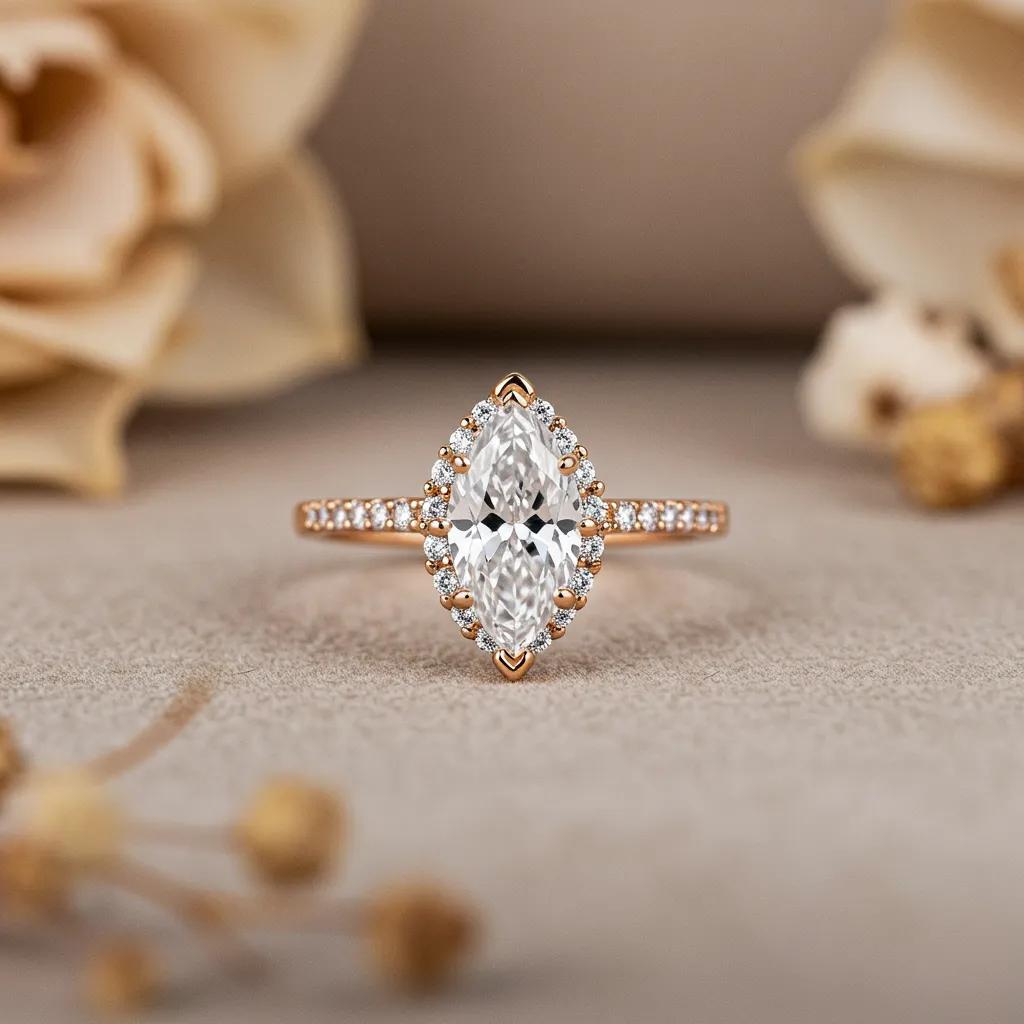
A marquise cut diamond is an elegantly elongated, navette-shaped gemstone with symmetrical pointed ends, typically featuring 56 to 58 facets meticulously arranged to maximise fire and scintillation. This design artfully creates the illusion of up to 20 percent more surface area compared to a round cut of the same carat weight, amplifying its visual drama and flattering finger length.
Originating in 18th-century France, this distinctive cut boasts a royal heritage and enduring appeal, seamlessly blending technical precision with symbolic elegance. Understanding its unique shape and origins is the first step towards selecting the ideal setting that not only protects its delicate tips but also showcases its unparalleled brilliance.
What makes the marquise cut diamond’s design so elongated and football-shaped?
The marquise cut’s signature silhouette is born from an oval centre that tapers to pointed terminations, reminiscent of a miniature navette or football. Precise symmetry in the length-to-width ratio, commonly ranging from 1.75:1 to 2.15:1, and balanced facet alignment ensure consistent light return across its elongated profile, promoting a steady, captivating sparkle. This design principle is key to accentuating finger length and delivering brilliance from tip to tip.
How did King Louis XV and Marquise de Pompadour shape the marquise diamond’s beginnings?
In the 1740s, King Louis XV commissioned a unique diamond cut specifically designed to capture the elegant curve of his mistress’s smile, the Marquise de Pompadour. This royal endorsement not only gave the “marquise cut” its name but also infused the style with aristocratic symbolism, firmly establishing its reputation as a symbol of refined taste and regal romance.
Marquise-cut Diamond Rings: Historical Context and ProtectionPoisson, Marquise de Pompadour, who set the standard in … wedding rings, protected by keepers, narrow bands set with …Marriage Ring, Unknown Author, 1998
What are the key characteristics: facets, brilliance, and the bow-tie effect?
With 56–58 meticulously placed facets, a marquise cut expertly balances brilliance and fire through strategic light refraction. However, its elongated centre can sometimes exhibit a subtle “bow-tie” shadow if facet angles are not perfectly aligned. Exceptional craftsmanship minimises this effect, ensuring uniform scintillation and maximising the stone’s visual depth.
Marquise Diamond Cut Grading: Bow Tie and Crushed Ice ObservationsOBSERVATIONS OF OVAL-, PEAR-, AND MARQUISE-SHAPED DIAMONDS: IMPLICATIONS FOR FANCY CUT GRADING. … marquise-shaped diamonds often include a bow tie and areas of crushed ice. A: Pear shape RD133 shows a thin bow tie … B: Marquise RD101 displays a medium bow tie and medium to …OBSERVATIONS OF OVAL-, PEAR-, AND MARQUISE-SHAPED DIAMONDS: IMPLICATIONS FOR FANCY CUT GRADING., Unknown Author, 2024
Why is the marquise cut renowned for creating the illusion of a larger diamond?
By extending the diamond’s surface area, the marquise cut distributes its carat weight across a broader plane, making the stone appear larger than round or cushion-cut diamonds of equivalent weight. Its expansive profile maximises the table area and accentuates length, delivering a striking and eye-catching presence on the finger.
Selecting the Ideal Marquise Diamond Ring Settings for Maximum Impact and Protection
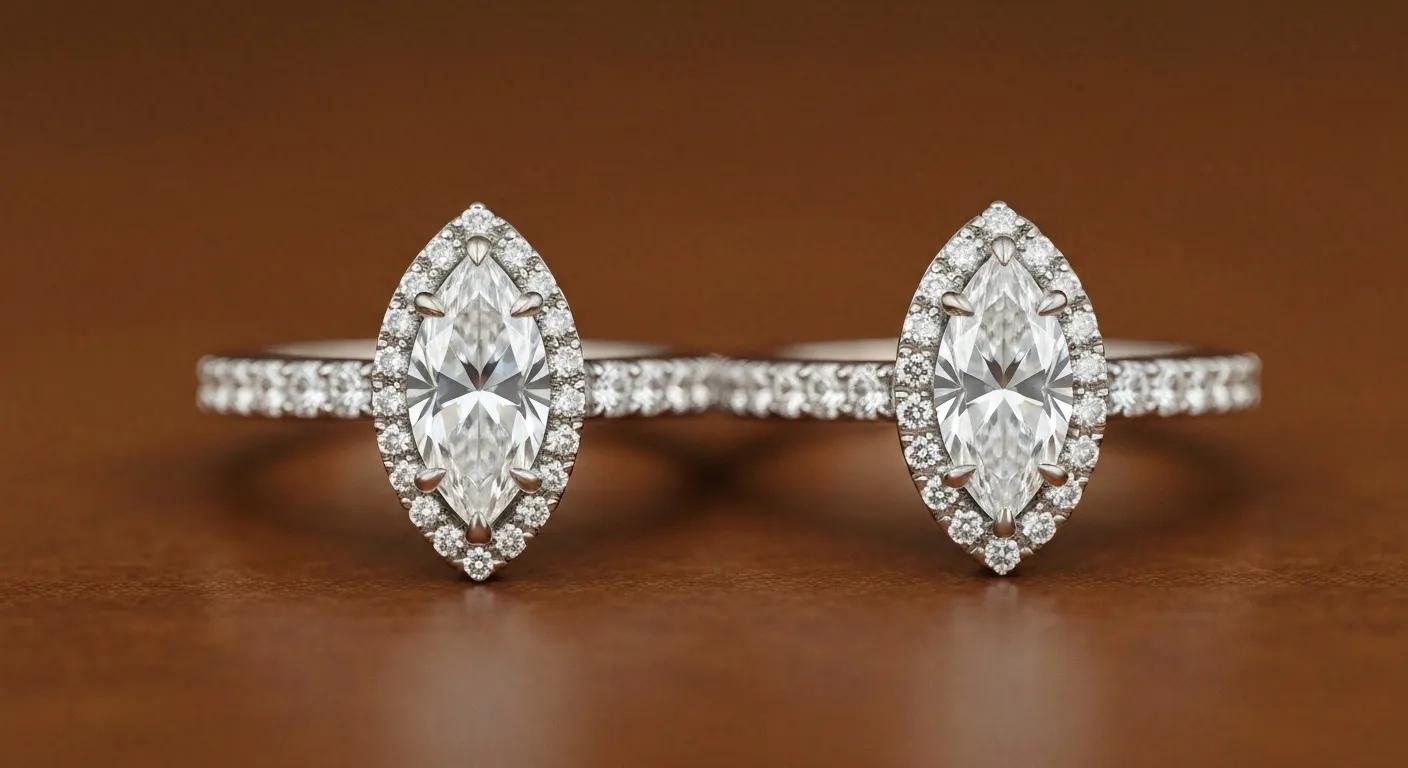
The perfect setting for a marquise cut diamond must not only highlight its elegant, elongated shape but also provide robust protection for its delicate pointed tips. V-prong and bezel settings are particularly adept at securing these vulnerable ends, while solitaire and halo arrangements enhance its brilliance and dramatic flair. Understanding which setting best complements your personal style and offers superior structural integrity will transform your marquise engagement ring from merely beautiful to truly enduring.
What are the most sought-after marquise ring settings: solitaire, halo, and three-stone?
A solitaire setting elegantly showcases the marquise shape with unadorned splendour, drawing all attention to its captivating elongation and sparkle. Halo settings encircle the centre stone with a constellation of smaller diamonds, amplifying its brilliance and creating the perception of a larger overall size. Three-stone designs incorporate complementary side stones, often trapezoid or pear shapes, to frame the marquise, adding depth and symbolic meaning representing past, present, and future.
How do V-prong and bezel settings safeguard the pointed tips from potential chipping?
V-prongs ingeniously cradle each point within a protective, V-shaped metal claw, reinforcing the most delicate areas without detracting from the stone’s profile. A full bezel setting encircles the diamond’s entire outline with metal, offering complete tip protection and a sleek, contemporary aesthetic. Both methods significantly reduce the risk of impact damage and contribute to the stone’s long-term preservation.
What is the contemporary allure of east-west marquise diamond settings?
Orienting the marquise diamond horizontally across the band introduces a modern, stylish interpretation of this classic shape. East-west settings emphasise the diamond’s width rather than its length, offering a fresh aesthetic that sits lower on the finger and pairs seamlessly with straight wedding bands for a clean, architectural look.
How do vintage and statement marquise ring designs differ in their aesthetic?
Vintage designs often feature intricate filigree work, delicate millgrain edges, and beautifully engraved bands, evoking a sense of antique charm and romantic intricacy. Statement rings, conversely, amplify drama through oversized halo clusters, bold multi-row pavé settings, or striking mixed-metal contrasts, transforming the marquise into a high-impact centrepiece of pure glamour.
Choosing Your Perfect Marquise Engagement Ring: Mastering the 4Cs, Bow-Tie Effect, and Certification
Selecting a marquise engagement ring involves harmonising the quality of its cut, colour, clarity, and carat weight with its overall visual performance. Carefully assessing the bow-tie effect and ensuring reputable certification are crucial steps in safeguarding both the diamond’s beauty and its authenticity. By mastering these key criteria, you can confidently invest in a dramatic marquise piece that perfectly balances brilliance, value, and enduring durability.
A detailed look at the marquise diamond 4Cs: cut, colour, clarity, and carat weight
- Cut: Prioritise symmetry and precise facet angles to minimise bow-tie shadows and maximise scintillation.
- Colour: G-H grades offer a near-colourless appearance without the premium price tag; D-F grades provide icy brilliance for a more significant investment.
- Clarity: VS1–SI1 grades typically represent the best value, offering visible purity at a cost-effective price point.
- Carat Weight: Select a size that complements your finger proportions and budget, remembering that marquise shapes naturally appear larger per carat than round cuts.
Each of these attributes plays a vital role in the diamond’s light performance, perceived size, and overall value.
How does the bow-tie effect influence a marquise diamond’s appearance and worth?
A prominent bow-tie, a dark, V-shaped shadow across the diamond’s centre, can diminish its sparkle and consequently lower its market value. Expert cutters skillfully adjust facet angles and pavilion depth to soften this optical phenomenon, resulting in an evenly illuminated stone that optimises both brilliance and price.
Why is certification from GIA or IGI indispensable for marquise diamonds?
Independent reports from esteemed institutions like the Gemological Institute of America (GIA) or the International Gemological Institute (IGI) serve as crucial verification of cut proportions, colour grade, clarity assessment, and overall authenticity. Certification significantly reduces the risk of misrepresented attributes and ensures complete transparency in quality evaluation, fostering buyer confidence in this distinctive diamond cut.
Marquise Cut Diamonds: Popularity and ValuationDiamond certificates issued by gemmological laboratories provide accessible quality assurance… within the used database, round brilliants are prevalent, with marquise cuts being the second most popular…A valuation model for cut diamonds, L Chambel, 2005
What length-to-width ratios are ideal for creating dramatic marquise rings?
Length-to-width ratios falling between 1.85:1 and 2.05:1 strike an excellent balance, offering both desirable elongation and ample surface area for a truly dramatic impact. Ratios below 1.75:1 can appear somewhat stubby, while those exceeding 2.15:1 risk an overly slender profile. Opting for a ratio within this optimal range accentuates both the illusion of size and flattering finger lines.
Essential Care and Maintenance for Your Dramatic Marquise Diamond Ring
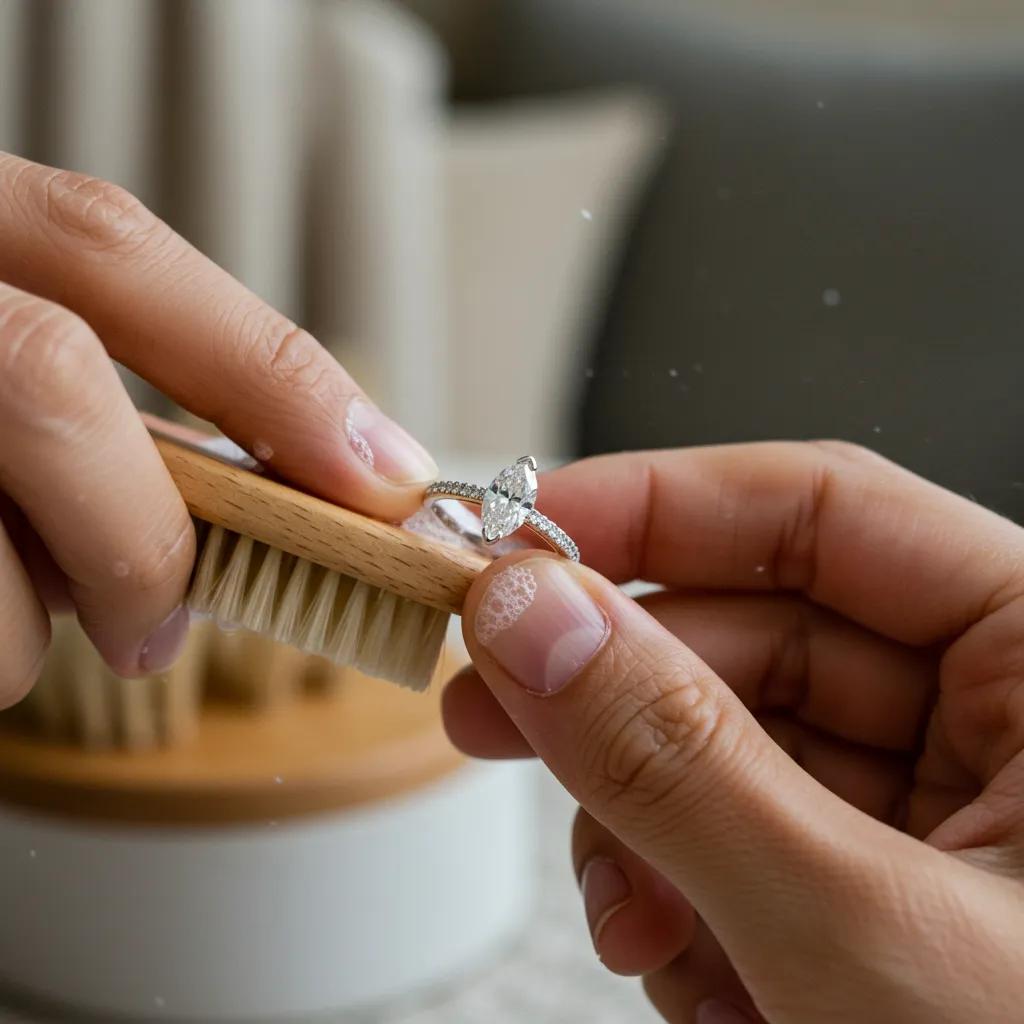
Implementing proper cleaning, storage, and regular inspections is key to ensuring your marquise cut diamond retains its breathtaking brilliance and structural integrity for years to come. Gentle at-home cleaning methods, combined with periodic professional servicing, will safeguard the stone’s sparkle and the security of its prongs, preventing any damage to its distinctive pointed tips.
Follow this simple step-by-step cleaning routine to keep your diamond radiant between professional check-ups.
- Gently immerse your ring in a solution of warm water and mild liquid dish soap for approximately five minutes.
- Using a soft-bristle brush, delicately clean the diamond and its setting, paying close attention to the tips and the area beneath the stone, especially under good lighting.
- Thoroughly rinse the ring under lukewarm running water and carefully pat it dry with a soft, lint-free cloth.
Performing this routine every two weeks helps prevent the buildup of oils and lotions, ensuring your diamond maintains its maximum sparkle.
Store your marquise jewellery in individual soft pouches or lined compartments within a jewellery box to prevent scratches and protect the delicate tips from accidental damage. Regularly inspect the prongs for any signs of loosening and seek professional tightening every six to twelve months to prevent potential chip risks at the stone’s vulnerable ends. Always avoid exposing your ring to harsh chemicals or abrasive surfaces that could compromise the metal or the diamond’s facets.
Being mindful of common mistakes, such as using ultrasonic cleaners on stones with existing chips or simply tossing rings into a cluttered jewellery box, will further help preserve both the diamond’s shine and the stability of its setting.
Discover the Latest Trends and Customisation Options for Marquise Diamond Rings in Australia
As of October 2025, bespoke jewellery designers across Australia are observing a significant surge in demand for personalised marquise designs, ranging from the inclusion of coloured gemstone accents to intricate open-work gallery details. Celebrity style continues to inspire interest in statement configurations, while ethically sourced and lab-grown marquise diamonds are increasingly popular among environmentally conscious couples.
Emerging design preferences include vibrant coloured-halo contrasts, such as rose-gold halos encircling crisp white marquise centres, and stylish mixed-metal bands that beautifully accentuate the diamond’s elongated silhouette.
A comparison between natural and lab-grown marquise diamonds reveals distinct advantages in terms of cost and sourcing transparency, without any compromise on brilliance.
This growing trend towards personalised expression is particularly evident in major cities like Sydney and Melbourne, where ateliers offer bespoke consultations, custom laser engraving services, and exclusive CAD renderings for clients seeking to create a truly one-of-a-kind dramatic marquise masterpiece.
Why Entrust Your Dramatic Marquise Cut Diamond Ring to ADC Australia?
ADC Australia’s unparalleled expertise in high-precision diamond cutting and bespoke design services ensures that every marquise ring we create embodies exceptional drama, enduring durability, and meticulous craftsmanship. Our proprietary selection protocols guarantee that we source only top-grade marquise stones, characterised by minimal bow-tie presence and outstanding brilliance.
Our rigorous quality standards mandate complete disclosure of the 4Cs, independent certification, and high-resolution imagery for every single piece. Coupled with our personalised design consultations, this unwavering transparency builds profound trust and allows our clients to visualise their dream dramatic marquise ring before its final creation. Our customer testimonials consistently highlight the perfect fusion of regal heritage aesthetics with contemporary durability, underscoring ADC’s steadfast commitment to both artistic excellence and engineering precision.
To explore ADC Australia’s exquisite marquise collection, we invite you to schedule a consultation or request a preview of a bespoke design through our customer service team, granting you access to an exclusive range of these captivating football-shaped diamond rings.
Frequently Asked Questions About Marquise Cut Diamond Rings
Marquise cut diamonds are celebrated for their distinctive elongated silhouette, which maximises visual size while creating a flattering slimming effect on the finger. Compared to oval and emerald cuts, the marquise’s pointed ends offer a more dramatic taper and a unique navette profile.
Pricing typically reflects the cut’s complexity and the diamond’s surface area: marquise rings can offer more perceived carat size for the cost than round diamonds, though top-quality symmetry and minimal bow-tie effects command a premium. Protecting the delicate tips from chipping requires diligent prong inspection and, ideally, the security of a V-prong or bezel setting. Celebrity engagement trends continue to spotlight marquise cuts, with icons from royal families to modern entertainers favouring this shape for its compelling blend of vintage heritage and contemporary flair. When compared directly, oval cuts present softer curves, while emerald cuts emphasise their linear, step-cut facets; the marquise remains uniquely unmatched for its dramatic elongation and dynamic sparkle.
By understanding the answers to these common inquiries, buyers are fully equipped with the knowledge needed to select, protect, and proudly showcase a truly dramatic marquise cut diamond ring.
By mastering these insights, from historical context and cutting techniques to essential maintenance and current trends, you will gain the confidence to choose a marquise cut diamond ring that perfectly marries regal elegance with everyday resilience, all guided by industry experts dedicated to delivering enduring brilliance.


