
Earth-Mined Diamond Value & Certification: Australian Diamond Company
Earth-sourced diamonds are natural treasures, forged deep within our planet and brought to the surface by ancient volcanic forces. They offer inherent value, a touch of natural scarcity, and a legacy that resonates with those seeking enduring beauty. If you would like to see how these stones look in finished designs, browse our engagement rings to compare earth-sourced diamond styles, settings, and metal options. This guide will illuminate how these diamonds come to be, how the renowned 4Cs shape their quality, and the significance of certifications and ethical sourcing in verifying their provenance and worth. Many find it challenging to balance aesthetic desires, long-term value, and ethical considerations. This article aims to provide clear, evidence-based insights and practical tools to assist you in making an informed choice. You’ll discover the geological journey of diamond formation, the tangible impact of cut, color, clarity, and carat, and how certifications like GIA reports validate authenticity. We’ll also explore how natural diamonds stack up against their lab-grown counterparts in terms of price and resale potential. Furthermore, this guide delves into ethical sourcing frameworks, essential steps for purchasing and caring for your diamond, and anticipated market trends for 2025 that might influence investment perspectives. Throughout, we’ve integrated key terms such as ‘earth-sourced diamond,’ ‘earth-sourced diamond engagement rings,’ ‘GIA diamond grading standards,’ and ‘earth-sourced vs lab-grown diamonds’ to enhance clarity and accessibility.
What Are Earth Mined Diamonds and How Are They Formed?
Earth-sourced diamonds are natural carbon crystals, meticulously crafted under immense pressure and heat deep within the Earth’s mantle. They are brought to the surface through dramatic volcanic events, resulting in unique optical and structural characteristics highly prized in fine jewelry. The very process of formation, where carbon atoms are compelled into a diamond lattice by extreme conditions, imbues these stones with characteristic inclusions and growth patterns, contributing to their rarity and distinctiveness. Understanding their origin helps to appreciate why natural diamonds often carry a higher intrinsic value and why their internal features act as a unique signature for gemologists. This foundational knowledge sets the stage for exploring regional mining differences and their influence on ethics, traceability, and global supply.
How Do Earth Mined Diamonds Form in the Earth’s Mantle?
Earth-sourced diamonds begin their journey approximately 140–190 kilometers beneath the Earth’s surface. It is here, under conditions of intense temperature and pressure, that the diamond crystal lattice stabilizes, and carbon atoms reconfigure into these exceptionally durable and highly refractive gems. Their rapid ascent to the surface is facilitated by the swift movement of kimberlite or lamproite magmas. These volcanic eruptions carry diamonds within their fiery embrace, preserving many in their journey, though the process can also introduce stress that results in characteristic inclusions. The creation of these diamonds spans millions, even billions, of years, a timescale that profoundly contributes to their perceived natural rarity and unique provenance. Grasping this geological origin allows buyers to truly appreciate each earth-sourced diamond as a geological archive, understanding how its formation directly influences its clarity and inclusion types.
Modern Concepts on Diamond Genesis: Diverse Origins and Formation Conditions
The best-known, most well-studied diamondiferous rocks are kimberlites and lamproites. Diamonds are also found in impactites, metamorphic rocks, ophiolites, and modern volcanic rocks. Diamonds from these rocks differ from kimberlitic diamonds in size, morphology, trace-element and isotope composition, and physical properties. Differences in these characteristics are related to their different mechanisms of origin. In some cases, diamonds can be formed in “metastable” conditions under disequilibrium thermodynamic parameters, supporting the conclusion that diamond is a polygenetic mineral, formed in nature under different physicochemical and geodynamic conditions. According to thermodynamic considerations and calculations, “metastable” crystallization of diamond is mainly controlled by the size of the forming crystallites. The main effectors in decreasing the energetic barrier for nanosized diamonds are surface tension and related surface energy.
Modern Concepts on Diamond Genesis, FV Kaminsky, 2021
What Makes Earth Mined Diamonds Naturally Rare and Unique?
The inherent rarity of natural diamonds stems from the minuscule fraction of carbon that crystallizes into gem-quality stones, coupled with the specific mantle conditions required for their formation and the limited geological mechanisms that successfully transport them to the surface intact. Inclusions, tiny features of solid, liquid, or gas trapped during their formation, act as unique internal fingerprints, enabling gemologists to confirm natural origin and distinguish individual stones. These features also play a crucial role in clarity grading and, consequently, value. Factors contributing to rarity include exceptional size, unusual color variations (including rare fancy colors), and remarkable clarity. Together, these attributes command market premiums and enhance heirloom potential. Recognizing these drivers of natural uniqueness empowers collectors and buyers to prioritize attributes that align with both beauty and investment aspirations.
Imperfections in Natural Diamonds: Keys to Understanding Diamond Genesis and Earth’s Mantle
Diamond has unique physical, thermal, electrical, and optical properties with respect to other minerals and related synthetic compounds that make it extremely valuable from an economic and industrial perspective. Natural diamond that forms in the upper mantle, transition zone, and lower mantle may encapsulate mantle minerals during growth and protect them from physical breakdown and chemical alteration upon ascent of the diamond to the surface via kimberlite eruption. Such mineral inclusions serve as the only direct means to study the deep Earth and provide critical information about the pressure, temperature, and redox conditions and the chemical and isotopic composition of the mantle. Natural diamonds show a wide range of ages and thus allow one to reconstruct the history of large-scale Earth processes, such as the formation and amalgamation of Earth’s lithosphere, the onset and evolution of tectonic processes (e.g., Wilson cycles), and the recycling of C, H, and N between different primordial and crustal reservoirs. In this review, a detailed description of all types of imperfections (e.g., mineral and fluid inclusions and structural defects) and the methods by which such imperfections can be analyzed to elucidate aspects of Earth’s complex geologic history is given.
Imperfections in natural diamond: the key to understanding diamond genesis and the mantle, MC Day, 2023
Where Are the Major Diamond Mining Regions Worldwide?
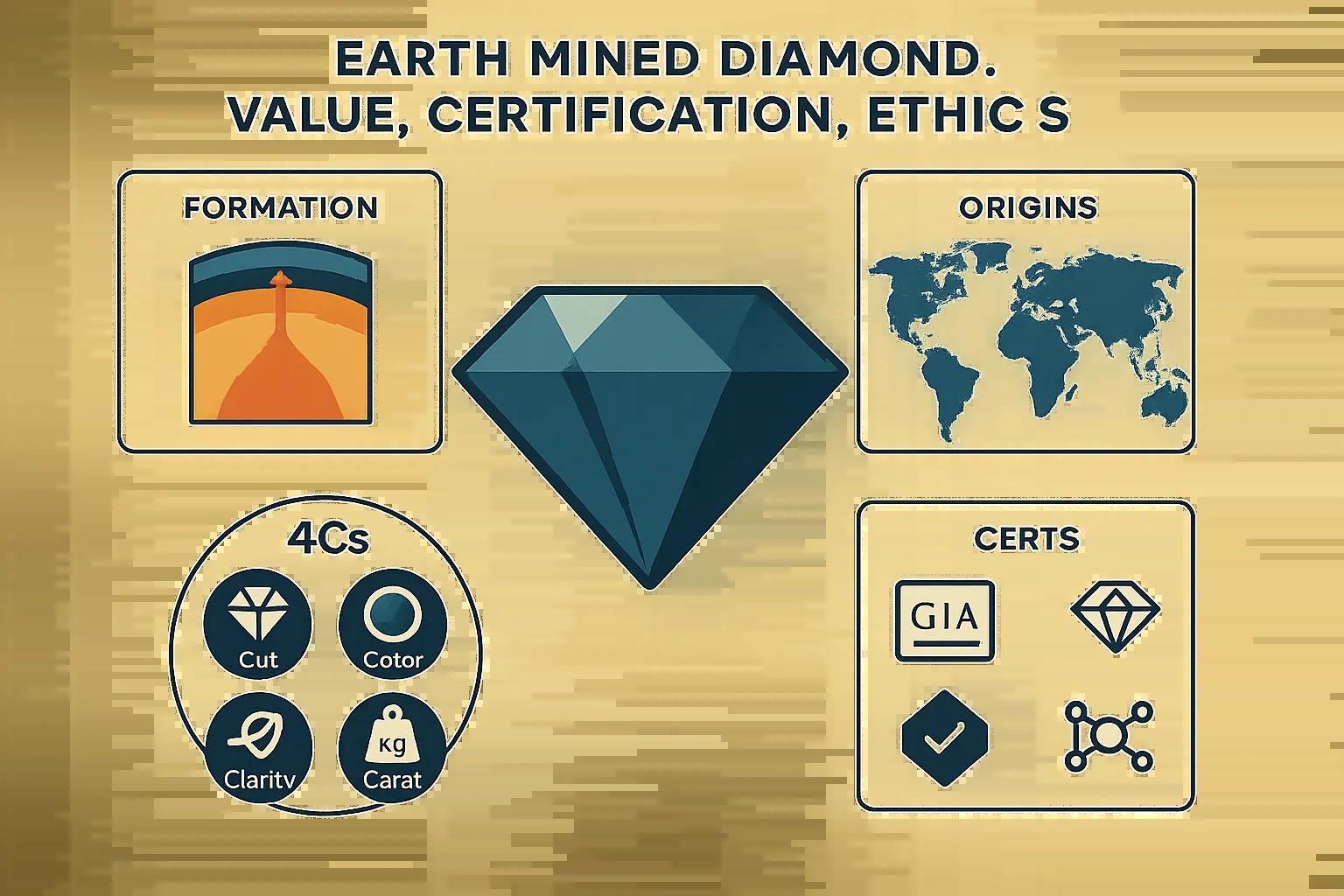
Key diamond-producing regions span across Africa (notably Botswana, South Africa, and Angola), Russia, Canada, Australia, and India. Each locale boasts distinct geological formations, mining methodologies, and resulting product characteristics that shape both stone attributes and supply chain dynamics. African mines are often recognized for yielding a broad spectrum of diamond sizes and occasionally producing colored gems. Canadian deposits, on the other hand, are frequently highlighted for their advanced traceability initiatives and lower perceived conflict risk. Russian production contributes significantly to global volume and influences worldwide supply. The specific practices employed in each region impact the environmental footprint, community engagement, and traceability efforts, factors that discerning buyers increasingly evaluate when considering provenance and ethical sourcing. These geographical distinctions naturally lead into discussions about how certification and traceability programs work to verify origin and conflict-free status.
How Do the 4Cs Define the Quality of Earth Mined Diamonds?
The 4Cs, Cut, Color, Clarity, and Carat, form the fundamental pillars that dictate the visual appeal and market value of earth-sourced diamonds. They translate measurable characteristics into tangible impacts for buyers and influence price sensitivity. Cut, arguably the most critical, governs how light interacts with the stone, profoundly affecting its perceived brilliance. Color assesses the subtle body tones on the D–Z scale, influencing choices in metal and setting design. Clarity focuses on the presence of internal inclusions and surface blemishes, impacting transparency and durability. Carat refers to the stone’s mass, a key driver of price, often with significant jumps at common weight thresholds. Collectively, the 4Cs provide a comprehensive framework for making informed trade-offs, balancing visual splendor, budget considerations, and long-term resale potential. The following concise table offers an EAV-style breakdown, linking technical definitions to buyer impact and price sensitivity for quick reference.
Different diamond attributes directly correlate with buyer outcomes and pricing structures.
This table serves as a valuable tool for buyers, helping them prioritize which attribute to adjust against their budget to maximize visual impact and long-term value.
What Is the Impact of Cut on Earth Mined Diamond Brilliance?
The cut of a diamond is paramount, dictating how light is returned to the eye through precise facet proportions, arrangement, and polish. This directly influences the brilliance, fire, and scintillation that define a diamond’s captivating sparkle. Ideal cut proportions meticulously balance crown and pavilion angles to prevent light leakage and maximize light return. Consequently, even a diamond with a lower color or clarity grade can exhibit remarkable liveliness if expertly cut. Many experts advocate prioritizing cut above the other Cs for maximum visual impact. Furthermore, shape-specific considerations, whether round brilliant, oval, princess, or emerald, affect the face-up appearance and how inclusions or color are perceived, guiding setting choices that enhance overall visual performance. A thorough understanding of cut mechanics empowers buyers to select stones that appear larger and more vibrant within their budget, a cornerstone of intelligent purchasing.
How Does Color Affect the Value of Natural Diamonds?
The color of earth-sourced diamonds is graded on a scale from D (colorless) to Z (faint yellow or brown). Each incremental step can significantly influence the price, although the visual difference may be subtle depending on the diamond’s shape and setting. Practical advice includes: opting for warmer metal tones like yellow gold can beautifully complement lower color grades, while platinum or white gold settings tend to accentuate whiter stones. For diamonds in the near-colorless range, balancing color against carat weight can maximize perceived value. Fancy colored diamonds, such as pink, blue, and yellow, fall outside the D–Z scale and often command substantial premiums due to their extreme rarity and high demand among collectors. Buyers prioritizing visual whiteness should carefully weigh color against cut and carat to achieve the most appealing appearance within their budget.
What Does Clarity Reveal About Earth Mined Diamonds?
Clarity refers to the presence, size, and location of internal inclusions and surface blemishes within a diamond. While these characteristics can affect transparency and, in rare cases, durability, they are often imperceptible to the naked eye in diamonds graded at modest clarity levels. Grades such as VS1–VS2 frequently yield “eye-clean” stones, where inclusions are not visible without magnification, offering excellent value compared to flawless grades that carry steep price premiums. Common inclusion types, including crystals, feathers, and clouds, serve as diagnostic clues to a diamond’s origin and can influence setting choices designed to conceal or showcase these features. Buyers are encouraged to balance clarity with cut and carat, prioritizing an eye-clean appearance while avoiding disproportionately high premiums for exceptional clarity.
How Is Carat Weight Measured and Valued in Natural Diamonds?
Carat is the standardized unit of mass for diamonds, with one carat equaling 200 milligrams. Diamond prices escalate in a non-linear fashion with carat weight, often exhibiting significant price jumps at popular thresholds such as 0.50, 1.00, and 2.00 carats. The perceived size of a diamond is also influenced by its cut proportions and shape; a well-cut stone with optimal spread can appear larger face-up than a heavier, deeper-cut stone. Therefore, maximizing visual impact often involves prioritizing superior cut and shape rather than solely pursuing carat weight. The price sensitivity to carat weight means that even minor increases in mass can result in substantial price hikes. Buyers are advised to consider “sweet spots” weights where slight reductions can yield considerable savings without a noticeable compromise in appearance. Understanding how carat weight interacts with the other Cs is crucial for making the most value-driven decisions for rings and jewelry.
Why Choose Earth Mined Diamond Engagement Rings?
Earth-sourced diamond engagement rings embody a rich cultural tradition, possess a perceived intrinsic value, and offer a sense of natural rarity and heirloom potential that many buyers prioritize when selecting a symbol intended to last for generations. Their natural origin often underpins resale confidence and insurance valuation, with certified earth-sourced stones typically enjoying broad recognition in secondary markets, thereby enhancing their liquidity compared to less established alternatives. The vast array of styles and settings available for engagement rings can further amplify perceived size and brilliance. Crucially, certification, especially comprehensive GIA reports, provides objective grading that validates provenance and builds trust. When evaluating options, buyers should carefully consider their aesthetic aspirations, lifestyle durability requirements, and the importance of certification to ensure their chosen ring aligns with both long-term value and profound emotional significance.
Earth-sourced engagement rings are the ideal choice for buyers seeking natural rarity, enduring legacy, and intrinsic value.
- Tradition and Legacy: Natural diamonds carry a profound cultural history as timeless symbols of commitment.
- Intrinsic and Resale Value: Certified natural stones typically command market recognition and robust appraisal support.
- Aesthetic Variety: Natural diamonds offer unique inclusions and subtle color variations that imbue each stone with character.
These compelling reasons explain why many couples opt for earth-sourced diamond engagement rings, even with alternative options available. The subsequent section will explore the styles and certification features that best complement these natural wonders.
What Styles and Settings Are Popular for Natural Diamond Rings?
Classic solitaire designs, elegant halo settings, meaningful three-stone arrangements, and charming vintage-inspired styles remain highly popular. These choices effectively highlight the center stone while offering varied levels of protection and visual emphasis, catering to diverse lifestyles. Solitaire settings showcase a diamond’s cut and brilliance, halo settings enhance apparent size and sparkle, and bezel settings provide exceptional durability for active individuals. The choice of setting can also subtly mask color or inclusions, thereby facilitating strategic trade-offs among the 4Cs. Metal selection, whether yellow gold, white gold, or platinum, interacts with diamond color to influence perceived whiteness, making metal and setting crucial design elements for optimizing appearance. Selecting a setting that harmonizes protection with the desired visual effect ensures the ring endures both daily wear and its sentimental significance.
How Does GIA Certification Ensure Diamond Authenticity?

GIA certification offers an independent, standardized evaluation of a diamond’s cut, color, clarity, and carat weight, along with identifying characteristics such as fluorescence and proportions. This report serves as a neutral, authoritative record that buyers and appraisers can reference for authenticity and valuation. Effectively interpreting a GIA report involves meticulously matching the report’s plotted inclusion map and precise measurements to the stone in question. It also entails verifying the report number and cross-checking proportions against seller claims to prevent misrepresentation. Certified grading significantly bolsters resale and insurance processes by providing objective metrics widely recognized in the market, thereby enhancing the liquidity of natural diamonds. Understanding how to read and verify a GIA report is instrumental in mitigating purchase risks and reinforcing confidence in claims of natural origin.
What Are the Benefits of Owning a GIA Certified Natural Diamond?
A GIA certificate significantly enhances market trust by meticulously documenting a diamond’s attributes. It greatly aids in insurance appraisals and simplifies future resale by providing a universally accepted grading standard that both buyers and trade professionals recognize. Furthermore, certification adds layers of provenance that, when combined with responsible sourcing disclosures, bolster buyer confidence in ethical claims and conflict-free status. For practical purposes, preserving and presenting the certificate when insuring or selling a stone helps maintain its documented value and discoverability in secondary markets. These tangible advantages make certification a cornerstone of a prudent buying strategy when prioritizing the long-term value and transferability of earth-sourced diamonds.
How Do Earth Mined Diamonds Compare to Lab Grown Diamonds?
While earth-sourced and lab-grown diamonds share similar physical and chemical compositions, they differ fundamentally in their origin, natural geological processes versus controlled high-pressure/high-temperature (HPHT) or chemical vapor deposition (CVD) methods. These distinctions lead to significant differences in pricing, resale behavior, and consumer perception, which buyers should carefully consider. Lab-grown diamonds typically trade at a discount compared to their natural counterparts and may experience different market trajectories influenced by manufacturing output. Conversely, earth-sourced diamonds often retain recognized resale premiums due to their inherent rarity and established market demand. Environmental and ethical considerations also vary by production pathway, with traceability, carbon footprints, and social impacts playing increasingly important roles in consumer choices. A concise EAV comparison below summarizes the core differences across the most common buyer concerns.
This EAV table addresses common buyer inquiries regarding origin, price, and market dynamics, empowering consumers to make choices aligned with their priorities, whether investment, ethics, or aesthetics.
What Are the Key Differences in Origin and Formation?
Natural diamonds are the product of millions of years of formation within the Earth’s mantle under extreme pressure and temperature, eventually reaching the surface via kimberlite or lamproite eruptions. In contrast, lab-grown diamonds are created in a matter of days or weeks using CVD or HPHT processes that replicate diamond-forming conditions within controlled laboratory environments. While the resulting materials are chemically and optically alike, these fundamental origin differences influence perceived value, rarity, and certain inclusion types that gemologists can use for differentiation. Consumers often weigh the romance and historical rarity associated with natural stones against the accessibility and lower price point of lab-grown options. Understanding the distinct formation processes clarifies why origin remains a significant factor in pricing and investor expectations.
How Do Value and Market Trends Differ Between Natural and Lab Grown Diamonds?
Lab-grown diamonds generally command lower prices relative to earth-sourced stones, with price differentials influenced by production costs, manufacturer capacity, and evolving demand patterns. Natural diamonds have historically maintained stronger premiums due to their inherent scarcity and well-established market channels. Market trends projected through 2025 indicate a growing consumer interest in sustainability and transparency, ongoing shifts in market share between natural and lab-grown segments, and the increasing influence of digital direct-to-consumer channels on pricing and availability. For buyers prioritizing long-term resale value or investment potential, natural diamonds typically offer more predictable market recognition. Lab-grown diamonds, however, may be a more suitable choice for budget-conscious purchasers who prioritize size and visual attributes. These market dynamics guide buyer strategies depending on whether long-term value appreciation or immediate cost-effectiveness is the primary objective.
How Do Consumers Perceive Ethical and Environmental Factors?
Consumer perceptions regarding ethical and environmental factors are diverse. Some buyers place a high value on natural origin and provenance, often linked to community benefits and robust traceability. Others gravitate towards lab-grown diamonds, perceiving them as having a lower environmental impact and more controlled supply chains. Demographic variations, particularly among younger cohorts who often emphasize transparency, significantly shape purchasing patterns. Traceability tools, including blockchain pilots, supplier disclosures, and independent certifications, play a crucial role in building trust and influencing decisions. Consequently, consumers increasingly demand verifiable supply-chain information when choosing between natural and lab-grown options. The ethical discourse centers on inherent trade-offs: supporting community development and regulated mining versus considering the energy consumption and manufacturing footprint of lab production. Heightened awareness of these factors empowers buyers to align their choices with personal values and sustainability priorities.
What Ethical Sourcing Practices Ensure Conflict-Free Earth Mined Diamonds?
Ethical sourcing for earth-sourced diamonds involves a combination of chain-of-custody verification, independent certification frameworks, and supplier transparency to mitigate the risk of conflict diamonds and enhance social and environmental outcomes. However, each mechanism possesses distinct strengths and limitations that buyers should understand. The Kimberley Process aims to regulate the rough diamond trade, but it has known gaps concerning traceability and human rights coverage, prompting the adoption of complementary measures such as Responsible Jewellery Council certification and private traceability programs, including blockchain pilots. The table below compares common certifications and practices, clarifying their scope and implications for buyers. Understanding these differences empowers buyers to ask targeted questions and request documentation that aligns with their ethical standards.
The following table outlines certifications and practices, detailing their scope and limitations.
How Does the Kimberley Process Certify Conflict-Free Diamonds?
The Kimberley Process operates by certifying rough diamonds based on declarations from participating countries and regulating cross-border trade to exclude conflict diamonds that finance rebel movements. This system provides a foundational chain-of-custody mechanism for rough material. While effective in curbing large-scale conflict financing, the process has limitations: it does not comprehensively address human rights abuses, environmental impacts, or detailed provenance beyond national controls, and its enforcement relies heavily on the systems within member states. Therefore, buyers are encouraged to seek supplementary documentation, such as traceability reports, independent audits, and supplier transparency disclosures, to gain a more complete assurance regarding social and environmental performance. Understanding these limitations prompts buyers to ask specific questions about the supply chain that extend beyond the scope of Kimberley Process documentation.
What Other Certifications Support Ethical Natural Diamond Sourcing?
Certifications such as the Responsible Jewellery Council establish standards for responsible business practices, encompassing governance, human rights, and environmental management. Concurrently, private traceability programs, including innovative blockchain pilots, strive to map mine-to-market flows with enhanced granularity. National certification schemes and independent audits can introduce valuable local verification layers. Furthermore, supplier-level transparency, which involves disclosing mine origin, community investment initiatives, and environmental mitigation measures, provides a more comprehensive picture for conscientious buyers. To effectively evaluate these claims, buyers should request audit summaries, chain-of-custody documentation, and evidence of community or environmental programs directly linked to mining operations. Combining multiple verification sources offers a more reliable assessment than relying on any single certification alone.
How Are Sustainability and ESG Metrics Influencing Diamond Mining?
Sustainability reporting and Environmental, Social, and Governance (ESG) metrics are increasingly shaping supplier selection processes. These metrics necessitate disclosure of greenhouse gas emissions, water and land usage, community relations, and governance structures. Buyers are increasingly incorporating these metrics into their purchasing decisions and investor assessments. Companies that adopt carbon-neutral pledges, implement robust rehabilitation plans, and establish community benefit programs can demonstrate measurable improvements. Concurrently, the use of recycled metals in jewelry manufacturing contributes to reducing the overall environmental footprint. Consumers and institutional buyers are now posing specific ESG-related questions, concerning emissions, land reclamation, and social investment, when evaluating sources, thereby pressuring suppliers to enhance transparency. These evolving trends signify that ethical sourcing now extends beyond mere conflict-free declarations to encompass quantifiable sustainability outcomes.
How Can You Buy and Care for Earth Mined Diamonds?
Purchasing and caring for earth-sourced diamonds requires a methodical approach: verify certification and provenance, prioritize cut for optimal visual performance, establish clarity thresholds for an eye-clean appearance, and adhere to maintenance practices that preserve both beauty and documented value. A practical buying checklist and a consistent care regimen serve to minimize risk and uphold the resale potential and provenance integrity of your diamond over time.
Many reputable sellers offer GIA-certified stones, detailed grading reports, and flexible financing options. It is always advisable to meticulously verify certificates, inquire about return policies, and confirm independent grading when making significant purchases.
Essential buying steps clarify verification and selection priorities.
- Request Certification: Obtain an independent grading report (e.g., GIA) and ensure it accurately corresponds to the stone.
- Inspect for Eye-Clean Appearance: Prioritize cut quality and select clarity grades that are visually free of inclusions.
- Confirm Return and Insurance Policies: Verify the seller’s return terms and ensure your purchase can be adequately insured.
These practical steps empower buyers to make informed decisions and safeguard both their investment and the sentimental value of their diamond.
What Should You Consider When Choosing Loose Natural Diamonds?
When selecting loose natural diamonds, begin by obtaining a verified grading report. Prioritize the cut grade to ensure optimal brilliance, then strategically balance color and clarity to meet your aesthetic goals and budget constraints, paying close attention to price jumps at common carat thresholds. Carefully inspect the plotted inclusion maps and request magnified images or in-person loupe views to confirm the clarity grade and the precise location of inclusions. Verify that the measurements and report numbers precisely match the physical stone to prevent any possibility of mislabeling. Consider different scenarios: budget-conscious buyers might opt for a slightly lower color grade paired with an excellent cut, while those prioritizing appearance might choose a higher color grade with eye-clean clarity. Ensuring clear documentation and a seller’s return policy significantly reduces the risk of unforeseen issues post-purchase.
How Do You Select the Perfect Earth Mined Diamond Engagement Ring?
Choose a setting that harmonizes with the stone’s shape and provides adequate protection based on your lifestyle needs. Bezel or low-profile settings are ideal for active individuals, while prong or halo styles can maximize sparkle and perceived size. Match the metal choice to your color preferences and overall design aesthetic. For an active lifestyle, prioritize protective settings and durable metals. For maximum visual impact on a budget, select an excellent cut and consider halo or side-stone designs that enhance the center stone’s presence. Personalization through custom design offers a unique way to showcase a natural diamond’s distinctive characteristics and can incorporate provenance documentation, adding to both resale and sentimental value. These considerations bridge aesthetic aspirations with practical durability and long-term maintenance.
What Are the Best Practices for Caring for Natural Diamond Jewelry?
Essential care practices include routine gentle cleaning with mild soap and a soft brush, secure storage separate from other jewelry to prevent abrasion, and maintaining insurance and documentation, including grading reports, to preserve provenance and replacement value. Periodic professional inspections, checking prong security, polishing, and verifying mounting integrity, are crucial for preventing stone loss and maintaining appearance. It is recommended to have professional inspections annually or whenever you notice any looseness in the setting. Keep certificates and valuations in a secure location and update insurance appraisals following major cleanings or repairs to ensure coverage accurately reflects the current value. Adhering to these practices helps maintain both the physical beauty and the documented provenance that support the long-term value of your natural diamond jewelry.
Within the buying guidance, please note that some vendors provide GIA-certified stones, grading reports, and financing options. It is always recommended to verify certificates, inquire about return policies, and confirm independent grading before purchase to effectively mitigate risk for both aesthetic and investment objectives.
What Is the Investment Value of Earth Mined Diamonds?
Earth-sourced diamonds can indeed retain value over time, particularly when factors such as comprehensive certification, documented provenance, inherent rarity (such as colored or exceptionally high-clarity stones), and favorable market conditions align. However, it is important to recognize that diamonds are not universally considered a liquid investment, and their performance can vary significantly across different market segments. Investment-grade pieces, typically rare colored diamonds or historically significant stones, have demonstrated strong performance at auction. Standard white diamonds, on the other hand, often reflect retail pricing with more modest resale recovery. The current market context for 2025 includes pockets of renewed luxury demand, sustained interest from younger buyers in traceability, and supply-side constraints that may support prices for select categories. A thorough understanding of which stones command premiums and how market mechanisms operate is essential when viewing diamonds through an investment lens.
How Do Natural Diamonds Retain Value Over Time?
Natural diamonds best retain their value when accompanied by objective certification, meticulously documented provenance, and rarity attributes that resonate with collectors or investors. These factors significantly enhance resale potential by reducing information asymmetry and simplifying the appraisal process. Buyers should maintain realistic expectations, acknowledging that standard retail purchases often resell below the initial purchase price due to retail markups. In contrast, certified, rare stones, such as high-clarity, large carat weight, or vivid colored diamonds, have the potential to appreciate and achieve significant premiums at auction. Liquidity varies considerably: specialized markets and auction houses serve as primary venues for investment-grade stones, whereas typical retail channels generally offer less favorable resale prices. Buyers interested in investment potential should focus on documented rarity and robust certification to maximize future marketability.
What Economic Trends Are Shaping the Natural Diamond Market in 2025?
The economic landscape for natural diamonds in 2025 is characterized by selective rebounds in luxury spending, generational shifts that increasingly emphasize sustainability and traceability, and the growing influence of digital direct-to-consumer channels on pricing transparency and availability. The evolving market share dynamics of lab-grown diamonds also continue to shape the positioning of natural diamonds. Supply-side constraints, including the depletion of mines in established districts and heightened regulatory scrutiny, may lead to tighter availability for certain qualities, potentially supporting premiums, especially for colored and high-clarity stones. Traceability technologies and ESG reporting are becoming increasingly essential requirements for buyers and investors, influencing which suppliers gain market preference. These trends suggest that well-documented, ethically sourced natural diamonds with strong certification and provenance are likely to maintain or enhance their market value for discerning buyers.
How Does Rarity Influence the Investment Potential of Colored and High-Clarity Diamonds?
Rarity stands as the primary determinant of premiums for colored and high-clarity diamonds. Intense natural colors and exceptional clarity grades are inherently scarce, fostering collector demand that can often outpace general market trends and lead to significant auction results. Colored diamonds, particularly pink, blue, and vivid yellow varieties, have historically commanded outsized prices relative to white diamonds due to their limited supply and strong collector appeal. Similarly, high-clarity white diamonds of substantial carat weights attract investor attention when fully certified and meticulously documented. Investors should carefully assess provenance, certification, and available resale channels, recognizing that achieving investment-grade performance requires discerning selection and expert appraisal, rather than relying on general retail purchases. For buyers seeking both personal enjoyment and potential appreciation, prioritizing documented rarity and certification maximizes the likelihood of favorable long-term outcomes.
For readers interested in exploring certified earth sourced selections or seeking personalised recommendations, we encourage you to consider suppliers that provide clear grading reports and comprehensive traceability documentation. Verifying GIA or equivalent certificates and understanding supplier return policies before purchase will help safeguard both your aesthetic desires and investment objectives. To see how this looks in practice, browse our engagement rings to compare natural diamond designs that meet these standards.


