
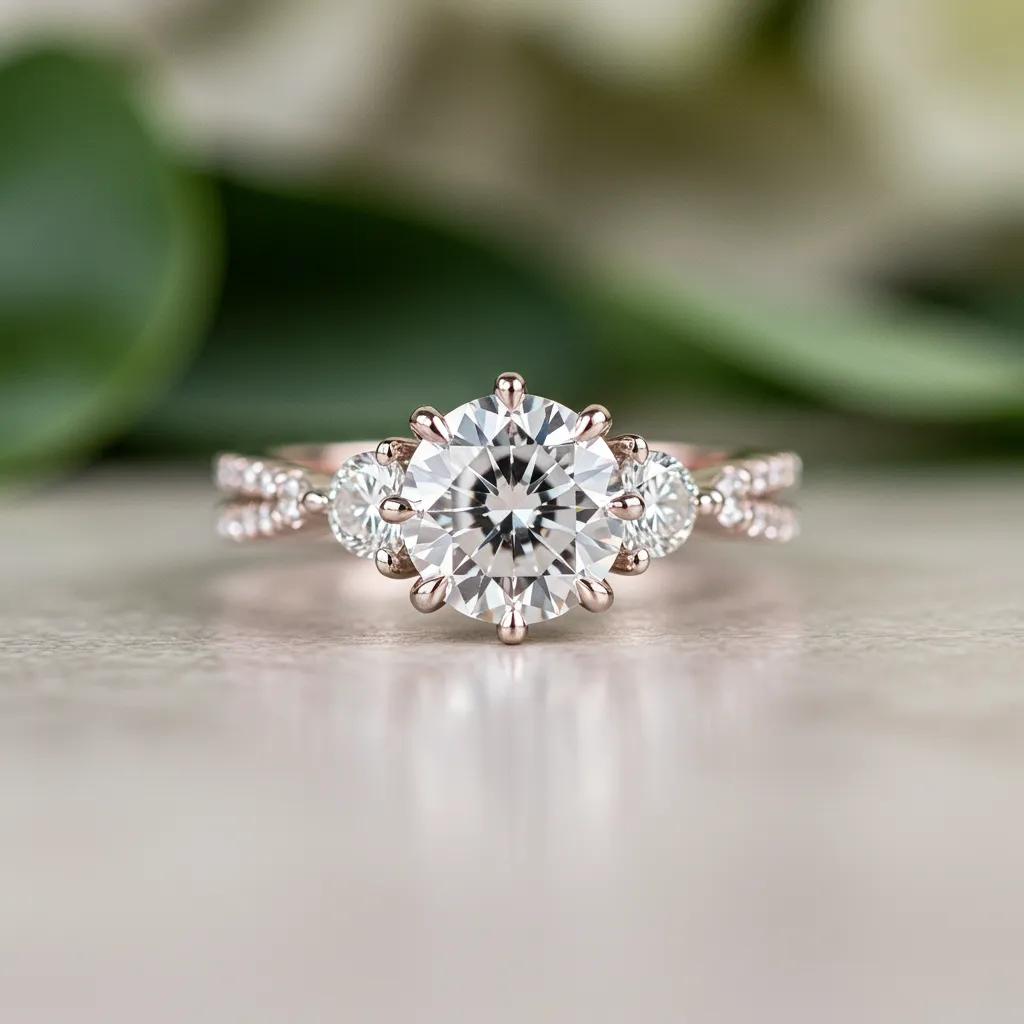
Ethical Diamonds in Australia: Your Definitive Guide to Conflict-Free and Sustainable Jewellery
Discover how to choose conflict-free, sustainable diamonds that align with your values and enhance your jewellery collection. This guide explains what ethical diamonds are, delves into certification and traceability, compares natural and lab-grown options, and showcases available designs, from engagement rings to elegant tennis bracelets. To better understand low-impact alternatives, our lab-grown diamonds guide offers a clear overview of sustainable options and how they compare to mined stones. You’ll learn how the Kimberley Process Certification Scheme ensures integrity, why lab-grown diamonds minimise environmental impact, and how to confirm authenticity through leading bodies. Finally, explore the Australian Diamond Company’s dedication to transparent sourcing and building customer trust.
What Exactly Are Ethical Diamonds and Why Do They Matter in Australia?
Ethical diamonds are gemstones sourced and produced under stringent standards that safeguard against human rights abuses, guarantee fair labour conditions, and minimise ecological damage. Grounded in the Kimberley Process Certification Scheme (KPCS), ethical sourcing provides assurance against conflict financing and environmental harm. In Australia, a growing consumer demand for transparency and sustainable practices is prompting retailers to adopt rigorous protocols that protect communities and ecosystems while still offering exquisite, high-quality jewellery.
The Kimberley Process was established by African diamond-producing nations to create an international certification system for rough diamonds, aiming to prevent their use by rebel groups to finance civil wars.
TheKimberley ProcessCertification Scheme: Origins and PurposeThe Kimberley Process was initiated by diamond-producing countries in Africa to establish an international certification scheme for rough diamonds, with the aim of preventing these diamonds from being used by rebel movements and disruptive forces to finance civil wars and other forms of violence.Kimberley Process Certification Scheme: Compliance and Limitations in Southern Africa, Unknown Author, 2008
Diamonds certified as ethical strongly resonate with Australia’s ethically-minded consumer base, where over 80 percent of buyers prioritise socially responsible products. By selecting conflict-free stones, Australians actively support fair wages, safe working environments, and reduced carbon footprints. This commitment not only strengthens local industry standards but also reinforces Australia’s standing as a leader in the responsible diamond trade.
What Defines an Ethical Diamond?
An ethical diamond meets three fundamental criteria: a conflict-free origin, fair labour practices, and environmental stewardship.
- Conflict-Free Origin ensures that no revenue generated funds armed conflict or human rights violations.
- Fair Labour Practices guarantee safe working conditions and equitable compensation throughout the entire supply chain.
- Environmental Stewardship minimises land degradation, water usage, and carbon emissions from the mine all the way to the market.
Adherence to these standards significantly boosts consumer confidence and promotes sustainable economic development.
How Does the Kimberley Process Ensure Conflict-Free Diamonds?
The Kimberley Process Certification Scheme is a collaborative international initiative that meticulously tracks rough diamonds through government-validated, sealed certificates. It mandates participating countries to certify all diamond shipments as conflict-free, effectively preventing illicit trade and bolstering legitimate markets.
The Kimberley Process Certification Scheme (KPCS), established in 2003, is a voluntary initiative aimed at preventing conflict diamonds from entering the international market by requiring member states to certify rough diamond shipments as conflict-free.
AddressingConflictDiamonds: TheKimberley ProcessCertification SchemeThe Kimberley Process concerning conflict diamonds serves as a prime example of a voluntary initiative designed to curb the flow of conflict diamonds into international commerce. The Kimberley Process Certification Scheme (KPCS) was instituted in 2003 by the United Nations General Assembly as a response to the issue of conflict diamonds, also referred to as blood diamonds. The KPCS endeavours to prevent conflict diamonds from entering the mainstream rough diamond market by mandating member states to certify shipments of rough diamonds as conflict-free.Tackling conflict diamonds: the Kimberley process certification scheme, Unknown Author, 2004
This unified framework has successfully reduced conflict diamonds to less than 1 percent of the global supply and underpins Australia’s stringent import regulations.
What Are the Limitations of the Kimberley Process?
While highly effective in curbing conflict financing, the Kimberley Process does not extend its oversight to labour abuses, environmental impacts, or the illicit mixing of stones after certification.
- It excludes oversight of conditions in artisanal mining operations.
- It lacks enforcement mechanisms for ecological rehabilitation efforts.
- It cannot prevent the smuggling of already certified stones.
These identified gaps underscore the necessity for complementary measures, such as fair-trade initiatives and independent audits, to ensure comprehensive ethical compliance.
How Does Ethical Diamond Sourcing Go Beyond Just Being Conflict-Free?
Truly comprehensive ethical sourcing extends beyond conflict-free certification to include fair wages, worker safety, and a significantly reduced environmental footprint. This holistic approach involves third-party audits of mine labour conditions, direct investments in local community development, and the adoption of carbon-offset programs. Furthermore, integrating recycled precious metals and vintage diamonds further minimises ecological impact and honours cultural heritage, reinforcing a complete vision of corporate responsibility.
How Do Lab-Grown Diamonds Offer a Sustainable Alternative in Australia?
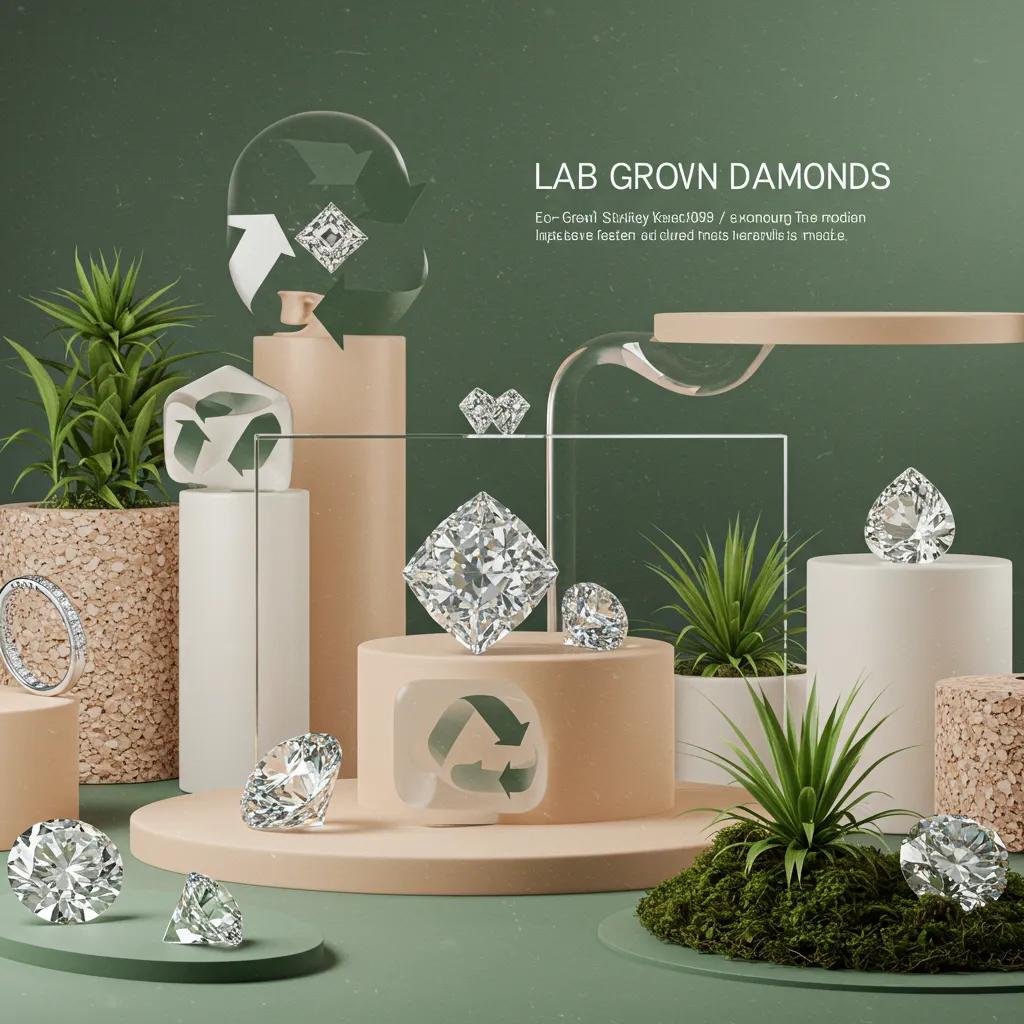
Lab-grown diamonds are chemically, physically, and optically identical to their mined counterparts, but are produced in controlled laboratory environments that dramatically reduce ecological harm. By eliminating the need for large-scale excavation and significantly lowering carbon emissions, laboratory synthesis offers an ethical and more accessible pathway to owning luxury jewellery.
What Are Lab-Grown Diamonds and How Are They Created?
Lab-grown diamonds are formed using two primary methods, High Pressure High Temperature (HPHT) and Chemical Vapour Deposition (CVD), both of which meticulously replicate natural diamond genesis under precise laboratory conditions.
These advanced technologies consistently yield premium-quality gems with demonstrable sustainability benefits.
Cultivated diamonds can significantly reduce annual greenhouse gas emissions, mineral waste, and water consumption, offering substantial environmental savings and contributing to the diamond industry’s sustainability initiatives.
Environmental Benefits of Cultivated DiamondsFurthermore, we observe that cultivated diamonds can lead to a reduction in annual greenhouse gas (GHG) emissions, mineral waste, and water consumption by 9.58 Mt, 421.06 Mt, and 66.70 million m³, respectively, by the year 2100. The implementation of a cultivated diamond substitution policy could result in annual savings of 714 million cubic metres of landfill space, the harvesting of 255 million kilograms of rice, the provision of food for 436 million people, and the alleviation of hunger for 1.19 million households. This policy could contribute to the diamond industry’s GHG mitigation and sustainability initiatives in a cost-effective manner.The environmental impacts and sustainable pathways of the global diamond industry, S Jiang, 2024
Why Are Lab-Grown Diamonds Considered Ethical and Eco-Friendly?
Lab-grown diamonds completely avoid the ecosystem disruption associated with open-pit mining, eliminate the potential for conflict-related revenues, and require substantially fewer water and tailings resources. They promote enhanced transparency through traceable synthesis batches and frequently carry sustainability certifications, making them a preferred choice for environmentally conscious consumers.
How Do Lab-Grown Diamonds Compare to Natural Diamonds?
A direct comparison between mined and lab-grown diamonds reveals distinct attributes concerning their sourcing, cost, and certification processes.
This comparison clearly illustrates the significant sustainable advantages and cost efficiencies offered by lab-grown alternatives.
Which Certifications Guarantee Lab-Grown Diamond Authenticity?
- The Gemological Institute of America (GIA) issues detailed origin reports for both HPHT and CVD methods.
- The International Gemological Institute (IGI) grades cut and clarity, and confirms laboratory provenance.
- SCS Global Services awards SCS-007 sustainability labels for diamonds demonstrating reduced environmental footprints.
Obtaining these certifications is crucial for ensuring authenticity and building consumer confidence.
How Can You Verify Certifications and Traceability for Ethical Diamonds in Australia?
Verifying the ethical credentials of diamonds involves carefully reviewing certified documentation, inspecting laser inscriptions, and utilising emerging digital tracking tools. This multi-layered approach confirms the diamond’s origin, its quality grade, and its compliance with both social and environmental standards, thereby safeguarding its investment value and ethical integrity.
What Are the Key Diamond Certification Bodies?
- GIA (Gemological Institute of America) provides comprehensive grading reports.
- IGI (International Gemological Institute) offers quality assessments and provenance verification.
- DCLA (Diamond Certification Laboratory of Australia) issues local origin certificates.
- SCS Global Services accredits sustainability and environmental impact credentials.
These esteemed bodies provide objective validation of a diamond’s attributes and its ethical standing.
How Does Laser Inscription Enhance Diamond Traceability?
Laser inscription embeds a microscopic, unique code onto a diamond’s girdle, directly linking each stone to its specific grading report and origin certificate. This permanent marking serves as a powerful deterrent against fraud, simplifies the verification process, and enables seamless resale with fully documented ethical provenance.
What Is the Role of Blockchain in Diamond Supply Chain Transparency?
Blockchain technology creates an immutable ledger that records every transaction, from the initial extraction of a rough diamond right through to its final retail sale, ensuring a completely tamper-proof chain of custody.
- It automates the verification of certification documents.
- It securely tracks all ownership transfers.
- It significantly reduces the risk of counterfeiting or illicit mixing of stones.
This innovative technology substantially boosts consumer trust and effectively prevents unethical trading practices.
What Ethical Diamond Jewellery Options Are Available in Australia?
Australian jewellers now offer an ever-expanding portfolio of ethically sourced designs, expertly blending timeless elegance with responsible practices. From classic engagement rings to contemporary bracelets, sustainable jewellery is available to suit a wide array of tastes and budgets.
What Styles of Ethical Engagement Rings Are Popular in Australia?
Contemporary solitaire, halo, and three-stone designs continue to be highly sought after. Each is meticulously crafted with conflict-free or lab-grown diamonds, often set in recycled gold or platinum. Many couples opt for minimalist bands, vintage-inspired motifs, or entirely custom bespoke designs that beautifully reflect their personal stories and ethical values.
Why Choose Ethical Diamond Tennis Bracelets and Other Jewellery?
Ethical diamond tennis bracelets, such as the popular three-carat total weight design, combine refined sparkle with guaranteed conflict-free sourcing. These bracelets, alongside elegant pendants and classic stud earrings, pair exceptional craftsmanship with certified provenance, offering both peace of mind and enduring style.
How Do Recycled Metals and Vintage Diamonds Support Sustainability?
Recycled gold and platinum utilise existing precious metals, leading to a reduction in mining-related emissions by over 99 percent. Vintage diamonds give new life to heirloom stones, preserving material value while honouring heritage. Both approaches effectively close resource loops and significantly minimise environmental impact.
Can You Customise Ethical Diamond Jewellery in Australia?
Absolutely. Personalised craftsmanship services available in Melbourne and across Australia allow clients to precisely select their preferred diamond type, setting style, and metal composition. Consultations typically include 3D design previews, detailed ethical sourcing options, and the possibility of laser inscriptions, ensuring each unique piece perfectly aligns with individual tastes and values.
What Is the Australian Diamond Company’s Commitment to Ethical Diamonds?
The Australian Diamond Company is dedicated to offering conflict-free and lab-grown diamonds under a rigorously enforced ethical policy. By strictly adhering to both international and local standards, the company seamlessly combines transparent sourcing with bespoke design services, fostering unparalleled customer confidence through documented integrity.
How Does ADC Adhere to the Kimberley Process and Ethical Standards?
ADC exclusively procures natural diamonds from supply chains that are fully compliant with the KPCS, conducting regular audits and meticulously maintaining chain-of-custody records. Every rough diamond shipment arrives accompanied by government-sealed certificates, reinforcing the company’s unwavering commitment to conflict-free trade.
What Certified Ethical Diamond Options Does ADC Offer?
Clients have the choice of GIA-certified natural diamonds, IGI-graded lab-grown stones, and SCS-007 sustainability-labelled gems. This extensive selection is designed to accommodate varying ethical priorities and budget requirements, all while guaranteeing fully documented provenance.
How Does ADC Ensure Transparency and Customer Trust?
All diamonds feature laser inscriptions that are directly linked to their digital grading reports. Detailed summaries of origin and environmental impact accompany every purchase, and dedicated consultants provide expert guidance to buyers through the entire certification verification process, strengthening confidence at every single step.
What Do Customers Say About ADC’s Ethical Jewellery?
Customer testimonials consistently praise ADC’s clear communication, exceptional quality craftsmanship, and unwavering ethical integrity. Clients frequently highlight seamless custom engagement ring experiences and ongoing transparency, building strong social proof of the brand’s leadership in the responsible jewellery sector.
What Are Common Questions About Buying Ethical Diamonds in Australia?
Shoppers frequently have questions regarding sustainability, certification, and sourcing practices when considering ethical diamonds. The following concise answers address these core concerns directly.
Are Lab-Grown Diamonds Truly Ethical and Sustainable?
Yes, lab-grown diamonds completely bypass large-scale mining operations, significantly reduce carbon emissions by over 99 percent, and eliminate any possibility of conflict financing, making them a highly ethical alternative to natural stones.
How Can I Be Sure My Diamond Is Conflict-Free?
By carefully reviewing a Kimberley Process certificate, inspecting laser inscriptions, and verifying grading reports from reputable bodies like GIA, IGI, or DCLA, you can confirm that a diamond has successfully passed conflict-free screening at every stage of its journey.
Are All Diamonds Sold in Australia Ethically Sourced?
No, while many retailers in Australia uphold high standards, some stones may lack comprehensive provenance documentation. It is always advisable to request certified reports and detailed origin information before making a purchase.
What Is the Environmental Impact of Natural vs Lab-Grown Diamonds?
Natural diamonds typically involve significant land disruption and generate an average of 57,000 grams of CO₂ per carat, whereas lab-grown stones produce as little as 0.028 grams of CO₂ per carat and require no open-pit excavation.
Where Can I Buy Certified Ethical Diamonds in Australia?
Reputable sources include established jewellery houses that offer KP-compliant natural diamonds and certified lab-grown options. The Australian Diamond Company provides both categories, complete with full traceability and expert guidance.
How Is the Ethical Diamond Market Evolving in Australia?
A heightened awareness of sustainability and rapid technological advancements are significantly reshaping consumer preferences within the diamond market. As new certifications and local initiatives continue to emerge, Australia’s diamond sector is progressively moving towards greater transparency, enhanced social responsibility, and improved eco-efficiency.
What Are the Latest Trends in Lab-Grown Diamond Demand?
Search interest for lab-grown diamonds has surged by over 9,000 percent since 2018, with a remarkable 70 percent of millennials now considering them for engagement rings. Growing environmental consciousness and significant cost savings are the primary drivers behind this accelerated demand.
How Are Australian Mines Contributing to Ethical Diamond Supply?
Australia’s former Argyle and Ellendale mines were renowned for supplying responsibly managed rough stones under strict government oversight. Although these operations have scaled back, the legacy of transparent Australian sourcing continues to inform and influence global best practices in the industry.
What Role Do Fair Labour and Environmental Practices Play in Consumer Choices?
Consumers are increasingly prioritising fair wages, safe working conditions, and minimal ecological damage when making purchasing decisions. These factors significantly influence choices, with over one-third of consumers indicating a willingness to pay a premium for verified ethical credentials.
How Are Certifications and Sustainability Standards Improving Transparency?
Emerging standards like SCS-007 and blockchain tracking plugins are significantly enhancing visibility into environmental metrics, labour conditions, and material flows throughout the supply chain. Such frameworks empower consumers with detailed lifecycle information for every diamond they consider.
Ethical diamonds beautifully merge aesthetic appeal with profound responsibility, offering discerning consumers the opportunity to wear jewellery that truly reflects their deeply held values. Whether you select a certified natural stone or an eco-friendly lab-grown gem, ensuring clear provenance and trusted certification guarantees complete peace of mind. Explore bespoke designs, compare sustainable options, and request a personal consultation to discover the perfect conflict-free treasure, and learn more in our ethical lab diamond guide, which explains how sustainable stones are crafted and certified.


