
Unlocking Diamond Carat: Your Ultimate Guide to Weight, Size, and Value
A diamond’s weight, measured in carats, profoundly influences its perceived worth and visual allure. Yet the nuances of carat weight often leave prospective buyers feeling uncertain about what they’re truly acquiring. If you’d like a clearer understanding of how carat size interacts with cut, shape and proportions, our comprehensive diamond selection guide offers an easy way to compare quality factors side by side. This comprehensive guide aims to eliminate that confusion by clearly defining diamond carat, exploring its historical significance, detailing its impact on a diamond’s size, appearance and price, and equipping you with the knowledge to verify and compare carat measurements accurately. In this article you’ll discover:
- The precise meaning of “diamond carat” and how it’s measured
- The direct correlation between carat weight and a diamond’s physical dimensions, visual presence, and cost
- Benchmark carat sizes for engagement rings in Australia, along with advice for selecting the perfect carat for your budget
- Proven strategies for evaluating diamond certifications, sidestepping common misunderstandings, and finding reliable resources through ADC’s trusted expertise
By mastering these essential aspects, anyone seeking exquisite jewellery in Australia will gain invaluable clarity on carat weight, simplify their selection process, and feel completely confident in choosing their ideal diamond.
What Exactly Is Diamond Carat?
How Do We Measure Diamond Carat Weight?
Diamond carat is a universally recognised unit of mass, equivalent to precisely 200 milligrams. This standardisation ensures consistent valuation and transparency in the gemstone market. Leading gemological laboratories employ highly accurate scales, calibrated to measure in increments of 0.01 carats, thereby guaranteeing precision and fostering fair trade practices. For instance, a diamond weighing 0.50 carats is confirmed to be exactly 100 milligrams, ensuring clear and unambiguous communication of weight between retailers and buyers. This meticulous measurement system builds buyer confidence and ensures consistency in resale value, forming the bedrock for all subsequent assessments of a diamond’s size, price, and overall quality.
What’s the Story Behind the Carat Unit?
The origin of the diamond carat unit traces back to the carob seed, which was historically used as a natural weight standard in ancient trading hubs. Merchants noticed the remarkably consistent mass of these seeds and began using them to compare the weights of precious stones. Over time, this practice evolved, leading to the formalisation of the “carat” as a unit equal to 200 milligrams, particularly under the 20th-century metric system. This progression from a simple botanical reference to an internationally recognised metric standard is fundamental to modern gemmology, bridging centuries of trade tradition with contemporary scientific precision. Understanding this historical lineage reveals the fascinating interplay between enduring practices and rigorous scientific methodology in the evaluation of diamonds.
The historical practice of using carob seeds as a reliable weight standard for precious stones ultimately paved the way for the formal definition of the carat unit.
The Origin and Evolution of theCaratas a Gemstone Weight UnitThe carat is the unit of weight for diamonds and other gemstones. It corresponds to the average weight of the seeds of a leguminous tree. What kind of tree is this? We have studied samples from Ethiopia, Egypt, Cyprus, and the United States. The tree is neither “Kuara” nor “Locust” (Robinia pseudoacacia Linn.), but rather Carob (Ceratonia Siliqua). In Ethiopia, as called by local inhabitants, “Kuara” is a species of Erythrina – E. brucei rather than E. abyssinica.As might be expected, using seeds as a means of weighing an extremely valuable commodity is not very scientific. Before 1907, at various times and in various countries, there were at least twenty-three standards for the carat, ranging from 187.00 mg to 215.990 mg.The metric carat, equal to 200 mg, was proposed in Paris in 1907. It was adopted in the United States on 1 July 1913 and is now the world-accepted standard. However, in reality, the standard of the carat is still confused with respect to its usage throughout the world. This is why the author reiterates that the standard of the carat should be integrated with the metric system.On the origin of the carat as the unit of weight for gemstones, Unknown Author, 1991
How Does Carat Relate to a Diamond’s Weight and Size?
Carat is a precise measure of weight, not physical dimensions. However, a higher carat weight generally corresponds to a larger diameter. It’s important to note that two diamonds of the exact same carat weight can have different visual profiles due to variations in their cut depth and shape. Therefore, weight and perceived size are distinct attributes. While precise weight is crucial for pricing and certification, the diameter is what guides visual assessments and influences setting choices. Understanding this distinction empowers buyers to consider both weight and dimensions for a complete appreciation of a diamond’s presence and value.
How Does Carat Weight Influence a Diamond’s Size and Appearance?
What’s the Difference Between Carat Weight and Diamond Size?
Diamond carat refers to the gemstone’s mass, while size relates to its physical measurements in millimetres, specifically its diameter, height, and girdle thickness, which collectively determine its visual impact. For example, a perfectly proportioned round diamond weighing 1.00 carat typically measures approximately 6.4 mm across. However, diamonds with deeper cuts might appear smaller when viewed from the top, despite having the same weight. Clearly distinguishing between these metrics allows buyers to prioritise either the substantial feel of the weight or the expansive spread of the stone, depending on their personal preferences and design aspirations, ensuring the chosen diamond delivers the desired aesthetic effect.
How Do Diamond Cut and Shape Affect Perceived Size?
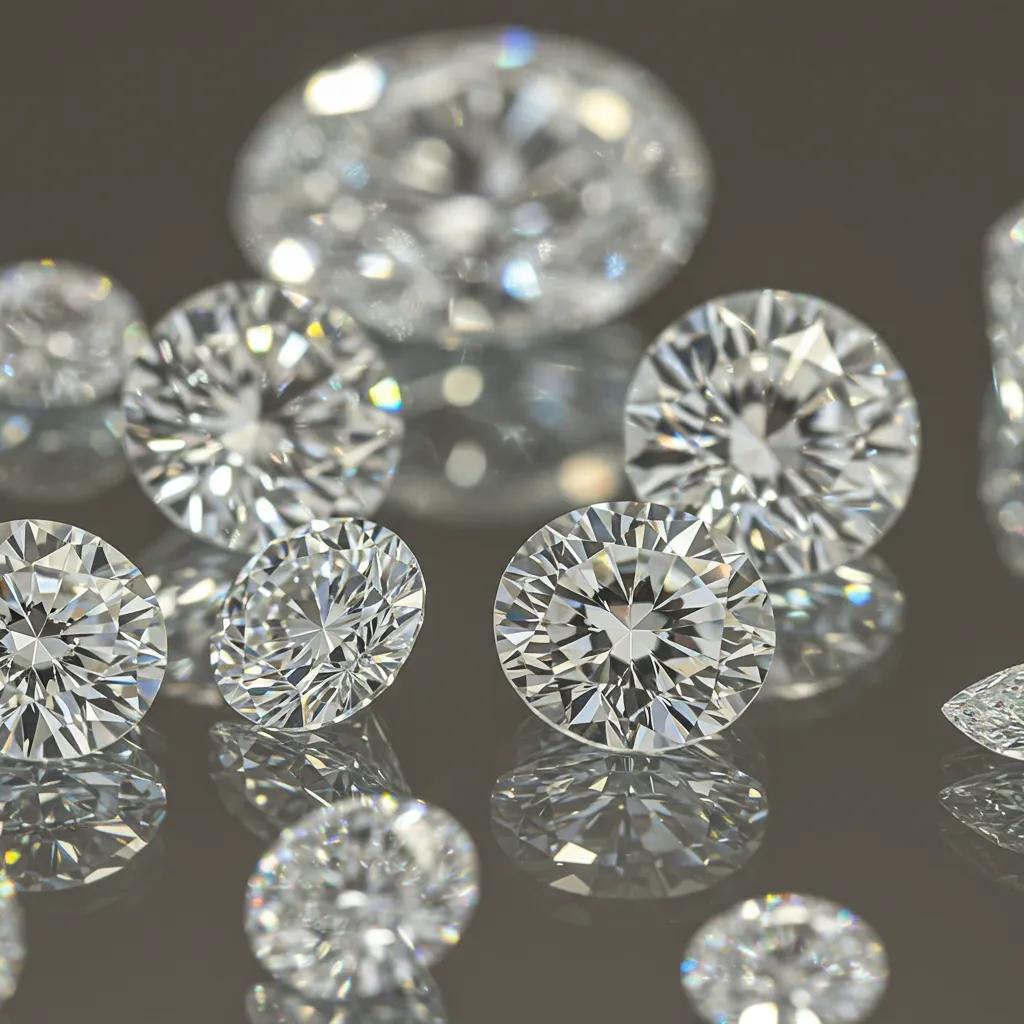
The quality of a diamond’s cut and its chosen shape play a significant role in how large it appears relative to its carat weight. Diamonds with shallower cuts tend to have a wider face-up spread, making them seem larger. Conversely, deeper cuts concentrate more weight towards the pavilion, reducing the visible surface area. Elongated shapes, such as oval, marquise, or pear cuts, generally offer a greater surface area per carat compared to round diamonds, thus enhancing their perceived size. Understanding these relationships empowers customers to select combinations of cut and shape that maximise visual presence without incurring unnecessary premiums for weight.
Can Two Diamonds of the Same Carat Weight Look Different in Size?
Absolutely. Two diamonds with identical carat weights can exhibit noticeable variations in their face-up dimensions and overall brilliance due to differences in their cut proportions and pavilion depth. For instance, a 1.00 carat round diamond cut to ideal proportions might measure 6.5 mm across, while another diamond of the same weight with a deeper cut could measure only 6.1 mm. Similarly, fancy shapes distribute their weight differently, leading to even more pronounced variations in spread. Appreciating these subtle differences is key to guiding buyers towards stones that perfectly align with their preferences for size, sparkle, and budget.
How Does Diamond Carat Impact Price?
A diamond’s carat weight is a primary driver of its price, largely due to rarity. Gemstones with greater weight are exponentially scarcer, meaning their value increases significantly as the carat weight rises.
The weight of a diamond is a fundamental factor in its pricing; heavier stones are progressively rarer and consequently more valuable.
Understanding Diamond Pricing: The Role ofCaratWeightThe weight of a diamond stone is indicated in terms of carat units. One … Specifically, do we learn more about pricing using the variables medium, large, med*carat and large*carat as …Pricing the C’s of diamond stones, S Chu, 2001
Market analysis consistently shows that diamonds exceeding 1.00 carat command significant price premiums compared to stones below this threshold. This is a direct reflection of their limited supply and heightened market demand.
By understanding the relationship between weight and pricing tiers, buyers can more accurately forecast their budget requirements and identify the optimal balance between size and value.
Before we delve into specific price ranges, here’s a comparison of typical carat categories and their corresponding average price brackets in Australian dollars:
These price tiers clearly illustrate how carat weight dictates cost progression, helping buyers to thoughtfully balance their aspirations for size with the realities of their budget.
How Do the 4Cs Influence Diamond Carat Pricing?
While carat weight serves as the primary foundation for pricing, the other three Cs, cut, colour, and clarity, refine the diamond’s value by impacting its light performance and internal purity. A superior cut enhances brilliance and the diamond’s face-up spread, justifying price premiums that amplify the weight-based cost. A near-colourless grade (G–H) will command higher prices than lower colour grades at comparable carats, and diamonds with high clarity (VS–IF) add rarity-driven surcharges. Integrating all four Cs results in a sophisticated pricing structure where carat weight remains the anchor, but the overall quality of the diamond ultimately determines its final cost.
Why Does the Price Increase Disproportionately with Carat Weight?
The price of diamonds escalates non-linearly because larger diamonds are disproportionately rarer than their smaller counterparts. Simply doubling the carat weight does not double the cost; instead, it multiplies it significantly, driven by supply scarcity curves and market demand. For example, a 2.00 carat stone might cost four to five times more per carat than a 1.00 carat gem. This disproportionate price escalation encourages strategic selection of diamonds just below premium thresholds (e.g., choosing a 0.95 ct stone instead of a 1.00 ct) to optimise perceived size and budget balance.
Research consistently shows that diamond prices rise substantially with carat weight, exhibiting significant price elasticity and a tendency for prices to jump at rounder carat marks compared to slightly lower weights.
Diamond Pricing Models: The Impact ofCaratWeight and Other FactorsABSTRACT: This paper investigates the relationship between the selling price of diamonds and their carat weight. For this purpose, we use a unique sample of 112,080 certified diamonds collected from www.info-diamond.com during the first week of July 2011. We find substantial differences in pricing depending on the cut shape. The price of diamonds increases markedly with carat weight, with a price elasticity of 1.94. However, estimates from unconditional quantile regressions show that the price-weight elasticity is not constant, as it rises along the price distribution of diamonds. Finally, we observe the existence of significant increases in prices for diamonds featuring round weights compared to gems just below these threshold weights.Understanding diamond pricing using unconditional quantile regressions, N Vaillant, 2013
What Is the Average Diamond Carat for Engagement Rings in Australia?
For engagement rings, Australian couples typically opt for diamonds with an average carat weight ranging from 0.70 ct to 1.20 ct. This range aligns well with mid-market budgets and reflects a cultural preference for noticeable elegance.
Recent sales data analyses indicate that 0.90 ct remains the most sought-after benchmark, representing an excellent balance between impactful size and manageable cost.
Understanding these local trends provides buyers with realistic expectations and valuable negotiation leverage.
What Carat Sizes Are Most Popular for Engagement Rings?
Popular carat sizes for engagement rings tend to cluster around:
- 0.50 ct, ideal for modest budgets and delicate designs
- 0.75 ct, offering a pleasing compromise between visibility and affordability
- 1.00 ct, favoured by those seeking classic proportions and a touch of status
How Does Carat Weight Affect Engagement Ring Style Choices?
Larger carat weights often lend themselves beautifully to solitaire and halo settings, which are designed to prominently showcase the central stone’s brilliance. Conversely, lighter stones pair elegantly with three-stone or accent designs, where visual weight is distributed effectively. A 0.50 ct gem might be enhanced by pavé bands or side stones to amplify its presence, whereas a 1.50 ct centre stone can command attention on its own with minimal embellishment. Matching the carat weight to the chosen setting style allows designers to accentuate the diamond’s beauty without overpowering personal taste or compromising comfort.
How to Choose the Right Carat Weight for Your Budget?
Selecting the optimal carat weight involves a thoughtful approach:
- First, determine your absolute maximum spend for the centre stone.
- Next, prioritise the other Cs (cut, clarity, colour) to maximise the diamond’s perceived size and brilliance.
- Consider settings like halos or side stones to enhance the visual presence of the centre gem.
- Explore “trade-off” weights that fall just below premium thresholds (e.g., a 0.95 ct stone instead of a 1.00 ct) to achieve greater value.
How to Evaluate Diamond Carat When Buying Jewellery?
What Questions Should You Ask About Carat Weight?
Before finalising a purchase, be sure to inquire about:
- The exact carat weight as stated on the diamond’s certificate
- Any weight tolerances applied by the grading authority
- Whether the total carat weight refers to the centre stone only or includes multiple stones
- The calibration and recency of the weighing process used
Diamonds accompanied by transparent weight reporting on their certificates empower buyers to compare offerings with confidence and avoid unexpected discrepancies during appraisals or resale.
How to Verify Carat Weight and Certification?
Authenticating a diamond’s carat weight requires careful review of its accredited laboratory report, such as those issued by the GIA or AGS, which details the weight measured to two decimal places. An independent gemmological appraisal can further confirm that the stone precisely matches its stated parameters. At Australian Diamond Company, every diamond undergoes a rigorous dual verification process, involving both our in-house gemmologists and external laboratories, to guarantee the accuracy of carat disclosure and uphold our commitment to trust and quality.
How Does Carat Weight Affect Different Types of Jewellery?
Carat weight significantly influences the design proportions across various jewellery categories:
Understanding these specific applications ensures that the chosen carat weight harmonises perfectly with the intended function and style of the jewellery.
What Are Common Misconceptions About Diamond Carat?
Is Bigger Always Better When It Comes to Carat?
Bigger is not always better. An excessively large carat weight can sometimes compromise cut quality or strain a budget without a proportional increase in brilliance. A slightly smaller diamond with superior cut proportions often outshines a larger stone that is poorly cut. Achieving the best overall performance involves balancing carat weight with cut, clarity, and colour, rather than solely pursuing maximum size.
To better understand why two diamonds of the same carat weight can appear different in size and sparkle, our guide to diamond cut quality breaks down how proportions and craftsmanship influence a stone’s visual impact.
Can Carat Weight Be Manipulated or Misrepresented?
Carat weight can only be misrepresented if scales are improperly calibrated or if sellers inaccurately include minor accent stones in a total-weight claim without clear disclosure. Reliable certification from recognised gemological laboratories and independent appraisals are crucial safeguards against such misrepresentations, protecting buyers from inflated or misleading carat statements.
How Does Carat Weight Relate to Diamond Durability?
A diamond’s inherent hardness and durability remain constant regardless of its carat size, as its Mohs scale rating does not vary with weight. However, larger diamonds may possess more internal strain or be more susceptible to chipping if they are cut with extremely sharp faceting angles. Selecting stones with optimal proportions ensures that the diamond’s weight does not compromise its structural integrity.
Common misconceptions surrounding carat weight can unfortunately lead to misguided purchasing decisions. Therefore, a critical evaluation of certification details and proportion data is absolutely essential before finalising any diamond sale.
Diamond Carat Guide: Weight, Size & Value — Australian Diamond Company
Why Choose Australian Diamond Company for Diamond Carat Education?
Australian Diamond Company is dedicated to empowering buyers with transparent, expert-driven content that demystifies carat weight and the other essential 4Cs. Our team of certified gemmologists contributes a wealth of knowledge through articles, videos, and infographics, designed to guide consumers through every step of their diamond journey. This commitment reflects our extensive specialised experience and unwavering dedication to consumer protection.
How Does ADC Ensure Accurate Carat Weight in Their Jewellery?
ADC employs a meticulous dual verification process: each diamond is weighed on state-of-the-art precision balances, and this measurement is then cross-checked against its official laboratory certificate. This rigorous two-step measurement protocol significantly reduces tolerance variances and fosters unwavering consumer confidence, underscoring our dedication to authenticity and exceptional quality.
What Resources Does ADC Provide for Learning About Diamond Carat?
ADC’s comprehensive educational hub offers a range of valuable resources:
- Interactive carat-to-size converters that allow you to visualise millimetre dimensions
- In-depth articles covering carat history, precise measurement techniques, and valuation methods
- Personalised virtual consultations with our expert gemmologists to address your specific questions
iamond carat weight sits at the fascinating intersection of tradition, science, and personal preference, fundamentally governing a diamond’s heft, its face-up appearance, and its market value. By thoroughly understanding measurement standards, historical origins, and the intricate interplay with cut, colour, and clarity, buyers can confidently navigate pricing tiers and explore design possibilities. Australian Diamond Company’s stringent certification protocols and dedicated educational support ensure that transparent carat disclosure is the cornerstone of every purchase decision. Armed with this comprehensive guide, anyone seeking a quality diamond in Australia can accurately assess carat weight, optimise the crucial budget-to-size trade-offs, and ultimately enjoy the enduring brilliance of a perfectly chosen gemstone. For a complete overview of the 4Cs and how they influence your final choice, explore our how to choose a diamond guide.


