
Emerald Cut Engagement Ring Styles Guide | Australian Diamond Company
Emerald cut engagement rings have surged in popularity over the past five years, driven by their blend of timeless elegance and modern minimalism. This guide unpacks what defines an emerald cut, explores ideal settings, compares metal options, surveys distinct design styles, and contrasts emerald cut moissanite with diamonds to help you choose the perfect ring. Discover exclusive selections at Australian Diamond Company – Diamond Engagement Rings Melbourne as you explore each style’s unique appeal.
What Defines an Emerald Cut Engagement Ring?
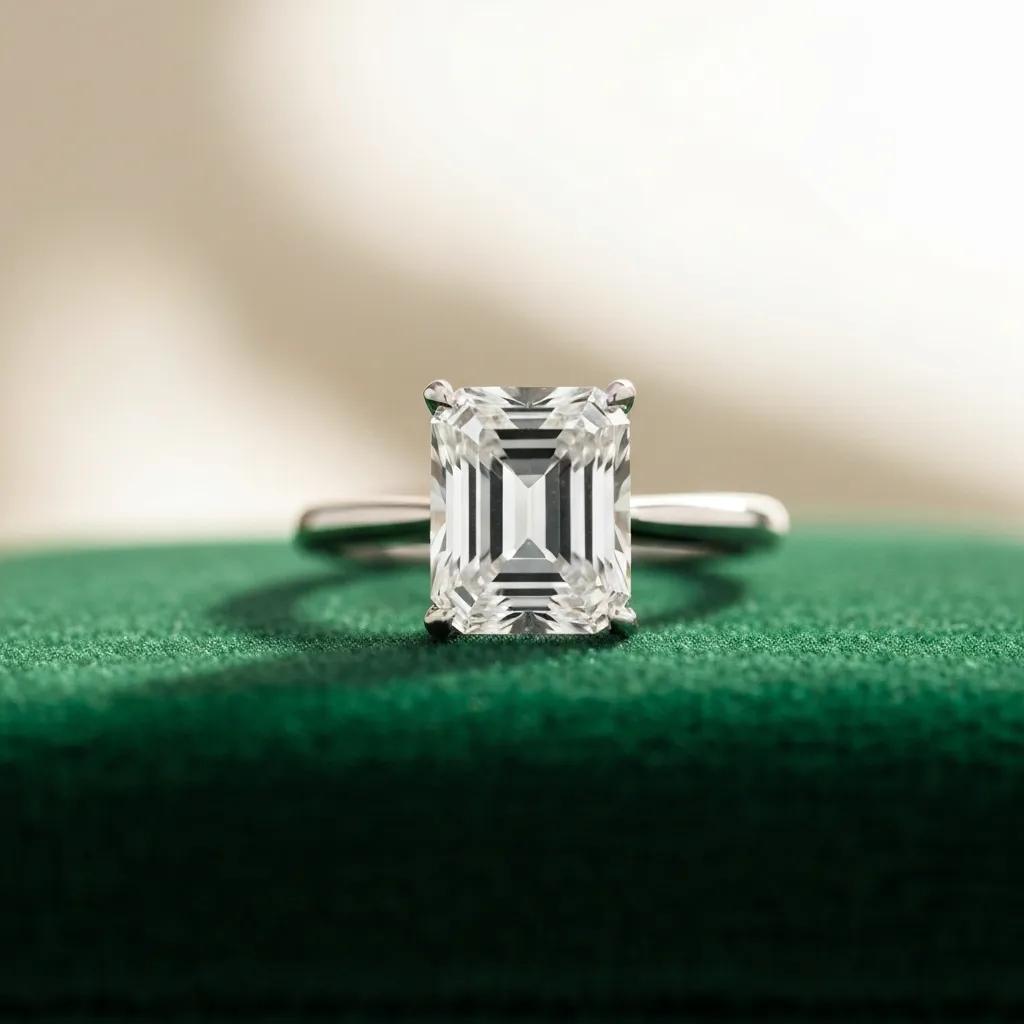
An emerald cut engagement ring features a rectangular step-cut diamond with cropped corners that emphasises clarity and creates a hall-of-mirrors effect, offering a sophisticated look on the finger. These cuts originated in the 1920s Art Deco era, imbuing modern rings with vintage charisma. Understanding these defining features leads us to examine how various settings showcase emerald cut diamonds.
What Are the Key Characteristics of an Emerald Cut Diamond?
Key characteristics of an emerald cut diamond include its elongated table facet, linear step cuts, and cropped corners. The step cuts produce broad flashes of light rather than pinpoint sparkle, so clarity grades of VS1 or higher are recommended. A length-to-width ratio between 1.30 and 1.50 ensures balanced proportions.
How Does the History of the Emerald Cut Influence Its Style?
Emerald cuts emerged in the 1920s Art Deco movement, where geometric forms and clean lines defined elegance. This historical pedigree inspires intricate milgrain detailing in vintage settings and minimalist prong work in contemporary designs. The cut’s legacy continues to influence modern rings seeking both sophistication and heritage.
History of the Emerald Cut
The emerald cut diamond gained popularity during the Art Deco period (1920s and 1930s) due to its clean lines and geometric form, which resonated with the design aesthetic of the time. This historical context continues to influence modern ring designs seeking both sophistication and heritage.
Gems of LaCosta, The History of Emerald Cut Diamonds and Their Most Famous Gems (2024)
This source explains the origins of the emerald cut and its rise to popularity during the Art Deco period, which directly supports the article’s discussion of the cut’s history and influence on style.
What Is the Ideal Length-to-Width Ratio for Emerald Cut Diamonds?
The ideal length-to-width ratio for emerald cut diamonds ranges from 1.30:1 to 1.50:1, balancing elongation with width for the most pleasing visual effect. Ratios below 1.30 appear too squat, while those above 1.50 can look overly narrow. Selecting a ratio within this range maximises table brilliance and finger coverage, guiding the choice of setting.
Ideal Length-to-Width Ratio
The ideal length-to-width ratio for emerald cut diamonds typically ranges from 1.30:1 to 1.50:1, which balances elongation with width for the most pleasing visual effect. Ratios outside this range can affect the overall appearance, with lower ratios appearing more square and higher ratios appearing more rectangular.
Petra Gems, Emerald Cut Diamonds | Guide, Proportions, L/W Ratios (2024)
This source provides specific guidance on the ideal length-to-width ratio for emerald cut diamonds, which directly supports the article’s discussion of this key characteristic.
Understanding these proportions prepares us to explore which settings best showcase emerald cut diamonds.
Which Engagement Ring Settings Best Showcase Emerald Cut Diamonds?
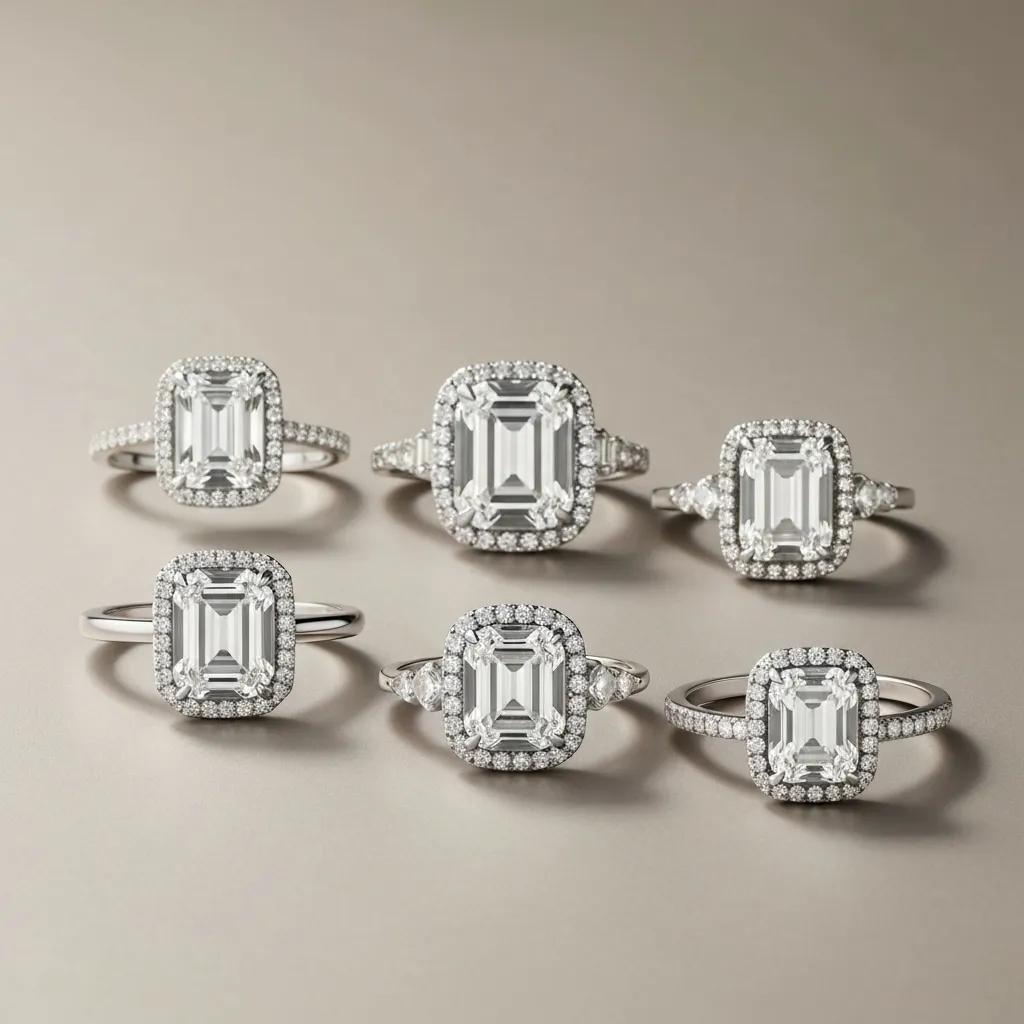
A well-chosen setting highlights the emerald cut’s step facets, showcasing clarity and architectural lines for maximum elegance. Preferred settings include solitaire, halo, three-stone, bezel, and vintage-inspired styles.
Before comparing individual styles, consider the attributes each setting brings:
Evaluating these setting attributes makes metal choices the next logical consideration.
How Does a Solitaire Setting Highlight an Emerald Cut Diamond?
A solitaire setting highlights an emerald cut diamond by lifting it above the band on slender prongs, creating unobstructed visibility of step facets. This minimalist mechanism maximises natural light reflection and draws attention to the diamond’s purity and proportions.
What Are the Benefits of Halo and Three-Stone Settings for Emerald Cuts?
Halo and three-stone settings enhance emerald cuts by framing the center stone with smaller diamonds, boosting overall sparkle. A halo creates a luminous border that magnifies table dimensions, while side stones in a three-stone design symbolise past, present, and future commitment.
How Do Bezel and Vintage-Inspired Settings Enhance Emerald Cut Rings?
Bezel and vintage-inspired settings give emerald cut rings enduring character and protection. A bezel rim secures the diamond within a sleek metal frame, reducing snag risks, while milgrain and filigree in vintage designs celebrate historical craftsmanship and ornate beauty.
With settings defined, the next step is selecting the ideal metal for your emerald cut ring.
What Metal Choices Complement Emerald Cut Engagement Rings?
Choosing the right metal influences both appearance and durability, reinforcing the emerald cut’s refined geometry.
Assessing metal properties clarifies how each option supports the emerald cut’s style.
Why Choose Platinum or White Gold for Emerald Cut Rings?
Platinum or white gold settings enhance an emerald cut diamond’s crisp reflections by providing a neutral silvery backdrop. Platinum’s density offers superior security, while white gold delivers similar brightness at a lower price point when plated with rhodium.
How Do Yellow Gold and Rose Gold Affect Emerald Cut Ring Styles?
Yellow gold and rose gold introduce warm color contrast that accentuates the emerald cut’s step facets. Yellow gold evokes vintage glamour, whereas rose gold imparts a romantic, contemporary vibe that can soften the diamond’s angularity.
With metal selection addressed, we can survey the full spectrum of design styles for emerald cut engagement rings.
What Are the Distinct Styles of Emerald Cut Engagement Rings?
Emerald cut rings span modern minimalism to classic and vintage revivals, each style emphasising different aesthetic qualities.
- Modern and minimalist designs feature sleek bands and hidden prongs for an ultra-clean look.
- Art Deco and vintage styles incorporate geometric motifs, milgrain edges, and engraved details.
- Classic and timeless rings rely on solitaire or three-stone layouts with subtle accent diamonds.
These style families illustrate the emerald cut’s versatility, leading naturally to alternative gemstone comparisons.
How Does Emerald Cut Moissanite Compare to Emerald Cut Diamonds?
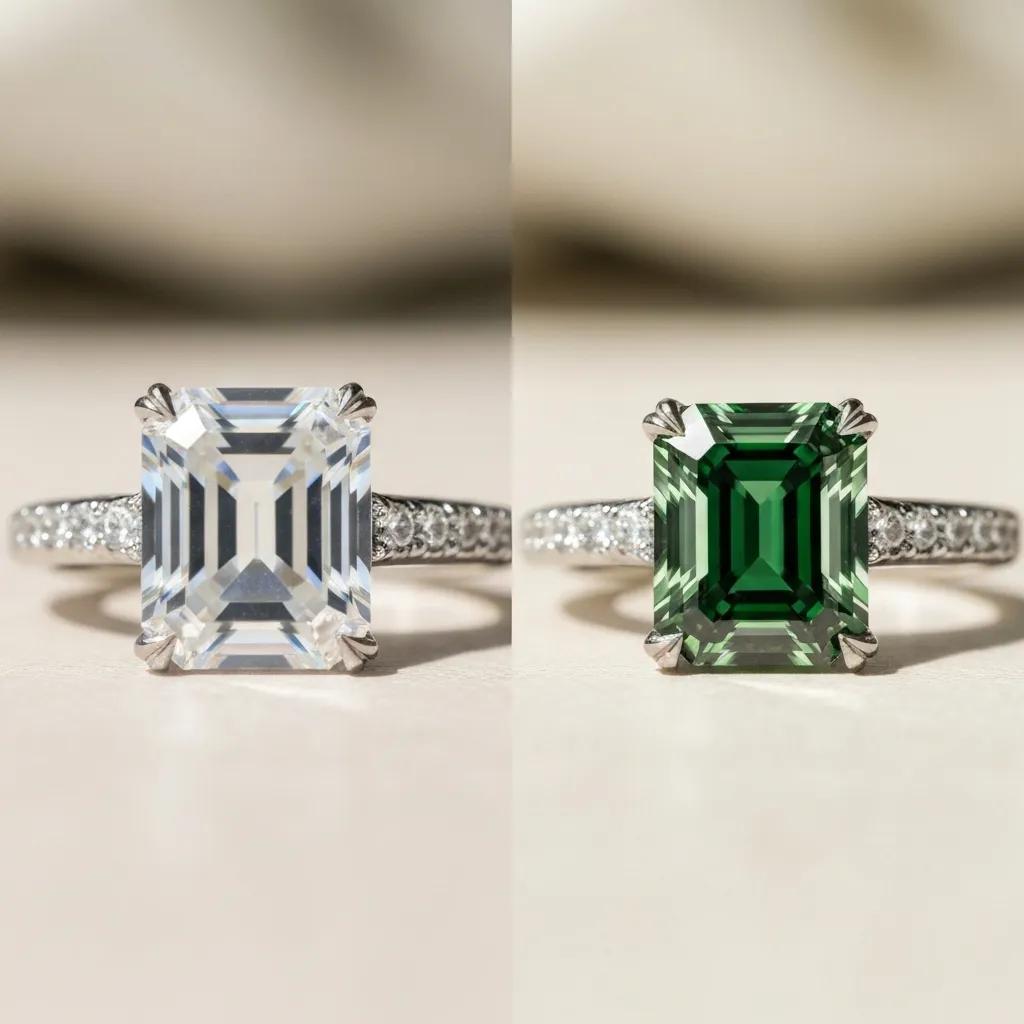
Emerald cut moissanite offers a cost-effective alternative, delivering high fire and brilliance with distinct visual nuances compared to diamonds.
What Are the Visual and Durability Differences Between Emerald Cut Moissanite and Diamonds?
Emerald cut moissanite exhibits greater fire (rainbow flashes) but lower hardness (9.25 on the Mohs scale) than diamonds (10), which maintain sharper facet edges. The step facets in moissanite appear slightly more scintillating, while diamonds provide unmatched resilience.
Moissanite vs. Diamond
Emerald cut moissanite offers a cost-effective alternative to diamonds, with distinct visual differences. Moissanite exhibits greater fire (rainbow flashes) but lower hardness than diamonds. Diamonds provide unmatched resilience and a more neutral sparkle profile.
Zuvelio, Moissanite vs Diamond: Which Looks Better in an Emerald Cut? (2025)
This source compares the visual and durability differences between emerald cut moissanite and diamonds, which directly supports the article’s comparison of these two gemstone options.
What Are the Benefits and Considerations of Choosing Emerald Cut Moissanite?
Choosing emerald cut moissanite offers affordability—up to 90% less cost—and ethical peace of mind as a lab-created gem. However, buyers should consider its sensitivity to scratching and distinct sparkle profile when comparing to traditional diamonds.
Emerald cut rings embody enduring elegance and adaptable design, ensuring your chosen style remains a cherished symbol of commitment.


