
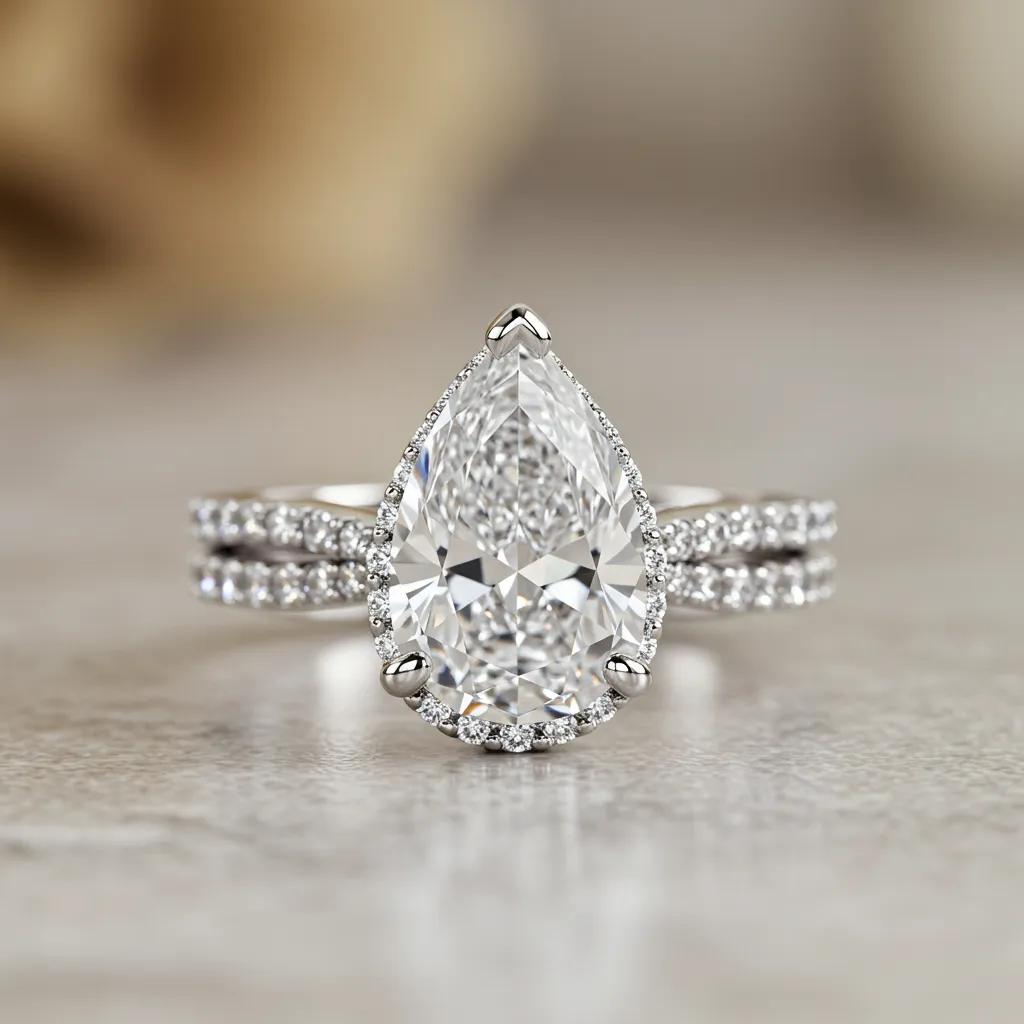
Teardrop Pear Diamonds: Buy & Set Guide – Australian Diamond Company
Discover the allure of the teardrop pear cut diamond, a stunning fusion of brilliant facet design and graceful tapering that maximises fire and creates a captivating silhouette for any jewellery piece. This comprehensive guide will equip you with the knowledge to assess quality, choose the perfect setting, sidestep common mistakes, explore popular styles, and make a confident purchase in Australia, all backed by the expertise of a leading Australian diamond company. You’ll gain a deep understanding of what defines a pear cut diamond, master the 4 Cs as they apply to this unique shape, compare different mounting options, decipher the nuances of the bow-tie effect, find inspiration for engagement rings, navigate local certification standards, and understand pricing factors before selecting your ideal teardrop diamond for that unforgettable moment.
What Exactly Are Teardrop Pear Cut Diamonds? Definition, History, and Distinctive Features
A teardrop pear cut diamond is a sophisticated hybrid, blending the brilliance of a round cut with the elongated elegance of a marquise. Its meticulously crafted facets direct light to produce exceptional sparkle and a distinctive drop-shaped outline that beautifully complements a variety of jewellery styles. First emerging in the 15th century, this cut represented a significant leap in both technical skill and aesthetic appeal, delivering maximum fire and a unique visual presence. Understanding its rich history and standout characteristics is key to evaluating its quality, selecting the ideal setting, and appreciating why this distinctive fancy shape continues to symbolise personal expression and refined artistry.
What is a pear cut diamond, and why is it referred to as a teardrop?
A pear cut diamond is characterised by a rounded end that gracefully tapers to a single, precise point, closely resembling the shape of a water droplet or a pear fruit. This elegant form merges the emotional warmth and sparkle of a round brilliant with the elongated sophistication of a marquise cut, expertly guiding light along its length to create pronounced scintillation. By echoing the natural teardrop form, it has a remarkable ability to elongate the appearance of the finger, creating a refined and captivating focal point, especially in engagement rings and pendants.
How did the pear cut diamond come into existence?
The origins of the pear cut diamond trace back to 1458, when a Flemish polisher named Lodewyk van Bercken introduced groundbreaking techniques for applying precise, hoof-shaped facets. This innovation was designed to maximise the diamond’s brilliance. It allowed cutters to channel light more effectively through its tapering profile, resulting in the creation of a distinctive, tear-shaped gemstone. Over the ensuing centuries, facet arrangements and symmetry standards were refined to enhance its sparkle, firmly establishing the pear cut as a cherished classic among fancy diamond shapes.
What sets teardrop diamonds apart from other fancy cuts?
Teardrop diamonds possess a unique charm due to their asymmetrical form, featuring a pointed tip for dramatic emphasis and a broad, rounded end that contributes to balanced sparkle. Unlike more symmetrical fancy cuts, the pear shape offers a customisable length-to-width ratio, allowing for a significant variation in visual impact – longer pear shapes appear more slender, while shorter ones seem broader. This versatility provides endless design possibilities and allows for deeply personalised symbolism.
Mastering the 4 Cs for Pear Diamonds: Carat, Colour, Clarity, and Cut
The quality assessment of pear diamonds relies on the universally recognised 4 Cs, which serve as objective grading benchmarks and directly influence the stone’s light performance and overall value. Each of these parameters – from its weight to the precision of its facets – plays a crucial role in shaping its brilliance, durability, and market price, guiding discerning buyers toward informed selections that harmonise aesthetic aspirations with budget realities.
This detailed breakdown clarifies precisely how each grading element shapes both the visual appeal and the market price of a pear diamond, empowering you to prioritise the attributes that are most important to you.
How does carat weight influence the size and price of a pear diamond?
Carat weight is the standard measure of a diamond’s mass, directly dictating its perceived size and its captivating sparkle. Larger pear diamonds naturally project a more substantial silhouette and command a higher price per carat due to their increased rarity. Buyers must carefully balance their desire for finger coverage with the financial implications, as each incremental increase in carat weight can exponentially amplify the cost.
What are the optimal colour grades for pear cut diamonds?
Pear diamonds exhibit their most striking brilliance when they fall within the near-colourless grades of D through F, where the absence of tint ensures crisp, pure sparkle. Grades G and H offer a more accessible price point with only a very slight warmth, which can beautifully complement vintage-inspired or rose-gold settings. Choosing the optimal colour grade ensures the diamond’s inherent sparkle remains uncompromised while harmonising perfectly with your chosen precious metal.
How should clarity be evaluated in pear shaped diamonds?
Clarity grading meticulously assesses internal inclusions and surface blemishes that might potentially interrupt the diamond’s light flow. Grades ranging from VS1 to SI1 often present an excellent balance between an eye-clean appearance and exceptional value. It is crucial to inspect the size, location, and visibility of any inclusions, particularly in the wider rounded end and the pointed tip, to select a pear diamond that is both visually clean and vibrantly brilliant.
Which cut quality factors are most critical for pear diamond brilliance?
The cut quality for pear diamonds encompasses several key factors, including symmetry, the precise alignment of facets, and the length-to-width ratio. Ideal symmetry ensures that light is dispersed evenly, while length-to-width ratios typically between 1.50:1 and 1.75:1 maintain balanced and aesthetically pleasing proportions. The meticulous execution of facet angles significantly boosts the diamond’s fire and sparkle, making cut arguably the most critical factor after carat weight.
Exploring the Best Pear Diamond Settings: Styles, Advantages, and Considerations
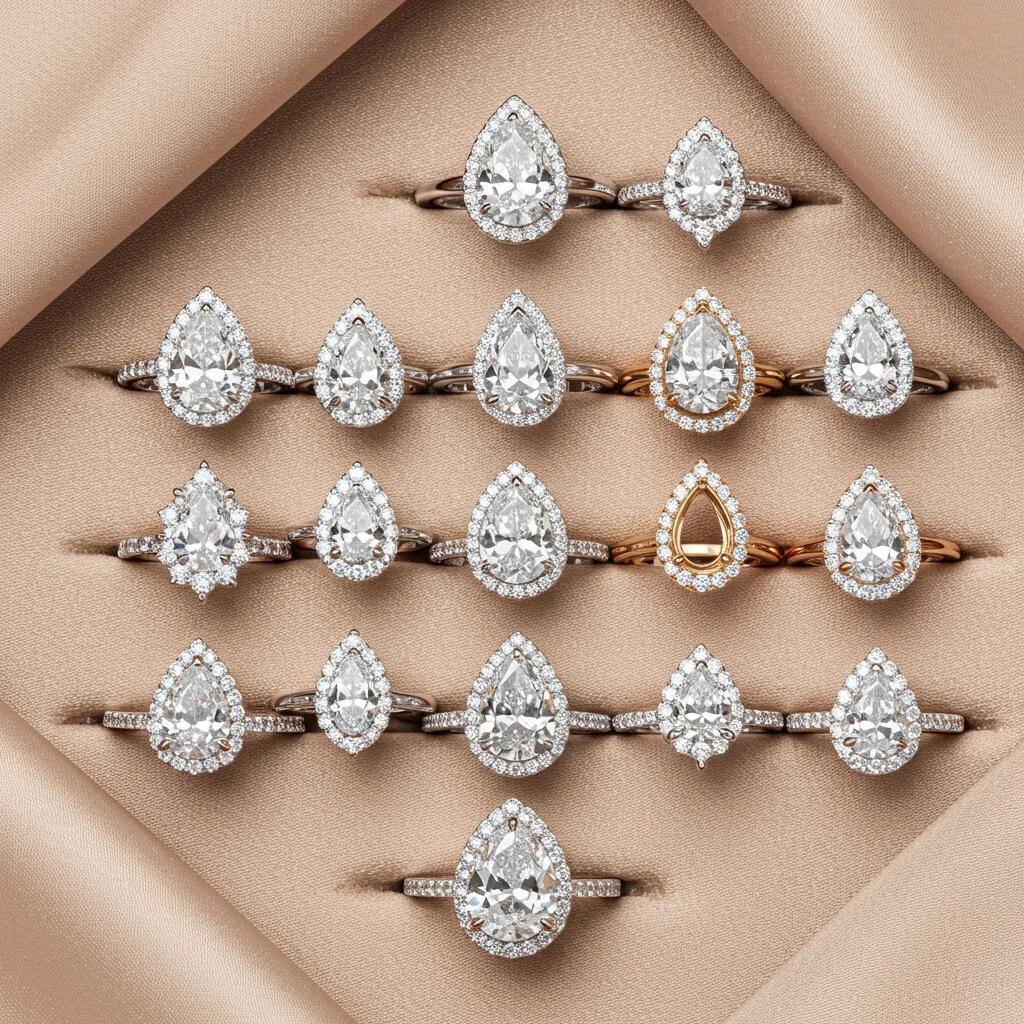
- Prong settings are designed to maximise light exposure by elevating the diamond above the band, thereby enhancing its brilliance while minimising metal coverage.
- Bezel settings fully encircle the diamond with a continuous metal rim, offering superior protection for its edges and creating a sleek, contemporary silhouette.
- Halo settings artfully surround the central pear diamond with a constellation of smaller accent stones, amplifying its perceived size and overall sparkle.
- V-prong protection specifically reinforces the delicate pointed tip of a pear diamond with a V-shaped claw, effectively guarding against potential chipping and abrasion.
How do prong settings effectively protect and showcase pear diamonds?
Prong settings utilise small, precisely placed claws to gently cradle the diamond at key points – typically three around the rounded end and two at the tip – ensuring the gem is held securely with minimal metal obstruction. By exposing a greater surface area of the diamond’s table and pavilion facets, this mounting style optimises light entry and exit, significantly enhancing brilliance while offering straightforward maintenance for the prongs themselves.
What are the key advantages of bezel settings for pear cut diamonds?
Bezel settings provide a continuous metal rim that completely encircles the diamond’s girdle, offering exceptional protection for its delicate edges and pointed tip against accidental impacts. This flush design not only presents a modern, streamlined aesthetic but also simplifies gemstone cleaning; however, it does slightly reduce the amount of light entering the diamond compared to open prong mountings.
How does a halo setting enhance the visual impact of pear diamond rings?
Halo settings artfully frame the pear diamond with a micro-pavé circle of smaller accent stones, which effectively reflect additional light back into the centre stone. This design strategy not only magnifies the diamond’s perceived size and fire but also draws the eye towards the elegant taper of the pear shape, creating a truly stunning and captivating profile.
What is V-prong protection, and why is it particularly important for pear diamonds?
V-prongs are a specialised type of claw, uniquely shaped like the letter “V,” designed to provide robust reinforcement to the pointed end of a pear diamond – the area most susceptible to chipping. By securely cradling this vulnerable tip within protective metal prongs, this thoughtful technique ensures enhanced durability without compromising the diamond’s classic drop silhouette or its overall dazzling sparkle.
Identifying and Avoiding the Bow-Tie Effect in Pear Diamonds
The bow-tie effect manifests as a noticeable dark shadow that stretches across the central portion of a pear diamond, typically caused by facet misalignment. This phenomenon can significantly impact light return and detract from the diamond’s overall brilliance. Learning to recognise and minimise this effect is essential for ensuring optimal sparkle and even light distribution, thereby elevating the gemstone’s visual performance.
What are the primary causes of the bow-tie effect in pear cut diamonds?
The characteristic bow-tie shadow arises when the pavilion facets are angled in such a way that they misdirect light away from the viewer’s eye, creating a distinctive butterfly or bow-tie-shaped dark area. Variations in the diamond’s depth, pavilion angle, and overall symmetry can amplify this effect, underscoring the critical importance of precise facet cutting in minimising contrast and maximising brilliance.
How can one effectively assess the severity of the bow-tie effect?
To assess the bow-tie effect, hold the diamond face-up under diffuse lighting conditions and gently rotate it to observe the central shadow. A faint, narrow bow-tie suggests well-balanced facet angles and optimal light performance, whereas a broad, dark region indicates excessive light leakage. Professional imaging tools and detailed proportion data found on diamond certificates can provide a more quantifiable assessment of the bow-tie’s severity.
A thorough understanding of the bow-tie effect’s nuances is absolutely vital when selecting a pear diamond that promises exceptional brilliance.
Grading of Pear-Shaped Diamonds and the Bow-Tie EffectA: Pear-shaped diamond RD133 exhibits a narrow bow-tie across… showed some variance in the assessment of the intensity of bow-tie patterns (contrast…OBSERVATIONS OF OVAL-, PEAR-, AND MARQUISE-SHAPED DIAMONDS: IMPLICATIONS FOR FANCY CUT GRADING., Unknown Author, 2024
What are the expert recommendations for minimising the bow-tie effect in pear diamonds?
To optimise light return, select pear diamonds with pavilion depths typically ranging from 43–47 percent and crown angles close to 35–38 degrees. Adhering to recommended length-to-width ratios helps ensure balanced facet geometry. Furthermore, carefully examining high-resolution images or videos under consistent lighting conditions will allow you to choose stones exhibiting subtle or virtually imperceptible bow-tie shadows.
Discover Popular Pear Diamond Engagement Ring Styles and Designs
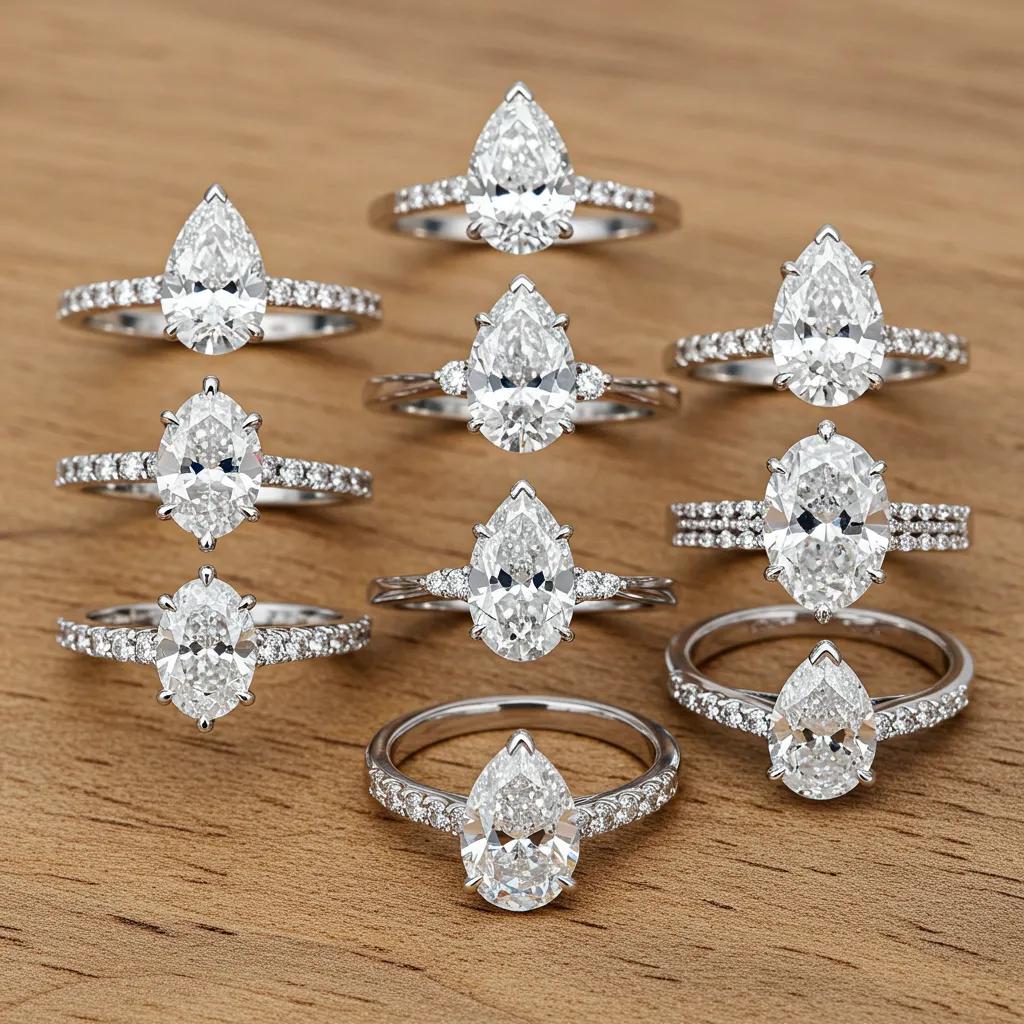
The spectrum of popular pear diamond engagement rings spans from timeless solitaire designs to intricately detailed vintage settings. Each style masterfully leverages the pear shape’s inherent asymmetry to create a distinctive focal point that beautifully flatters a variety of finger shapes. Familiarising yourself with these style variations will guide you in selecting a ring that perfectly reflects your personal taste and complements your lifestyle.
What characterises classic solitaire pear diamond engagement rings?
Solitaire pear engagement rings are defined by a single, exquisite teardrop diamond, elegantly held in place by minimal prongs atop a simple, unadorned metal band. This enduring design choice places the spotlight squarely on the diamond’s clean lines, maximises light entry for exceptional sparkle, and seamlessly suits both traditional and contemporary aesthetic preferences.
How do vintage-inspired pear diamond rings differ in their design elements?
Vintage-inspired pear rings are distinguished by their intricate metalwork, delicate milgrain detailing, and often feature charming floral motifs encircling the centre stone. These heirloom-style settings frequently incorporate filigree or elaborate gallery accents to evoke a sense of romantic nostalgia, while still beautifully showcasing the unique tear-shaped diamond.
What are the trending modern pear diamond ring styles?
Contemporary pear designs are pushing boundaries with an emphasis on asymmetry, often featuring unique bypass bands, innovative tension mountings, or striking mixed-metal accents. Sleek bezel settings, sideways orientations of the pear shape, and geometrically inspired shanks offer a fresh, modern interpretation of this classic cut, appealing particularly to those with a fashion-forward sensibility.
How are pear diamonds incorporated into earrings and pendants?
Beyond their prominence in engagement rings, pear diamonds lend themselves beautifully to creating graceful drop earrings and elegant pendants that echo their signature teardrop silhouette. Vertical bails and surrounding halo frames can accentuate the diamond’s length, while carefully paired designs ensure balanced sparkle that harmonises perfectly with neckline and facial features.
Where and How to Purchase Pear Diamonds in Australia: Local Insights and Certification Essentials
Acquiring a pear diamond in Australia necessitates a thorough verification of certification standards and a discerning selection of reputable retailers. This approach ensures you receive excellent value, ethically sourced stones, and reliable post-purchase support, fostering complete confidence in your quality and investment. Local expertise and transparent grading practices are the cornerstones of a successful and satisfying diamond purchase.
Why is GIA certification considered essential for pear diamonds?
GIA certification offers an impartial and authoritative assessment of a diamond’s 4 Cs and its precise proportions, serving as a guarantee that the diamond’s quality claims align perfectly with its intrinsic characteristics. This independent verification process builds invaluable trust and significantly simplifies the process of comparing different stones.
How can one identify trusted Australian diamond retailers specialising in pear cuts?
Seek out established jewellers renowned for their transparent grading disclosures, provision of detailed imagery, and positive customer testimonials. Retailers who offer personalised in-house consultations, bespoke custom design services, and comprehensive after-sales care demonstrate a strong commitment to quality and client satisfaction within the Australian market.
What key considerations should Australian buyers keep in mind when purchasing pear diamonds?
It is important to factor in regional pricing trends, the availability of service warranties, and the retailer’s ethical sourcing policies. Carefully review local return and resizing options, consider potential customs duties if importing gems, and prioritise retailers who rigorously adhere to conflict-free diamond sourcing standards.
Understanding the Price Factors for Pear Shaped Diamonds: Value and Cost Dynamics
The pricing of pear diamonds is a complex interplay of their precise proportions, grading attributes, and the intricacy of their setting, all of which contribute to significant cost variations and ultimately shape the investment value. A careful analysis of each contributing factor will enable you to optimise your budget allocation while achieving your desired visual impact and ensuring lasting durability.
A thorough understanding of the various setting techniques is fundamental for both safeguarding and enhancing the aesthetic appeal of pear-shaped diamonds.
Professional Diamond Setting Techniques for Pear-Shaped Diamonds… -cut diamonds. Procedure for bezel setting a pear-shaped diamond… To fully appreciate the art of diamond setting, it is beneficial… split and levered onto a diamond to provide security. Other applications…Diamond Setting: The Professional Approach, Unknown Author, 1983
How does the length-to-width ratio impact the price of a pear diamond?
The length-to-width ratio is a defining characteristic that dictates a pear diamond’s visual profile: narrower drops appear more slender and elongated, while wider drops present a broader appearance. Ratios falling outside the most sought-after range may result in reduced market demand and consequently command lower prices. Conversely, the most popular and aesthetically balanced proportions often attract premium pricing due to their superior light performance and visual appeal.
What is the role of the 4 Cs in determining the price of pear diamonds?
Each of the 4 Cs plays a direct and significant role in a diamond’s cost: larger carat weights elevate the per-carat rate, higher colour grades command premiums for their exceptional near-colourless appearance, superior clarity minimises visible inclusions at an additional expense, and ideal cut grades substantially increase value by maximising brilliance and fire.
How do different setting styles influence the total price of pear diamond rings?
The complexity of the setting directly impacts labour costs and the quantity of precious metal used. Simple prong mounts require minimal fabrication, whereas bezel, halo, and intricate vintage designs necessitate additional accent stones, detailed craftsmanship, and more metal, all of which contribute to a higher final ring cost relative to the centre diamond itself.
To find the perfect teardrop pear cut diamond that aligns with your unique style and budget, we invite you to explore our meticulously curated collection or schedule a personal consultation with our dedicated Australian Diamond Company specialists. We offer tailored guidance and seamless custom design support to bring your vision to life.


