
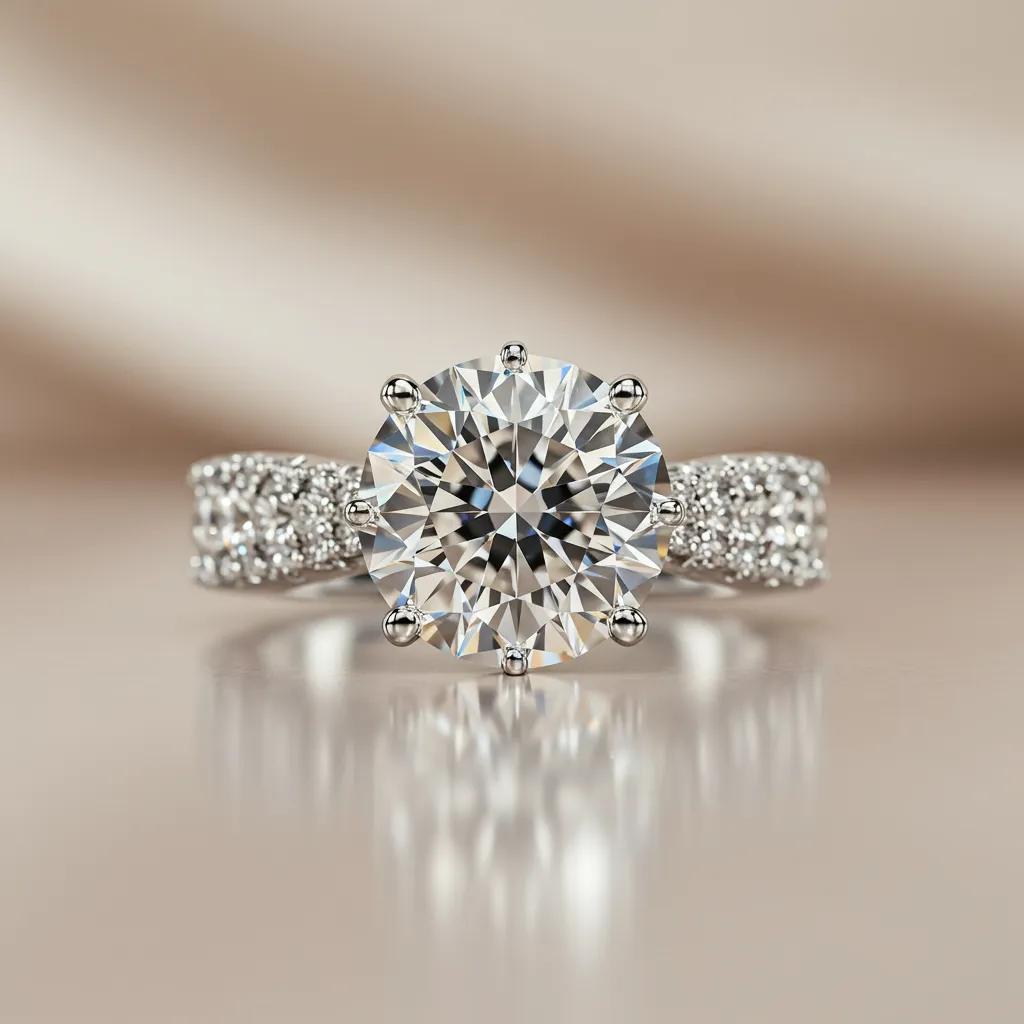
The 4Cs of Diamonds: Your Essential Guide to Diamond Quality and Value
https://www.adc.com.au/choose-the-perfect-diamond-for-your-engagement-ring-today/ Diamonds are a timeless emblem of sophistication, yet choosing the perfect stone can feel daunting when quality factors seem complex. By grasping the four key attributes: Cut, Colour, Clarity, and Carat Weight, you’ll gain the confidence to compare stones objectively and make a wise investment. To understand how these characteristics work together and influence your final choice, our diamond buying guide offers a clear framework for evaluating quality. This guide will demystify each “C,” explain how they combine to determine a diamond’s value and brilliance, explore GIA grading standards, examine certifications like GIA and AGS, and offer expert advice for selecting the ideal diamond for engagement rings or exquisite jewellery. Discover how the Australian Diamond Company’s personalised diamond education and curated collections provide local insights and professional support to guide your decision.
What Are the 4Cs of Diamonds and Why Do They Matter?
The 4Cs of Diamonds define a gem’s quality by measuring its proportions, hue, internal purity, and weight, ensuring predictable beauty and lasting value. Understanding these attributes allows you to distinguish a truly brilliant, lifelong treasure from an ordinary stone. Cut influences how a diamond interacts with light, Colour assesses its lack of hue, Clarity examines its internal and external imperfections, and Carat Weight denotes its size. When these factors are harmonised, they create exceptional sparkle at a price that aligns with your priorities. Grasping their interplay will help you focus on what matters most to your budget and aesthetic preferences, leading you to the perfect diamond.
What Is Diamond Cut and How Does It Affect Sparkle?
Diamond Cut refers to the precision of a diamond’s angles, proportions, and polish, which directly dictates its brilliance and fire. An expertly executed cut maximises light refraction and reflection, resulting in dazzling sparkle that captivates even in low light. Precise symmetry and facet alignment create scintillation, the dynamic play of light and dark areas that draws the eye. A poorly crafted cut, regardless of its colour or clarity, can make a diamond appear dull. Considering cut first ensures you achieve the most radiant possible outcome.
How Is Diamond Colour Graded and Why Is It Important?
Diamond Colour grading measures the absence of body colour on a scale from D (colourless) to Z (light yellow or brown), where less hue translates to higher value. Colourless diamonds allow white light to pass through unimpeded, enhancing brilliance, while warmer tones can subtly diminish sparkle. Even slight variations in hue between grades can significantly impact price without being dramatically noticeable to the unaided eye. Opting for near-colourless grades (G–J) often provides the best balance between visual appeal and cost.
What Does Diamond Clarity Mean and How Is It Evaluated?
Diamond Clarity describes the presence of internal inclusions and external blemishes when viewed under magnification, indicating the stone’s purity and transparency. Gemologists assess clarity by identifying and rating these imperfections, ranging from Flawless (no inclusions) to Included (inclusions visible to the naked eye). Fewer or less prominent inclusions allow light to travel through the diamond more freely, boosting its brightness. An “eye-clean” clarity grade (typically VS2–SI1) often appears pristine in everyday wear, offering superior value compared to higher grades where differences are imperceptible without magnification.
The Impact of Graining on Diamond Clarity Grading at GIAThe impact of internal whitish and reflective graining on the clarity grading of D-to-Z colour diamonds at the GIA laboratoryThe impact of internal whitish and reflective graining on the clarity grading of D-to-Z color diamonds at the GIA laboratory, W Wang, 2006
How Does Carat Weight Influence Diamond Size and Value?
Carat Weight is a measure of a diamond’s mass, with one carat equivalent to 0.2 grams. Larger stones typically command exponentially higher prices. While weight is a factor in size, the diamond’s cut proportions and depth also affect its perceived dimensions. Small differences in weight, especially below significant thresholds, can lead to considerable savings without a noticeable visual reduction in size. Total Carat Weight refers to the combined weight of multiple stones in a piece of jewellery, influencing its overall design and value.
How Do the 4Cs Work Together to Determine Diamond Quality?
The 4Cs form an interconnected system where excellence in one area can compensate for minor compromises in another, helping you achieve your desired aesthetic and budget. A superior cut can enhance brilliance to the point where slight colour or clarity variations are less apparent. Similarly, a larger carat weight can draw attention away from a slightly lower colour grade. Prioritising cut and clarity often yields the most dramatic visual impact, while budget constraints might lead you to choose a warmer colour or slightly more inclusions. By carefully considering the effect of each attribute on sparkle and value, you can create a balanced, personalised choice.
How Is Diamond Cut Graded According to GIA Diamond Standards?
GIA Cut Grades assess round brilliant diamonds based on their proportions, light performance, and finish, ensuring consistency in sparkle and fire. The grading process involves precise measurements of the crown angle, pavilion depth, table size, and girdle thickness to predict how light will interact within the stone. A combination of mechanical and human inspection verifies the quality of symmetry and polish. These stringent criteria guide consumers towards diamonds that exhibit exceptional brilliance.
Grading the Quality of Round Brilliant Cut DiamondsA basis for assessing the overall cut quality of round brilliant cut diamondsA foundation for grading the overall cut quality of round brilliant cut diamonds, Unknown Author, 2004
What Are the GIA Cut Grades and Their Criteria?
- Light Performance: Assesses brightness, fire, and scintillation using imaging and modelling techniques.
- Proportions: Evaluates angles and facet dimensions against established ideal ranges.
- Finish: Examines symmetry and polish under magnification.
Diamonds graded as “Excellent” demonstrate optimal light return, while those rated “Fair” or “Poor” exhibit significant light leakage.
What Are Ideal Proportions for Maximum Brilliance and Fire?
Maintaining proportions within these ranges is key to achieving the signature sparkle that distinguishes an excellent cut from a merely good one.
How Do Fancy Shape Cuts Differ from Round Brilliant Cuts?
Fancy shape cuts, such as oval, princess, and emerald, feature varied facet arrangements and proportions designed to accentuate length, step facets, or unique outlines. Unlike the symmetrical pavilion of a round brilliant, fancy shapes often require specialised grading considerations, including length-to-width ratio and the potential for a “bow-tie” effect in oval cuts. While they might offer slightly less light return than top-grade round brilliants, they provide distinct personality and are often more affordable per carat for comparable visual impact.
What Tips Help Choose a Well-Cut Diamond?
- Compare stones within similar carat and budget ranges to clearly see differences in sparkle.
- Prioritise diamonds with Excellent or Very Good cut grades for round brilliants and request optical images.
- Ask for a diamond proportion diagram to verify ideal dimensions and avoid overly deep or shallow cuts.
Selecting a diamond with proven light performance ensures it will dazzle beautifully in any setting.
How Does Diamond Colour Affect Appearance and Price?
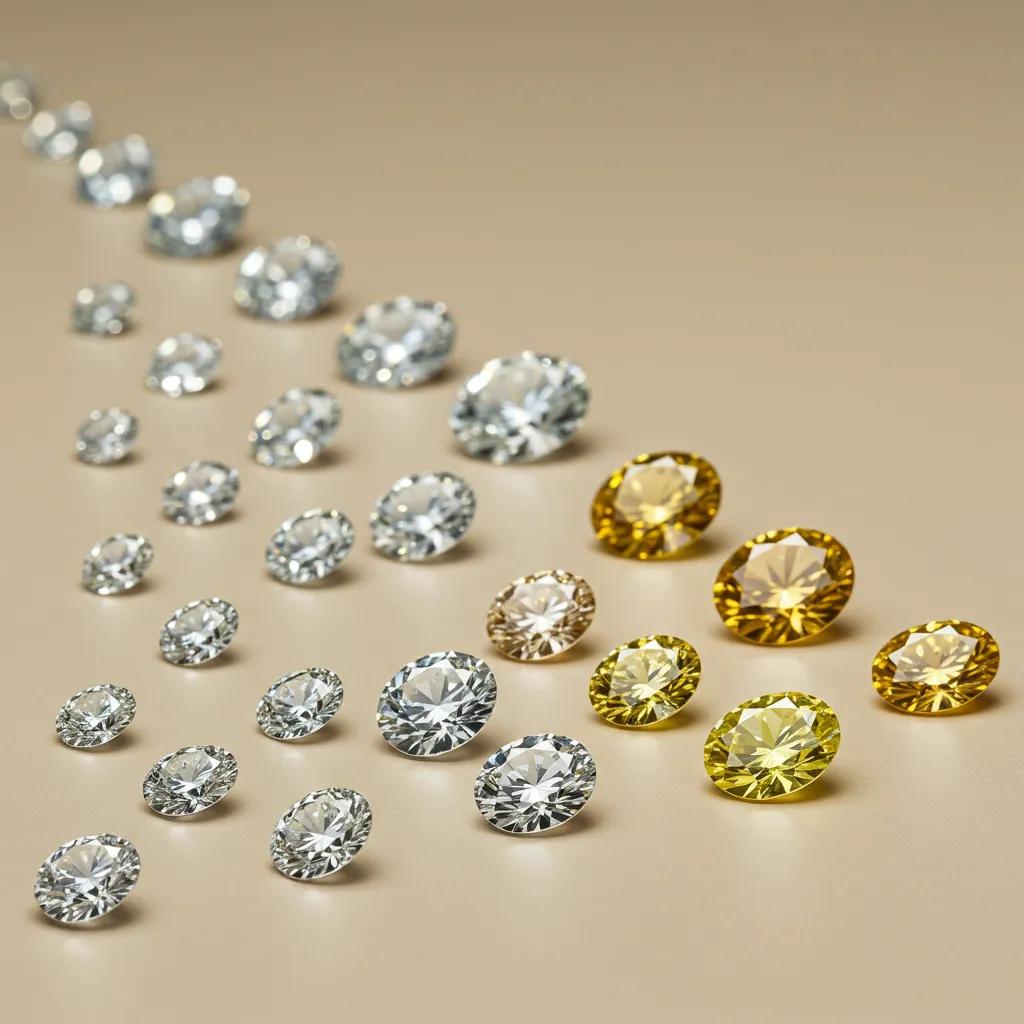
Diamond Colour plays a crucial role in a stone’s visual brightness and its market value, indicating the presence of trace tints. Colourless grades (D–F) appear icy white and command the highest prices, while near-colourless options (G–J) offer virtually identical brilliance at a more accessible cost. Understanding how fluorescence and subtle warm tones affect appearance allows you to make informed choices without sacrificing sparkle.
What Is the D-to-Z Colour Scale Explained?
Colour differences are often more apparent under magnification than to the naked eye, making near-colourless grades an excellent choice for budget-conscious buyers.
How Does Fluorescence Influence Diamond Colour Perception?
Fluorescence describes a diamond’s reaction to ultraviolet light, typically emitting a soft blue glow. Moderate to strong fluorescence can counteract yellow tints in lower colour grades, making a K or L grade appear whiter in daylight. However, excessive fluorescence in higher-grade stones might create a hazy or milky appearance. Evaluating fluorescence effects under various lighting conditions helps ensure predictable visual performance.
What Are Warm vs Cool Diamond Colour Tones?
Warm tones, often appearing yellow or brown, can soften a diamond’s brilliance, whereas cool tones, such as blue or grey, tend to enhance perceived whiteness.
- Warm-toned stones (K–M) can beautifully complement settings in yellow gold.
- Cool-toned diamonds, sometimes with blue fluorescence or grey undertones, often appear crisper against white metals like platinum or white gold.
Selecting a tone that harmonises with your chosen metal and personal style ensures a cohesive and elegant jewellery design.
How to Choose the Right Colour Grade for Your Budget?
Achieve a balance between appearance and cost by targeting near-colourless grades (G–J) for round brilliant diamonds, and consider how fluorescence might enhance lower grades. Assess your personal preference for warmth by comparing actual stones or using simulation tools. If budget allows, prioritise higher colour grades for larger diamonds, as hue is more easily detected in bigger stones.
What Should You Know About Diamond Clarity and Its Grading?
Diamond Clarity grading quantifies imperfections using magnification to assess a stone’s transparency and brilliance. Grades range from Flawless (no imperfections) to Included (visible inclusions), impacting light passage and structural integrity. An “eye-clean” designation signifies that no flaws are visible to the naked eye under normal viewing conditions, offering exceptional value without compromising everyday appearance.
Objective Clarity Grading of Diamonds: The GIA Scale as a ModelThe GIA’s clarity grading scale, much like its overall diamond grading system, has established itself as the benchmark for objective diamond clarity grading.Objective Diamond Clarity Grading., Unknown Author, 2014
What Are the Clarity Grades from Flawless to Included?
Focusing on VS2–SI1 grades often secures an eye-clean appearance while offering substantial cost savings.
What Types of Inclusions and Blemishes Affect Clarity?
Common internal inclusions include feathers, crystals, needles, and clouds, while external blemishes can manifest as scratches or nicks. Each type affects light transmission differently:
- Feathers are internal fractures that can impact durability but are often invisible in secure settings.
- Crystals are mineral inclusions that may appear as dark or light spots under magnification.
- Clouds are clusters of tiny inclusions that can diffuse light if numerous or large.
What Does “Eye-Clean” Mean in Diamond Clarity?
“Eye-clean” signifies that no inclusions or blemishes are visible to the naked eye when a diamond is viewed from a typical distance. Many diamonds in the VS2 and SI1 clarity grades achieve this standard, allowing you to prioritise carat weight or colour without compromising the diamond’s apparent purity. Always confirm eye-clean status through actual images or video inspections.
How Does Clarity Magnification Help in Grading?
Gemologists employ 10× magnification and controlled lighting conditions to precisely detect, measure, and map inclusions, ensuring consistent and accurate clarity grades. Advanced imaging techniques reveal the depth and orientation of flaws, supporting reliable ratings that consumers can trust when comparing diamonds. Insights derived from magnification reports empower confident purchasing decisions.
How Does Carat Weight Impact Diamond Size and Price?
Carat Weight, a measure of a diamond’s mass, directly influences its price; each additional fraction of a carat can significantly increase the cost. However, the perceived size of a diamond is also affected by its shape and cut proportions. A well-cut 0.90-carat diamond might appear similar in diameter to a 1.00-carat stone with less ideal proportions. Understanding “magic sizes” and the implications of total weight ensures you invest in visible impact rather than paying solely for mass.
What Is the Difference Between Carat Weight and Diamond Size?
Carat Weight measures a diamond’s mass, whereas size refers to its physical dimensions, such as diameter or surface area. Two diamonds of the same carat weight can look different: a shallow, wide cut may appear larger face-up than a deeper cut diamond, despite having identical weight. Prioritising the diamond’s spread (its face-up size) alongside its weight maximises its visual presence.
What Are “Magic Sizes” in Carat Weight?
Magic sizes are psychologically significant carat weight thresholds, such as 0.50, 1.00, 1.50, and 2.00 carats, where prices tend to escalate sharply.
- A 1.00-carat diamond often marks the most substantial jump in per-carat pricing.
- Prices continue to rise significantly at 1.50 and 2.00 carats, especially for higher quality stones.
Opting for a diamond just below these thresholds can result in substantial savings without a noticeable difference in size.
How Does Total Carat Weight Affect Jewellery Value?
Total Carat Weight aggregates the weight of all diamonds within a piece of jewellery, significantly influencing its overall appraisal value and visual impact. In items like tennis bracelets or halo settings, the combined weight contributes more to the perception of luxury than the weight of individual stones. ADC’s expertly selected tennis bracelets utilise balanced total weight to achieve consistent brilliance across the entire design.
What Are Practical Tips for Choosing Carat Weight?
Compare diamonds slightly below major price thresholds, examine actual face-up images, and consider the chosen setting style. Settings such as halos or those featuring side stones can amplify a diamond’s perceived size, allowing you to allocate more budget towards cut and colour at lower carat weights. Balancing total carat weight with quality factors ensures an impressive yet cost-effective selection.
How Do Diamond Certifications Like GIA and AGS Validate the 4Cs?
Certifications from reputable laboratories like GIA and AGS provide objective verification of a diamond’s 4Cs, ensuring industry-wide consistency and trust. Each report details precise measurements, clarity mapping, colour assessment, and cut analysis performed by accredited gemologists. Certification confirms a diamond’s authenticity and underpins its long-term value.
What Is the Role of GIA in Diamond Grading?
The Gemological Institute of America (GIA) pioneered the 4Cs system and upholds rigorous, unbiased grading standards that are recognised globally. GIA reports include detailed proportion diagrams, clarity plots that map imperfections, fluorescence notation, and ratings for polish and symmetry, providing consumers with credible data to compare diamonds confidently.
How Does AGS Certification Compare to GIA?
The American Gem Society (AGS) uses a cut grading scale from 0 to 10, with 0 representing an Ideal Cut. While AGS and GIA share similar criteria for clarity and colour, AGS places a stronger emphasis on advanced light performance modelling. Both certifications are highly respected, though differences in their cut grading scales might influence a final grade selection.
Why Is Certification Important When Choosing a Diamond?
Certified diamonds offer transparency, minimise the risk of misrepresentation, and facilitate future resale or insurance appraisals. Independent laboratory reports confirm that the diamond’s cut, colour, clarity, and carat weight align with established industry benchmarks, providing peace of mind and objective assurance.
How to Read a Diamond Certificate for the 4Cs?
Familiarise yourself with these key sections of a diamond certificate:
- Report Number: Used for online verification.
- Cut Diagram: Illustrates the diamond’s facet measurements and angles.
- Colour Grade: Indicates the diamond’s position on the D–Z scale.
- Clarity Plot: Maps the location and type of inclusions and blemishes.
- Carat Weight: Specifies the diamond’s mass and dimensions.
How to Choose the Perfect Diamond Using the 4Cs for Your Jewellery?
Selecting the ideal diamond involves aligning your personal aesthetic preferences, budget, and lifestyle with the balanced interplay of the 4Cs. Whether you are designing an engagement ring or commissioning a fine necklace, making informed decisions about cut, colour, clarity, and carat weight will result in a stone that radiates beauty and retains its value. By leveraging ADC’s personalised diamond education and expert consultations, you gain access to local market insights and hands-on guidance specifically tailored to Australian conditions.
What Are Key Considerations When Selecting Diamonds for Engagement Rings?
Prioritise cut quality to maximise sparkle for everyday wear, followed by clarity to ensure an eye-clean appearance. Select a colour grade that complements your chosen metal; near-colourless diamonds pair beautifully with white gold or platinum, while warmer tones enhance yellow gold. Finally, choose a carat weight that balances finger proportions and your budget. Consulting with qualified gemologists can help refine these choices.
How Do the 4Cs Influence Diamond Value and Visual Beauty?
Cut dictates a diamond’s immediate visual impact, while clarity and colour determine its transparency and fire. Carat weight influences its size and perceived status. A well-cut diamond can appear brighter and even larger than a heavier stone of lower quality, highlighting how prioritising light performance often yields superior results. True value is achieved by finding the right balance that suits your personal style and financial parameters.
What Are Common Misconceptions About the 4Cs?
A prevalent misconception is that carat weight is the most important factor, when in reality, cut quality often has a more significant impact on a diamond’s beauty than its sheer size. Another common misunderstanding is that flawless clarity is essential; in practice, eye-clean VS2 or SI1 grades offer an identical appearance for daily wear at a considerably lower cost. Understanding these distinctions helps prevent overpaying for imperceptible differences.
How Does the Australian Diamond Market Affect Your Choice?
Australia’s dynamic retail environment and competitive pricing for both local and imported diamonds offer a wide selection of natural and lab-grown options. Recent market trends indicate consistent demand for near-colourless round and oval diamonds, with prices showing stability after minor fluctuations. ADC’s specialised local expertise ensures you can capitalise on regional trends and secure the best available selection.
How Does ADC Support You with Personalised Diamond Education?
Through personalised one-on-one consultations, ADC’s expert gemologists guide you through the intricacies of the 4Cs, provide side-by-side comparisons, and explain market conditions specific to Australia. Interactive viewing tools and expert-led videos help you visualise potential trade-offs and build confidence in your purchase, a service designed to enhance your diamond buying journey.
What Are Frequently Asked Questions About the 4Cs of Diamonds?
From thousands of customer inquiries, four key themes consistently emerge: the importance of prioritising one “C,” the impact of each factor on pricing, the distinctions between natural and lab-grown diamonds, and the trade-offs between colour and cut. Understanding these answers will empower you to approach diamond selection with clarity and confidence.
What Is the Most Important C Among Cut, Colour, Clarity, and Carat?
Cut is widely considered the most critical factor because it governs how light interacts with the diamond, creating the brilliance and fire that can overshadow minor variations in colour or clarity. A superb cut transforms available light into intense sparkle, enhancing the diamond’s perceived size and overall value more than any other attribute.
Since cut quality has the greatest impact on a diamond’s brightness and beauty, exploring our guide to diamond cut and brilliance can help you understand why two stones with similar grades can look remarkably different.
How Do the 4Cs Affect Diamond Pricing?
Diamond prices increase exponentially with improvements in cut grade, higher colour grades, finer clarity, and larger carat weights. While each “C” contributes to the price, cut quality often has one of the steepest cost curves due to its direct impact on visual appeal. Budget-conscious buyers frequently prioritise cut, then select balanced colour and clarity grades that are just below the top-tier levels.
What Are the Differences Between Natural and Lab-Grown Diamonds?
Natural diamonds are formed over billions of years deep within the Earth and often carry a premium status. Lab-grown diamonds possess identical chemical and optical properties but are created in a matter of months using advanced technology. Lab-grown diamonds typically cost 20–40% less per carat and offer ethical assurances, while natural diamonds retain traditional prestige and potential for future resale value.
Can a Lower Colour Grade Still Look Beautiful with an Excellent Cut?
Absolutely. An excellent cut can effectively mask a slightly lower colour grade by maximising brilliance and fire, making a G or H grade appear visually equivalent to D–F under many lighting conditions. Prioritising cut allows you to achieve vivid sparkle while benefiting from cost savings on the colour grade.
How Can You Verify the Authenticity of a Diamond’s 4Cs?
Always request an independent certification report from a reputable laboratory such as GIA or AGS. Verify the report number on the lab’s official website, carefully examine the proportion diagrams and clarity plots, and compare any diamond imaging to the descriptions provided in the report. This diligent approach ensures the diamond’s attributes precisely match its documented grades.
Diamonds beautifully merge technical precision with profound emotional significance, and mastering the 4Cs illuminates the path to a flawless purchase. By focusing on cut first, balancing colour and clarity, and selecting a carat weight that aligns with your budget and style, you secure a gem that will dazzle for generations. Partnering with the Australian Diamond Company’s experienced gemologists enhances your confidence through personalised education and carefully curated selections tailored to Australia’s unique market.
Understanding the 4Cs is the foundation of choosing a beautiful diamond, but seeing how these quality factors come together in real designs can make your decision even easier. If you’re ready to compare shapes, sizes and grades with confidence, our how to choose a diamond guide provides a clear, practical framework to help you find the perfect match for your style and budget.


