
Diamond Clarity: Your Essential Guide to Choosing Brilliance
Embarking on the journey to find your perfect diamond starts with understanding clarity – a crucial element that shapes a stone’s brilliance, resilience, and ultimate worth. For anyone considering an engagement ring or a special piece of fine jewellery, grasping the nuances of diamond clarity explained empowers you to strike the ideal balance between breathtaking beauty and a sound investment. This comprehensive guide will illuminate what clarity truly means, how grading systems work, which imperfections matter most, and how to pinpoint the perfect clarity grade for your unique style and budget. We’ll also delve into the world of certification, explore the latest trends in the Australian market, and equip you with the knowledge to assess clarity like a seasoned professional.
What Exactly Is Diamond Clarity and Why Is It So Important?
Diamond clarity refers to the presence, or absence, of internal characteristics known as inclusions, and external imperfections called blemishes. These features can influence a diamond’s sparkle and its structural integrity. A precise clarity grading ensures you select a gem that not only captivates with its brilliance but also stands the test of time and everyday wear.
How Are Diamond Clarity Grades Determined and Measured?
Clarity is assessed based on five key attributes: the number, size, nature, position, and contrast (relief) of any inclusions or blemishes visible under 10x magnification. Because each of these characteristics can affect how light performs within the diamond, grading laboratories employ a meticulous, standardised microscopic examination to assign a grade that reflects the stone’s rarity and value. By carefully evaluating these elements, these institutions provide you with a clear understanding of how clarity influences a diamond’s overall appearance and its price point.
This systematic approach lays the groundwork for understanding how clarity interacts with the other vital quality aspects of a diamond.
What Role Does Clarity Play Within the 4Cs of Diamond Quality?
Clarity is one of the renowned 4Cs of diamond quality, standing alongside cut, colour, and carat weight. It plays a significant role in both the diamond’s aesthetic appeal and its long-term durability. While the cut sculpts the diamond to maximise light reflection, colour influences its hue, and carat determines its size, clarity dictates the unobstructed path light takes through the stone. A diamond with fewer internal imperfections allows light to travel more freely, revealing deeper fire and brilliance. Therefore, clarity is an indispensable partner to cut when aiming for maximum sparkle. Understanding this interconnectedness guides you towards a well-balanced choice that prioritises visual impact and enduring value.
Recognising clarity’s place alongside these broader quality factors underscores why consistent grading is essential for making confident purchasing decisions.
How Did GIA and AGS Establish the Standards for Diamond Clarity Grading?
The global benchmarks for diamond clarity grading were largely shaped by two leading authorities: the Gemological Institute of America (GIA) and the American Gem Society (AGS). The GIA pioneered an eleven-grade scale, ranging from Flawless (FL) to Included (I3), with precise definitions for internal and external characteristics. The AGS complements this with its own numerical 0–10 clarity scale, which maps directly to the GIA grades. Through decades of dedicated gemological research, these organisations have refined their grading criteria, establishing a consistent and transparent framework that underpins virtually all certified diamond transactions worldwide.
The GIA Diamond Grading System: A Concise Overview
The Gemological Institute of America (GIA) developed the foundational diamond grading system, including the 4Cs (Cut, Clarity, Colour, and Carat), to ensure a standardised method for evaluating diamonds. The GIA’s clarity scale, which spans from Flawless (FL) to Included (I3), is the globally recognised standard for assessing diamond quality.
GIA, GIA Diamond Grading Report (2024)
Their groundbreaking work has set the essential benchmarks you rely on when comparing certified diamonds.
Navigating the Diamond Clarity Scale: What You Need to Know
Understanding the clarity scale is key to interpreting diamond reports and visualising how each grade impacts a stone’s appearance and its price.
A Detailed Look at the GIA Diamond Clarity Grades
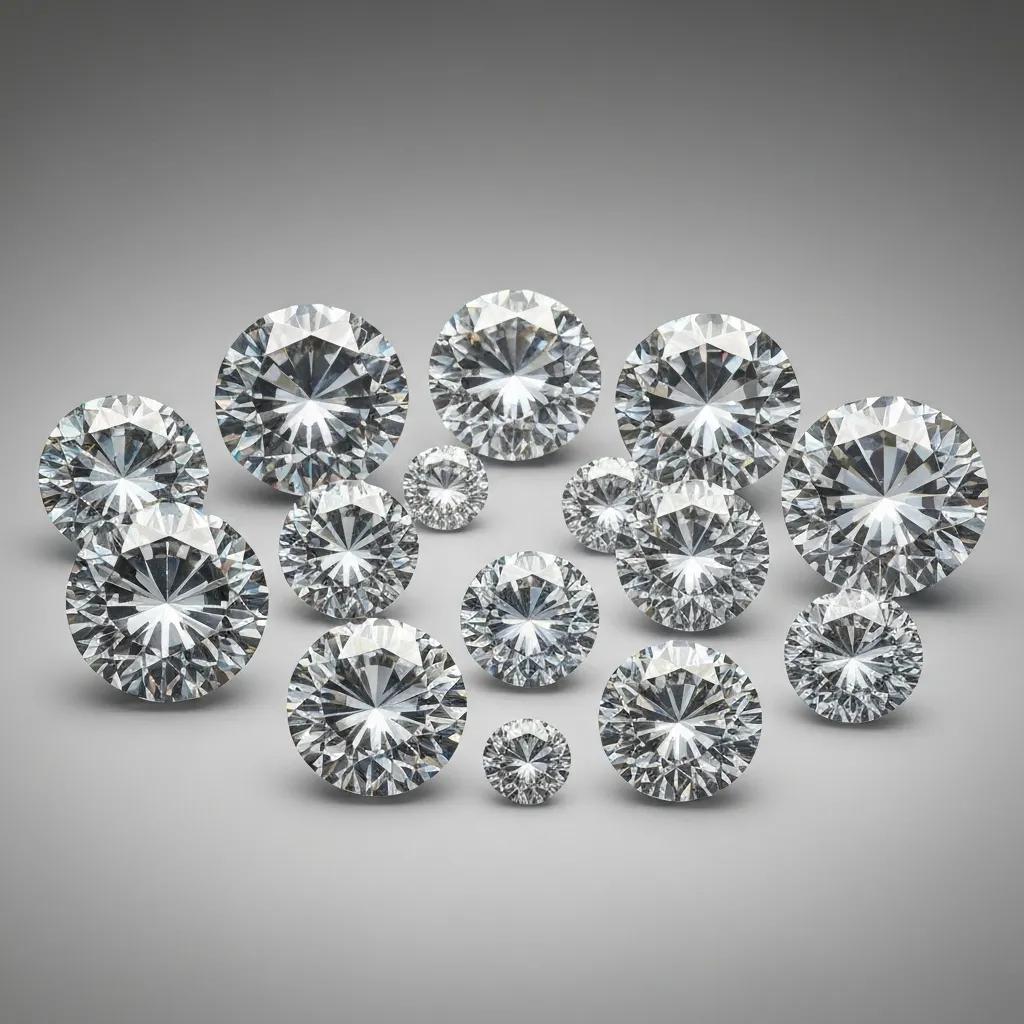
The GIA clarity scale comprises eleven distinct grades, each defined by the presence and visibility of inclusions or blemishes:
This table provides a clear breakdown of grade names and their associated visible traits, helping you anticipate how inclusions might influence a diamond’s appearance and value.
How Does the AGS Clarity Scale Align with GIA Grades?
The AGS numerical scale, ranging from 0 to 10, corresponds directly to the GIA’s clarity grades:
- AGS 0–1: Corresponds to Flawless (FL) to Internally Flawless (IF)
- AGS 2–3: Corresponds to Very Very Slightly Included (VVS1–VVS2)
- AGS 4–6: Corresponds to Very Slightly Included (VS1–VS2)
- AGS 7–8: Corresponds to Slightly Included (SI1–SI2)
- AGS 9–10: Corresponds to Included (I1–I3)
By comparing these scales side-by-side, you gain a comprehensive understanding of equivalent grades, enabling you to confidently interpret either certification when you’re exploring certified diamonds.
Visualising Diamond Clarity: A Comparison Chart
Below is a comparative chart that illustrates the key transitions between GIA grades and AGS scores, along with typical inclusion visibility:
This comparison chart is designed to help you align laboratory reports with your visual expectations as you examine your diamond selections.
Understanding Common Diamond Inclusions and Blemishes
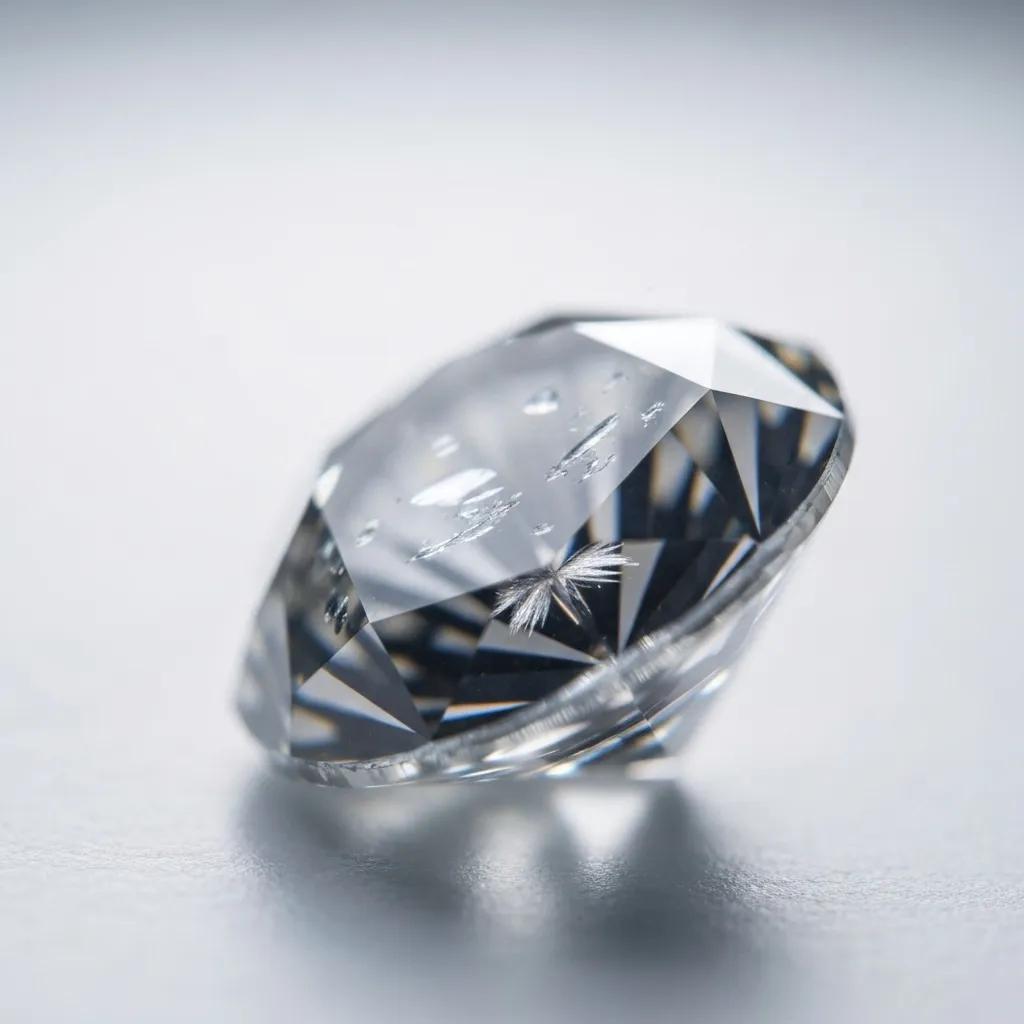
Identifying the most significant internal and external characteristics is key to making well-informed decisions about diamond clarity.
What Are the Most Impactful Diamond Inclusions?
Inclusions are internal features that can disrupt the flow of light within a diamond. Common types include:
- Crystals – These are mineral deposits that appear as tiny specks within the diamond.
- Feathers – These are internal cracks or fissures that can resemble fine lines or wisps.
- Clouds – Clusters of tiny inclusions that can create a hazy or milky appearance.
- Pinpoints – Very small, single dots of light, often insignificant.
- Needles – Elongated inclusions that, if large or numerous, can affect durability.
- Twinning Wisps – Lines resulting from the crystal’s growth process, indicating imperfect formation.
The size, location, and contrast of these inclusions collectively influence a diamond’s clarity grade and its overall resilience.
What Are Typical Diamond Blemishes and How Do They Occur?
Blemishes are imperfections found on the diamond’s surface, often resulting from the cutting and polishing stages:
- Naturals – These are small areas of the original rough diamond’s surface left intact.
- Polish Lines – Fine lines or streaks left by the polishing process.
- Scratches – Surface abrasions that can occur during handling or wear.
- Chips – Small nicks or breaks, typically found at facet junctions or the girdle, often from impact.
Understanding the origin of blemishes helps you distinguish between purely cosmetic marks and those that might affect the diamond’s finish or structural integrity.
How Do Inclusions and Blemishes Affect Diamond Durability?
While most minor inclusions pose no threat to a diamond’s structural soundness, certain features, such as deep feathers or significant internal fractures, can compromise its strength. Surface chips, particularly near the setting, can be prone to snagging, and internal stress points near the girdle can potentially expand under pressure. Selecting a diamond with stable inclusion types and minimal surface blemishes ensures a beautiful stone that is also robust enough for everyday wear.
Balancing clarity with longevity naturally leads to considering the ideal grade for your chosen ring style.
Choosing the Optimal Diamond Clarity for Your Engagement Ring
Selecting the right clarity for an engagement ring involves a thoughtful consideration of visual appeal, your budget, and the diamond’s inherent durability.
What Does “Eye-Clean” Mean, and How Can You Find Eye-Clean Diamonds?
An “eye-clean” diamond is one where any inclusions are so small or well-positioned that they are not visible to the naked eye when the diamond is viewed face-up. Diamonds graded VS1, VS2, and often certain SI1 stones fall into this category, appearing flawless without magnification. To find an eye-clean diamond, it’s advisable to request a close inspection with a jeweller’s loupe or to examine high-resolution imagery that clearly shows the placement of any inclusions. Prioritising diamonds with minimal blemishes on the table and crown facets is also recommended.
Identifying eye-clean diamonds ensures your ring possesses stunning sparkle without the premium cost associated with perfect laboratory grades.
How Does Diamond Shape Influence Clarity Recommendations?
The shape of a diamond can significantly affect how visible its inclusions appear:
- Emerald Cut – Its broad, open facets make inclusions more apparent, generally favouring VS clarity grades or higher.
- Round Brilliant – The intricate facet pattern of a round brilliant cut is adept at masking minor inclusions, making VS2 or SI1 grades excellent choices for achieving great value and sparkle.
- Oval/Marquise/Pear – These elongated shapes can sometimes highlight inclusions within the central “bow-tie” area, making VS grades a safer recommendation, especially for larger stones.
Considering these shape-specific visibility factors helps you select a diamond that maximises its brilliance while staying within your budget.
What Clarity Grades Are Most Suitable for Different Carat Weights?
As a diamond’s carat weight increases, its surface area grows, making inclusions potentially more noticeable:
- Under 1 ct – VS2 and SI1 grades often appear eye-clean and offer excellent value.
- 1–2 ct – VS1 or VS2 grades are typically recommended to ensure inclusions remain invisible to the unaided eye.
- Over 2 ct – For larger diamonds, VS1 or higher clarity grades are generally preferred to guarantee consistent visual perfection.
Adjusting clarity recommendations based on size ensures that prominent centre stones do not display visible imperfections.
How Should You Balance Clarity with the Other 3Cs When Making a Purchase?
Achieving a truly spectacular diamond requires a harmonious balance among the 4Cs:
- Prioritise an excellent or ideal cut to maximise light performance and brilliance.
- Select a clarity grade that appears eye-clean for the diamond’s specific shape and size.
- Aim for a near-colourless hue (G–H range) to enhance value and visual appeal.
- Choose a carat weight that aligns with your budget and the overall design aesthetic.
By thoughtfully balancing these elements, you can achieve the most impressive visual impact for every dollar invested.
What Are the Differences in Clarity Between Natural and Lab-Grown Diamonds?
Lab-grown diamonds often exhibit fewer inclusions and more predictable clarity patterns due to the controlled conditions under which they are created. While natural diamonds possess unique internal characteristics that tell their own story, lab-grown diamonds frequently achieve higher clarity grades (such as VS1 and above) at more accessible price points. Understanding these distinctions empowers you to compare the inherent beauty of natural diamonds with the value and ethical considerations of lab-grown alternatives.
Evaluating the clarity differences between natural and lab-grown diamonds offers greater flexibility when designing your bespoke engagement ring.
Understanding Diamond Clarity Reports and Certifications
Reliable certification is essential for verifying clarity claims and protecting your diamond investment.
How to Interpret the Clarity Section of a GIA Diamond Grading Report
The clarity section of a GIA report typically includes:
- Clarity Grade – The official designation assigned to the diamond (e.g., VS2).
- Plotting Diagram – A visual representation detailing the types and locations of inclusions and blemishes.
- Clarity Characteristics – A description of the most significant inclusions or blemishes noted by the grader.
Reviewing these components confirms that the diamond’s actual appearance aligns with its official grading, addressing any potential visual concerns before you finalise your purchase.
What Information Does an AGS Diamond Quality Document Provide on Clarity?
AGS clarity documentation offers:
- Numerical Score – A score from 0 to 10 that corresponds to GIA clarity grades.
- Comment Section – Notes that may detail the impact of inclusions and the quality of the diamond’s polish.
- Grade Definitions – Specific benchmarks outlining the criteria for inclusion visibility at each grade level.
Interpreting AGS details in conjunction with GIA benchmarks allows for a thorough cross-verification of clarity standards, ensuring a well-informed selection.
Why Is Independent Certification So Important for Diamond Clarity?
Independent certification from reputable laboratories eliminates subjectivity and ensures complete transparency in diamond grading. This certification guarantees that you are receiving the exact clarity level you expect, safeguarding you against undisclosed flaws and inflated valuations. This framework of trust is fundamental to every reputable diamond transaction.
Verifiable clarity assessments build confidence as we turn our attention to market trends.
Current Trends and Insights in Australian Diamond Clarity
Australia’s diamond market skillfully blends international standards with local consumer preferences and a growing emphasis on ethical sourcing.
How Does Clarity Influence Diamond Value in the Australian Market?
Within Australia, each incremental increase in clarity can lead to a price premium of approximately 10–20 percent. While Flawless (FL) to Internally Flawless (IF) grades are highly sought after by collectors, Very Slightly Included (VS) to Slightly Included (SI) grades are most prevalent among engagement ring buyers. Market analysis indicates that VS1–SI1 stones offer the most compelling balance of price and visual appeal for modern brides seeking eye-clean brilliance without an exorbitant cost.
Diamond Clarity and Its Significance in the Australian Market
In the Australian diamond market, a diamond’s clarity is a major determinant of its value, with each grade potentially influencing the final price. The growing consumer interest in ethical sourcing and affordability lends support to the article’s observations regarding the increasing popularity of lab-grown diamonds in Australia.
Australian Jewellery Association, Australian Diamond Market Report (2024)
Demand for innovations in lab-grown diamond clarity continues to grow in Australia, shaping the landscape of engagement ring offerings nationwide.
Why Are Lab-Grown Diamonds Becoming Increasingly Popular in Australia?
Australian consumers are increasingly drawn to lab-grown diamonds due to their ethical origins, affordability, and consistently high clarity. With fewer inclusions and transparent manufacturing processes, lab-grown stones often surpass their natural counterparts in clarity while minimising environmental impact, a combination that strongly appeals to socially conscious buyers.
What Are the Current Clarity Preferences for Engagement Rings in Australia?
Recent trends reveal:
- Round brilliant cuts in VS2–SI1 grades remain the most favoured choice.
- Oval and pear shapes in VS1 grades are gaining popularity for their elegant, elongated appearance.
- Vintage-inspired designs often favour VS1 or higher grades to ensure intricate details in filigree settings are perfectly preserved.
These preferences reflect a sophisticated blend of timeless sparkle and contemporary design sensibilities.
How Do Australian Consumers Prioritise Ethical and Local Sourcing?
Ethical sourcing is becoming as influential as price when it comes to clarity decisions. Consumers actively seek certified provenance that guarantees conflict-free origins and responsible mining practices. Local jewellers are increasingly highlighting traceable supply chains and collaborations with Australian artisans to offer diamonds that combine exceptional clarity, masterful craftsmanship, and ethical peace of mind.
This heightened focus on ethics reinforces clarity’s role as both a measure of quality and a criterion of conscience.
Tools and Resources to Enhance Your Understanding of Diamond Clarity
Empowering yourself with the right visual aids and expert guidance ensures you make the most informed clarity choice possible.
How to Effectively Use an Interactive Diamond Clarity Chart
An interactive clarity chart allows you to explore each grade by clicking on it to view representative images of inclusions under magnification. By comparing these real-world examples side-by-side, you can truly appreciate how subtle differences in inclusion size or contrast impact the diamond’s face-up appearance, guiding you towards selecting the ideal clarity grade for your ring.
This hands-on exploration effectively bridges the gap between technical grading reports and the perceived brilliance of a diamond.
Where Can You Find Examples of Different Inclusions and Blemishes?
High-resolution galleries, often provided by reputable jewellers and gemological institutes, showcase inclusions and blemishes as seen under 10x magnification. By studying detailed examples of feathers, crystals, and clouds, you can learn to differentiate between harmless pinpoints and potentially significant fractures, equipping you to assess clarity with greater confidence.
Directly examining these inclusion galleries helps set realistic visual expectations before you make your purchase.
What Expert Advice Is Available for Selecting Diamond Clarity?
Certified gemologists offer personalised consultations, available both online and in-person, to help you understand how specific clarity grades translate into real-world visual appeal. Their expert guidance often includes digital imaging, video presentations, and hands-on loupe inspections, ensuring your chosen diamond perfectly meets your aesthetic desires and budgetary requirements.
Leveraging professional insights can refine your clarity selection process and significantly enhance your confidence.
How Can You Assess Diamond Clarity Using a Jeweller’s Loupe?
A standard 10x jeweller’s loupe allows for direct, magnified examination of a diamond’s inclusions and blemishes. When inspecting a diamond:
- Hold the diamond under bright, diffused lighting conditions.
- Carefully rotate the stone to view inclusions from various angles.
- Note the size, shape, and precise location of each characteristic you observe.
By practising these loupe inspection techniques, you can become adept at verifying certification details and assessing a diamond’s eye-clean appearance directly.
Connect with our expert design team at adc.com.au to explore our curated selection of certified natural and lab-grown diamonds, meticulously chosen to align with your clarity preferences and to celebrate life’s most cherished moments.


