
Diamond Clarity, Flaws & Value Guide – Australian Diamond Company
Diamond clarity is a pivotal yet often misunderstood factor that determines a diamond’s rarity, visual purity, and final value. Whether you’re evaluating a diamond for a ring, bracelet, or other jewellery, a clear understanding of clarity grading can make the difference between brilliance and disappointment. To get a full picture of how clarity fits alongside other quality measures, our 4 Cs diamond guide explains everything from internal inclusions to official grading standards. This comprehensive guide will illuminate what clarity means, how it’s assessed, why certification matters, and how clarity interacts with cut, colour and carat to affect a diamond’s overall appeal. By the end, you’ll have the confidence to evaluate clarity with precision and choose a stone that balances beauty and value with integrity.
What Exactly Is Diamond Clarity and Why Does It Matter?
Diamond clarity refers to how free a gemstone is from internal characteristics (inclusions) and surface irregularities (blemishes). These imperfections can affect a diamond’s brilliance and overall appearance. Evaluating clarity ensures that the diamond can refract light optimally, maintaining its beauty over time. Clarity works in concert with cut, colour, and carat weight, the renowned four Cs, to determine a diamond’s quality. Understanding clarity is therefore crucial for achieving a balance between aesthetic appeal and financial value. Top jewellery experts stress the importance of clear, consistent grading to help consumers find diamonds that meet both their visual expectations and budget. ADC provides comprehensive clarity details for every diamond in its Australian showrooms.
How Do We Define Diamond Clarity?
Clarity is defined by the absence of inclusions and blemishes when examined under 10× magnification by a certified gemologist. Inclusions are internal features like crystals, feathers, or clouds, while blemishes are external marks such as scratches or pits. Graders use standardized scales to ensure uniformity and transparency in their assessments. These precise definitions create a universal language for describing a diamond’s purity, enabling direct comparisons between stones of similar colour and cut, and paving the way for a well-informed purchase.
Why Is Clarity One of the Four Cs of Diamond Quality?
Clarity stands as one of the four fundamental pillars, alongside cut, colour, and carat weight, that collectively define a diamond’s overall grade. While cut dictates a diamond’s sparkle and proportions, colour assesses its lack of hue, and carat measures its size, clarity focuses on its internal purity. A higher clarity grade typically enhances brilliance by minimizing obstructions to light. Given that each of the four Cs contributes significantly to a diamond’s final value, clarity plays a vital role in balancing its visual allure with its investment worth, ensuring both enduring beauty and resale potential.
How Does Clarity Influence a Diamond’s Beauty and Sparkle?
Internal flaws within a diamond can disrupt light flow, diminishing its fire and reducing its perceived brilliance and contrast. When inclusions are minimal or strategically placed, a diamond appears more luminous and vibrant. Facets that are free from imperfections reflect light uniformly, producing sharp flashes of colour and captivating patterns. Consumer research indicates that diamonds graded VS2 or higher often exhibit exceptional sparkle to the naked eye, underscoring clarity’s importance in achieving maximum optical performance and visual delight.
If you want to see how clarity affects the overall look of a diamond in real designs, our guide to choosing the perfect diamond explains how clarity, cut, colour, and carat combine to create brilliance in engagement rings and fine jewellery.
What Tools Are Used to Assess Diamond Clarity?
Gemological professionals utilize a jeweller’s loupe, offering 10× magnification, and advanced gemmological microscopes to meticulously inspect diamonds under controlled lighting conditions. Grading laboratories employ standardized illumination and high-powered microscopes to reveal intricate internal structures, enabling precise classification. Additional tools, such as polarization filters and dark-field illumination, are used to highlight even the smallest inclusions. These sophisticated instruments ensure objective grading practices, providing buyers with a clear understanding of a gemstone’s true characteristics before they commit to a purchase, thereby fostering trust in clarity assessments.
Exploring the Diamond Clarity Grades: A Detailed Breakdown
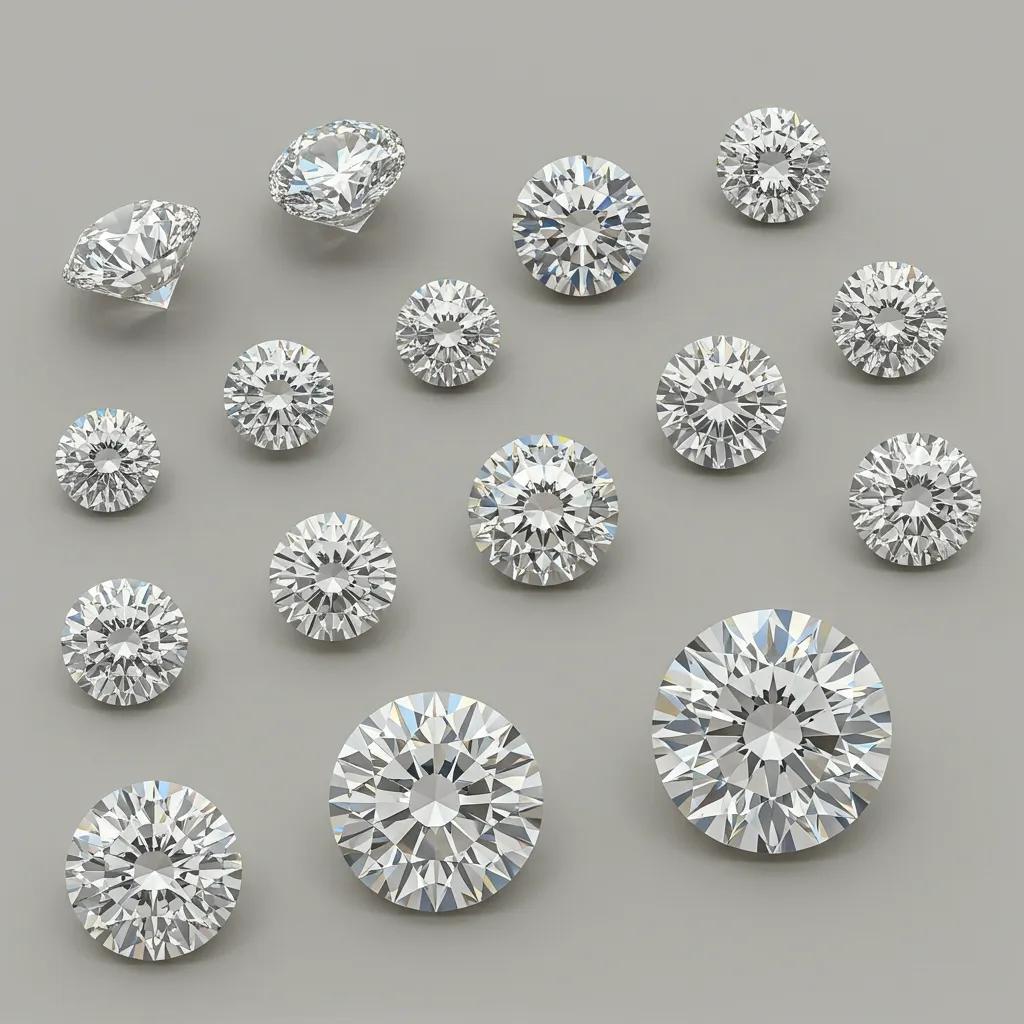
The industry-standard clarity scale, established by the Gemological Institute of America (GIA), classifies diamonds into eleven distinct grades, ranging from Flawless to Included. Each grade reflects the quantity, size, prominence, and location of imperfections observed under 10× magnification, guiding consumers toward stones that align with their visual preferences and financial plans. A thorough understanding of this grading spectrum is essential for selecting diamonds that offer optimal value and aesthetic appeal.
What Is the GIA Diamond Clarity Scale?
The GIA scale meticulously ranks clarity from Flawless (completely free of internal and external flaws) down to Included III (featuring significant inclusions visible to the naked eye). Each grade represents a spectrum of characteristics:
- FL – Absolutely no inclusions or blemishes visible under 10× magnification.
- IF – No inclusions; only minor surface blemishes may be present.
- VVS1 / VVS2 – Very, very slight inclusions that are extremely difficult to detect even for expert graders.
- VS1 / VS2 – Very slight inclusions that are only visible under magnification.
- SI1 / SI2 – Slight inclusions that might be noticeable to the naked eye under close inspection.
- I1 / I2 / I3 – Inclusions that are clearly visible without magnification.
A firm grasp of this scale empowers buyers to accurately assess rarity, beauty, and cost when comparing different diamonds.
Objective Diamond ClarityGrading:GIA’s Global StandardGIA’s clarity grading scale, akin to its diamond grading system, has become the benchmark for laboratories worldwide. The terminology and definitions of this scale are universally recognised…Objective Diamond Clarity Grading., Unknown Author, 2014
What Do Flawless (FL) and Internally Flawless (IF) Mean?
Flawless diamonds are entirely free of internal or surface imperfections when viewed under 10× magnification, representing the zenith of diamond purity and commanding the highest market prices. Internally Flawless diamonds possess no internal inclusions but may exhibit minute surface blemishes that can be easily polished away. Both grades deliver exceptional brilliance and significant investment appeal, with FL diamonds offering the rarest combination of pristine clarity and light performance.
How Do Very Very Slightly Included (VVS1, VVS2) Grades Differ?
VVS1 and VVS2 clarity diamonds contain microscopic inclusions so minute that even highly trained graders find them challenging to locate under 10× magnification. VVS1 inclusions are typically smaller or positioned closer to the pavilion, whereas VVS2 inclusions might be slightly larger or nearer to the crown. These superior clarity grades offer a near-flawless appearance and brilliant sparkle at a considerably lower price point than truly flawless stones, making them a favoured choice for discerning collectors seeking exceptional quality without the FL premium.
What Are Very Slightly Included (VS1, VS2) Diamonds?
VS1 and VS2 clarity diamonds feature minor inclusions that are invisible to the naked eye but detectable under magnification. VS1 inclusions are generally fewer and less conspicuous than those in VS2, which may present slightly more noticeable spotting under magnification. Both grades provide outstanding brilliance and frequently qualify as “eye clean,” offering excellent value for engagement rings and fine jewellery, particularly when paired with an excellent cut grade.
What Should You Know About Slightly Included (SI1, SI2) Grades?
SI1 and SI2 diamonds contain inclusions that may be visible to the unaided eye when viewed face-up, though they can often be cleverly concealed by jewellery settings or hidden beneath prongs. Many SI1 diamonds achieve the highly sought-after “eye-clean” status, offering a compelling blend of affordability and attractive sparkle. Potential buyers are advised to examine actual images or magnified videos to assess how inclusions affect the diamond’s appearance before making a purchase, ensuring satisfaction with its clarity without overspending.
The concept of a diamond appearing “eye-clean” is paramount for consumers, as it prioritizes visual perfection over strict magnification-based grading. This standard helps buyers find diamonds that look flawless to the naked eye without incurring the premium associated with the highest technical grades.
Diamond Clarity Scales and the ‘Eye-Clean’ Standard… clarity scales, by omitting diamonds with SI3 clarity ratings, for consistency reasons. The importance of a diamond appearing ‘eye-clean’ is …Shine bright like a diamond: a hedonic model of grading and pricing an experience good, JA Lee, 2014
What Are Included (I1, I2, I3) Clarity Grades?
Included-grade diamonds possess flaws that are readily apparent under magnification and sometimes visible without it. I1 stones can still exhibit reasonable brilliance if their inclusions are located towards the edges, but I2 and I3 diamonds have more significant imperfections that noticeably disrupt light performance. While these grades offer more accessible price points, careful evaluation of the type, location, and potential impact on durability of the inclusions is essential before selection.
Understanding the Spectrum of Diamond Inclusions and Blemishes
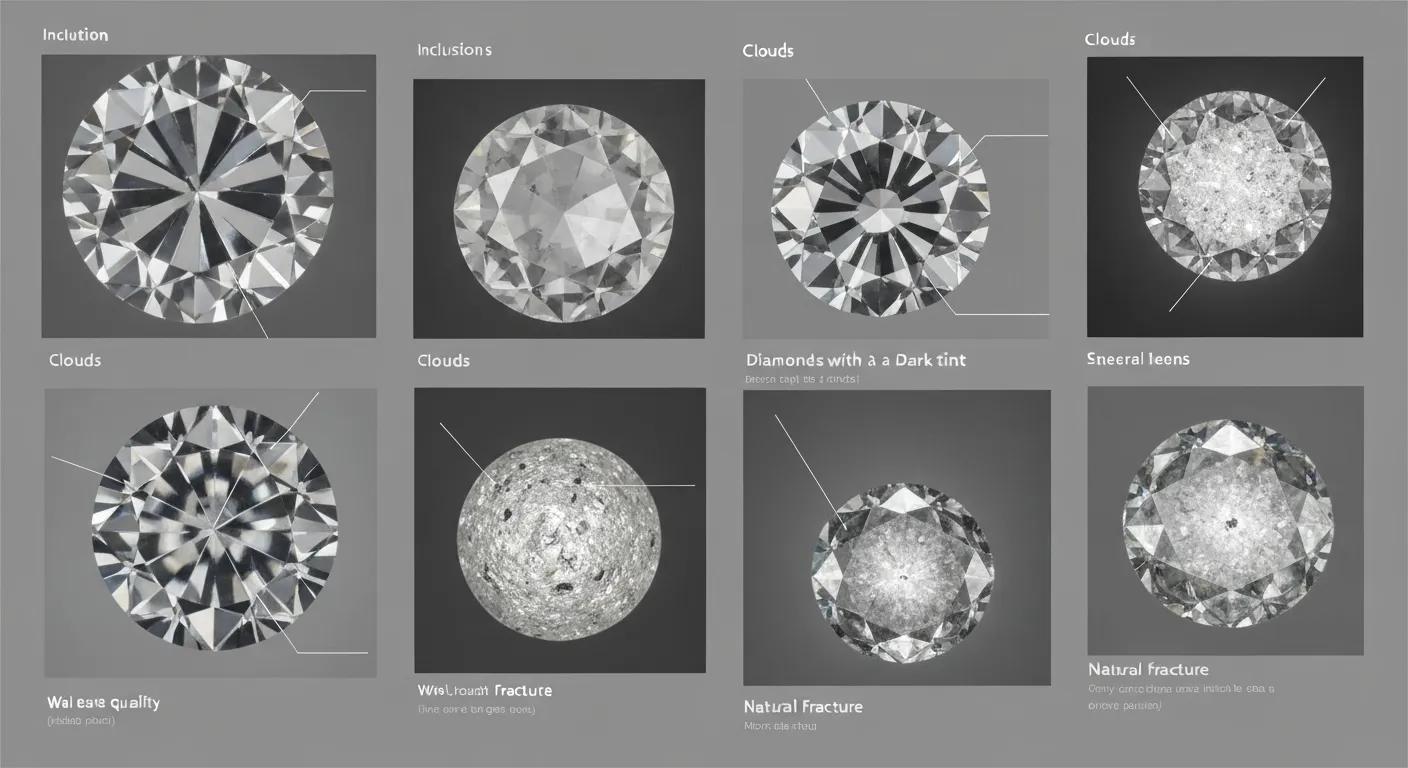
Both internal and external imperfections play a significant role in determining clarity grades and influencing a diamond’s visual appeal. Familiarizing yourself with specific types of inclusions and blemishes will help you assess how these flaws affect light refraction, durability, and overall beauty. Here’s a guide to the common characteristics you should be aware of when selecting a diamond.
What Are Diamond Inclusions and How Do They Impact Clarity?
Inclusions are internal features that form naturally within a diamond during its geological formation. These can include crystals, feathers, clouds, and graining. Such internal characteristics can interfere with light paths, scattering light and reducing a diamond’s sparkle. The size, quantity, prominence, and placement of these inclusions are key factors in determining the clarity grade and how effectively a diamond interacts with light, guiding consumers toward stones with minimal optical disruption.
Internal graining, a specific type of inclusion, can subtly alter the way light travels through a diamond, influencing its overall clarity assessment. The GIA laboratory has developed precise methodologies for evaluating and reporting the effects of such graining on a diamond’s clarity grade.
GIAClarityGrading: The Impact of Internal GrainingThis article reviews the history of reporting on such graining by the GIA Laboratory, considers the system GIA employs to determine the effect of such graining on a diamond’s clarity grade…The impact of internal whitish and reflective graining on the clarity grading of D-to-Z color diamonds at the GIA laboratory, W Wang, 2006
Which Common Inclusions Should Buyers Be Aware Of?
What Are Diamond Blemishes and Their Effect?
Blemishes are external surface characteristics that can arise during the diamond’s cutting and polishing process. These include polish lines, scratches, nicks, and pits. While many blemishes are primarily cosmetic, some can trap dirt or compromise the diamond’s symmetry if they are significant. Professional polishing typically addresses most blemishes, ensuring that diamonds meet their clarity specifications and maintain optimal sparkle.
Which Blemishes Are Most Frequently Encountered?
- Polish lines: Fine parallel marks left by the cutting wheel.
- Surface graining: Subtle variations in the diamond’s surface texture from polishing.
- Scratches and nicks: Minor abrasions or small indentations from handling or setting.
- Pits: Small depressions or cavities on the surface.
- Chips or bruises: Small fractures near facet edges, often concealable by settings.
The severity of blemishes varies by clarity grade, with higher-clarity diamonds exhibiting minimal surface imperfections, while lower grades may tolerate more noticeable marks. Understanding these blemishes helps buyers evaluate the final appearance and potential maintenance requirements of a diamond.
Selecting the Ideal Diamond Clarity for Your Engagement Ring
Choosing the perfect clarity grade involves a thoughtful balance between visual purity, budget considerations, and your personal design preferences. By focusing on achieving an “eye-clean” appearance and understanding how clarity interacts with other diamond attributes, you can maximize sparkle and value in your engagement ring.
What Does “Eye Clean” Mean and Why Is It Important?
“Eye clean” is a term used to describe diamonds whose inclusions are not visible to the unaided eye when viewed from the top (face-up). This concept prioritizes visual perfection over strict magnification-based grading, allowing you to allocate your budget more effectively without compromising on appearance. Most VS2 diamonds and many SI1 diamonds are considered eye clean, offering exceptional sparkle at a moderate price point, making them highly popular choices for everyday wear.
Can You See SI1 Clarity Inclusions Without Magnification?
In many cases, SI1 inclusions are not visible to the naked eye, depending on their size and location. If inclusions are positioned near the edges of facets or are hidden beneath the setting’s prongs, they are effectively concealed. Prospective buyers should always review high-resolution images or magnified videos to confirm eye-clean status before purchasing, ensuring confidence that the clarity will meet your expectations for daily wear without any visible flaws.
How to Harmonize Clarity with Cut, Colour, and Carat?
Prioritizing cut quality will enhance a diamond’s brilliance, while making modest concessions in clarity and colour can lead to significant cost savings. A round brilliant diamond with an excellent cut and VS2 clarity will often appear more dazzling than a higher-clarity stone with a subpar cut. Similarly, opting for a near-colourless grade (G–H) instead of a top D–E can free up budget for a larger carat weight or improved clarity. Strategic balancing across the four Cs ensures the most visually impressive and cost-effective selection.
What Clarity Grades Offer the Best Value for Engagement Rings?
For many consumers, VS2 and SI1 grades represent the optimal balance between clarity and cost. VS2 diamonds provide excellent brilliance with minimal visible imperfections, while eye-clean SI1 stones can offer savings of 20–30 percent compared to higher grades. VS1 and VVS2 diamonds provide enhanced sparkle but come at a premium, ideal for those seeking near-flawless perfection. For those on a tighter budget, SI2 grades can be a viable option if their eye-clean status is confirmed through detailed imagery or professional appraisal.
How Do Different Diamond Shapes Influence Clarity Choices?
The shape of a diamond can affect how inclusions are perceived:
- Round Brilliant: The numerous facets of this popular cut are adept at masking minor inclusions.
- Princess: The sharp corners of this cut can sometimes highlight inclusions located near them.
- Emerald: Its larger, step-cut facets and open table make imperfections more apparent.
- Oval, Pear, Marquise: These elongated shapes can exhibit a “bow-tie” effect, necessitating careful clarity assessment where dark zones intersect.
Considering shape-specific clarity guidance helps buyers select the grade that best complements each cut’s unique light-reflecting properties, ensuring optimal brilliance and value.
How Diamond Clarity Impacts Price and Investment Value
A diamond’s clarity grade is a direct determinant of its price, with significant price escalations occurring at the higher clarity levels. Understanding the intricate relationship between clarity and market value empowers buyers and investors to make informed decisions that align with their aesthetic desires and long-term financial objectives.
How Does Clarity Influence Diamond Pricing?
Higher clarity grades command substantial price premiums: Flawless and Internally Flawless diamonds can be two to three times more expensive than VS1 or VS2 diamonds of equivalent carat weight and cut quality. VVS grades carry a moderate premium, while the price differences between VS and SI grades become progressively smaller. Pricing charts clearly illustrate how each incremental increase in clarity corresponds to percentage-based price adjustments, guiding budgets toward the most cost-effective grade for the desired level of purity.
What Is the Relationship Between Clarity and Diamond Investment?
As a tangible asset, high-clarity diamonds tend to retain their value over time, with exceptionally rare grades showing steady appreciation. Flawless and Internally Flawless stones are considered collectible investments, while VVS and VS grades offer good liquidity and broad market appeal. Investors should always consider the diamond’s complete 4Cs profile, its certification authenticity, and prevailing market trends, particularly concerning natural versus lab-grown diamonds, to maximize potential long-term returns.
How to Read and Understand Diamond Clarity Certificates?
Certified diamond reports, issued by reputable laboratories like the GIA, provide detailed clarity grades, inclusion maps, and magnified images. Essential elements of a certificate include the official clarity grade designation, a precise plotted diagram of inclusions, the fluorescence grade, and a reference to the grading standards used. Thoroughly reviewing these certificates ensures transparency and confirms that the diamond meets the advertised purity standards before purchase, reinforcing trust in its authenticity and quality.
How Do Inclusions and Blemishes Affect Diamond Value?
The presence of visible inclusions and blemishes diminishes a diamond’s market value by reducing its light performance and overall aesthetic appeal. Minor flaws might lower a stone’s price by approximately 5–10 percent per clarity step, whereas more prominent imperfections can lead to steeper discounts. Buyers who understand the specific impact of each type of flaw can negotiate fair pricing for diamonds that meet their personal clarity tolerances and design requirements.
Where to Find Visual Examples of Diamond Clarity Grades and Inclusions
Visual references are indispensable for accurately assessing diamond clarity, enabling buyers to distinguish subtle grade differences and identify flaws that are most significant. Interactive tools and expert demonstrations significantly enhance understanding and guide confident selection.
How Do Magnified Images Aid in Identifying Clarity Grades?
High-resolution, magnified photographs provide a precise view of the type, size, and location of inclusions, effectively replicating the view through a jeweller’s loupe. By comparing these images side-by-side, consumers can evaluate how inclusions affect the diamond’s sparkle and determine its eye-clean status. Such visual comparisons facilitate informed clarity judgments, especially when purchasing online, without the need for in-person inspection.
What Are the Premier Visual Tools for Comparing Clarity Grades?
Interactive clarity charts allow users to explore examples of each grade, while infographics visually map inclusion types against their severity and visibility. 360-degree video presentations simulate rotating the diamond under various lighting conditions, demonstrating how its reflectivity changes. These visual aids transform abstract grade definitions into tangible representations, empowering buyers to select clarity grades that satisfy both their aesthetic aspirations and budget constraints.
How Can Expert Videos Enhance Understanding of Diamond Clarity?
Concise educational videos produced by experienced gemologists offer practical demonstrations on using a loupe, interpreting certificate diagrams, and identifying common inclusion patterns. Narrated footage guides viewers through real-world clarity inspections, providing valuable tips on optimal lighting, viewing angles, and magnification techniques. Expert commentary builds confidence and clarifies complex concepts, fostering a deeper connection between technical clarity criteria and consumer preferences.
Current Trends and Key Considerations in Diamond Clarity
Contemporary market dynamics and evolving consumer values are shaping clarity expectations. Ethical sourcing, the rise of lab-grown alternatives, and enhanced educational resources are collectively influencing how clarity grades impact purchasing decisions in 2025 and beyond.
How Are Lab-Grown Diamonds Reshaping Clarity Expectations?
Lab-grown diamonds often exhibit higher clarity grades at more accessible price points due to the controlled conditions under which they are created, which minimize inclusions. Consumers comparing natural and synthetic diamonds may find lab-grown VS and VVS grades priced comparably to natural SI grades. Understanding these quality distinctions is key to making an informed choice between traditional rarity and innovative affordability.
Why Is Ethical Sourcing as Important as Clarity?
Ethical sourcing guarantees that diamonds are mined and processed under stringent labour and environmental standards. Certifications such as the Kimberley Process and fair trade endorsements add intrinsic value that complements the diamond’s technical clarity. Consumers increasingly prioritize ethical credentials, seeking brands that transparently align the purity of their supply chain with the purity of the gemstone, thereby reinforcing confidence in every clarity grade.
What Are Australian Market Preferences for Diamond Clarity?
Australian buyers typically favour eye-clean VS2 and SI1 grades, seeking a harmonious balance between visual perfection and cost-effectiveness. Round brilliant shapes remain the most popular choice, effectively utilizing their facet patterns to mask minor inclusions. Within Australia, GIA certification is highly regarded, and the demand for ethically sourced diamonds continues to grow, prompting retailers to emphasize both clarity and provenance.
How Is Consumer Education Influencing Diamond Clarity Choices?
With a wealth of online resources readily available, consumers are increasingly well-informed about the four Cs and clarity considerations. They actively seek detailed comparison charts, magnified visuals, and interactive tools. Retailers that provide transparent clarity information, visual examples of different grades, and expert guidance build credibility and foster purchase confidence. Continuous consumer education is driving the evolution of clarity standards, making comprehensive clarity guides an essential element of modern jewellery acquisition.
Diamonds with superior clarity grades exhibit enhanced brilliance and greater investment potential. For everyday jewellery, eye-clean VS2 and SI1 stones often represent the best value. A thorough understanding of the full range of clarity grades, the types of inclusions and blemishes, and current market trends empowers buyers to select diamonds that perfectly align with both their aesthetic aspirations and financial plans. Leveraging expert visual tools and up-to-date market insights, consumers can confidently navigate the world of diamond clarity. ADC’s commitment to certified clarity information and meticulously curated collections ensures that every selection meets rigorous technical standards while fulfilling personal preferences.
Understanding diamond clarity is essential to choosing a stone that will truly shine. For a clear, step-by-step overview of how clarity interacts with cut, colour, and carat, explore our guide to diamond quality and the 4 Cs, which helps you compare stones with confidence and select the ideal piece for your jewellery collection.


