
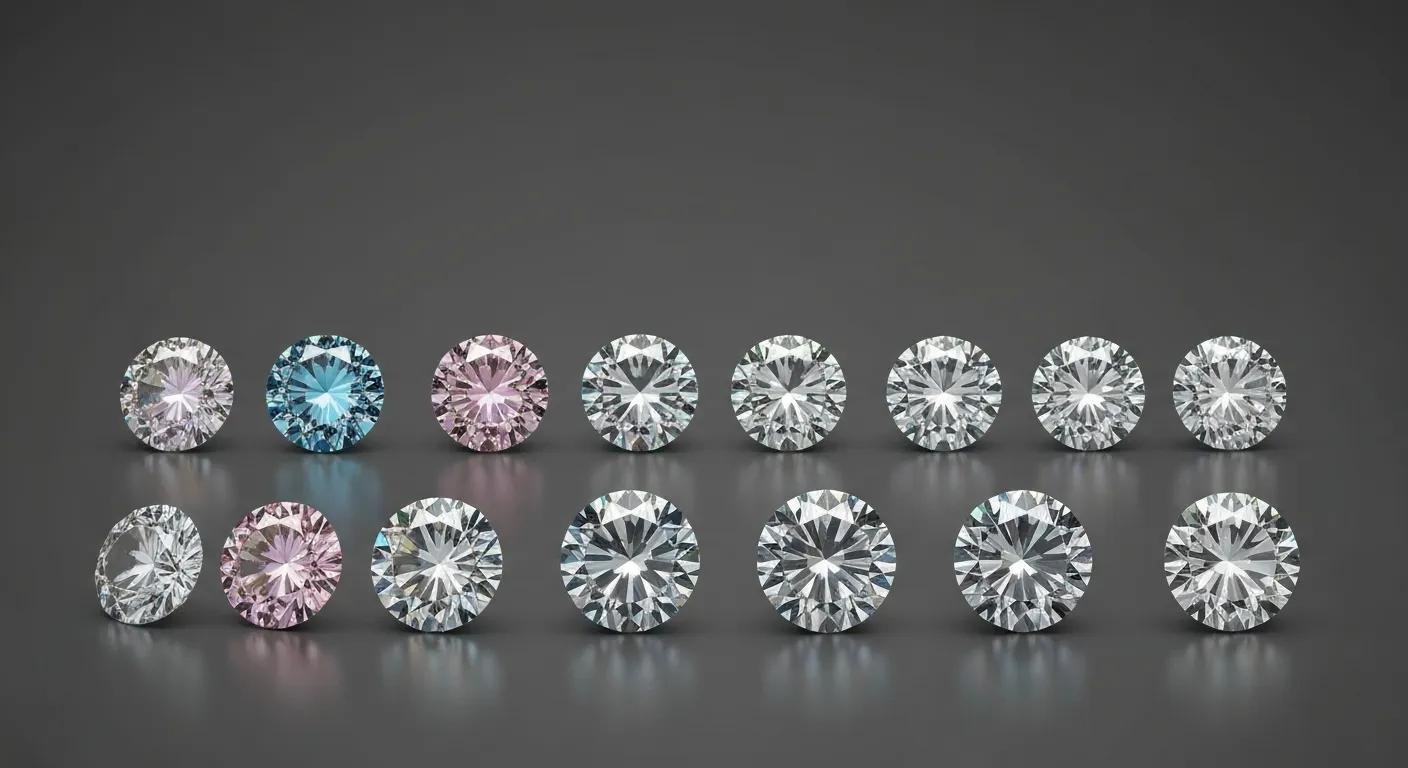
Unlocking Diamond Brilliance: Your Definitive Guide to Colour Grades and Their Impact
Diamond colour is a pivotal yet often misunderstood element that profoundly influences a diamond’s brilliance, rarity and overall value. It serves as an essential guide for discerning consumers making informed jewellery selections. If you would like a clearer overview of how colour fits into the broader diamond quality framework, our diamond buying guide is a helpful place to begin before comparing individual stones. Within this comprehensive guide, you will delve into the true meaning of diamond colour, understand how the GIA D to Z scale defines quality, explore why colour significantly impacts price and discover how the choice of metal can subtly alter a diamond’s perceived tint. We will also cover the allure of fancy colour diamonds, the role of fluorescence and introduce practical tools such as interactive colour charts and personalised quizzes designed to simplify your selection process. As Australia’s premier fine jewellery specialist, ADC is committed to transparent colour disclosures across all our engagement rings and diamond pieces, ensuring you have complete clarity and confidence at every stage. By mastering these insights, you will be empowered to harmonise colour with cut, clarity, carat weight and budget, ultimately choosing the perfect diamond for your treasured jewellery.
What Exactly Is Diamond Colour, and Why Is It So Important?
Diamond colour refers to the subtle presence or absence of body tint, typically yellow or brown, within a diamond. This characteristic is assessed under controlled lighting conditions to gauge its purity. This metric directly influences how light refracts through the stone; a truly colourless diamond will reflect and refract light with maximum brilliance and fire. Understanding colour grades helps prevent overspending on distinctions that are barely perceptible and ensures your diamond delivers visual satisfaction in everyday wear. Consumers who prioritise a high colour grade not only gain superior aesthetic appeal but also secure a diamond with excellent long-term value retention.
How Are Diamond Colours Defined and Precisely Measured?
Diamond colour is determined by meticulously comparing a stone against a set of master diamonds under lighting that precisely mimics D65 daylight. Gemologists use magnification and specialised viewing equipment to identify and grade any body tint, assigning a letter grade based on this assessment.
Key elements of this precise measurement process include:
- A standardised lighting environment to ensure consistent comparisons.
- Positioning the diamond with its pavilion facing upwards on a white surface.
- Utilising a master set of diamonds to match the closest hue.
- Employing trained graders who adhere strictly to GIA protocols.
Each of these steps is critical to ensuring that the assigned grade accurately reflects how the diamond will appear when set in fine jewellery.
The GIA Laboratory has pioneered a methodology for assessing the absence of colour in diamonds, establishing the most widely recognised system for grading diamond colour.
GIA D-to-Z Diamond ColourGradingExplainedThe GIA Laboratory has developed a methodology for assessing the absence of colour in diamonds. This methodology is based on the GIA’s D-to-Z colour-grading system, which is the most widely accepted system for grading diamond colour. The system assigns a letter grade from D (colourless) to Z (light yellow or brown) to each diamond based on its colour appearance when viewed face-up.COLOR GRADING” D-TO-Z” DIAMONDS AT THE GIA LABORATORY., Unknown Author, 2008
Why Does Diamond Colour Significantly Affect Its Value and Visual Appeal?
Diamond colour directly influences both its perceived purity and its market price, primarily because colourless diamonds are exceptionally rare and allow light to perform without interference. A diamond graded D will refract white light without any tinted distortion, maximising its brilliance and commanding a premium price. Conversely, diamonds with lower colour grades exhibit a noticeable warmth that can diminish their fire and consequently lower their valuation. Understanding this fundamental relationship empowers buyers to align the colour grade with their aesthetic desires and budget constraints.
What Are the Primary Factors Influencing How Diamond Colour Is Perceived?
Several key factors shape how a diamond’s tint is perceived in real-world settings:
- Lighting Conditions The type of light, whether natural daylight or artificial incandescent light, can significantly alter the visible warmth of a diamond.
- Cut Proportions A diamond’s cut can either magnify or minimise its body tint; shallow cuts may accentuate warmth, while ideal cuts are designed to minimise it.
- Setting Metal The metal used for the jewellery setting plays a role; white gold and platinum tend to mask slight tints, whereas yellow gold can accentuate a diamond’s warmth.
- Fluorescence Under ultraviolet light, the presence of blue fluorescence can sometimes soften or counteract yellowish tones in a diamond.
Navigating the GIA Diamond Colour Scale
The GIA diamond colour scale spans from D, representing absolute colourlessness, to Z, indicating a light yellow or brown hue. This scale provides a universally recognised benchmark for evaluating white diamonds. It ensures consistent grading across the globe and forms the basis for pricing structures used by dealers and retailers alike. By familiarising yourself with this scale, you can align your purchasing expectations with industry standards and confidently select a diamond whose beauty truly matches its grade.
What Are the Specific GIA Colour Grades from D to Z?
Here is a detailed overview of the GIA colour grades, categorised for clarity:
These designations are crucial for setting visual expectations and understanding pricing tiers, fostering clear communication between buyers and gemologists.
What Do the Categories ‘Colourless,’ ‘Near Colourless,’ and ‘Faint Colour’ Signify?
Colourless diamonds (D–F) are the epitome of purity, exhibiting no discernible body tint to the unaided eye. Near-colourless stones (G–J) possess a faint warmth that is typically only visible under close examination, offering an excellent balance between beauty and affordability. Diamonds in the faint colour categories (K–M) display subtle yellow hues that can be particularly appealing in vintage-inspired or warm-metal settings. Understanding these distinctions allows for targeted selection based on your specific design preferences and budget.
How Has the GIA Colour Grading System Evolved Over Time?
Since its inception in 1953, the GIA colour grading system has undergone significant advancements, driven by improvements in lighting technology, digital imaging, and more rigorous grading protocols. While early assessments relied on natural daylight, modern laboratories utilise precise D65 simulation lighting and advanced spectrophotometry. This continuous evolution has enhanced grading consistency and reduced variance, strengthening consumer trust in reported colour grades and supporting transparent pricing practices.
The Interplay of Diamond Colour, Value, and Price
Diamond colour is a significant driver of value, as diamonds in the premium colour grades are rarer and interact with light with minimal tinted interference, thus commanding higher market prices. As the colour grade decreases, prices can drop substantially; even a small shift between grades like E and G can result in a difference of thousands of dollars per carat. Understanding this dynamic ensures that you invest in a colour grade that aligns with both your aesthetic aspirations and the long-term value of your diamond.
Why Are D-F Colourless Diamonds Considered the Most Valuable?
Diamonds graded D–F are virtually devoid of any body tint, making them exceptionally rare and highly coveted for the most exquisite jewellery. Their inherent colourlessness maximises light reflection and dispersion, enhancing overall brilliance. This extreme rarity is the primary reason for their premium pricing, reflecting both their scarcity and their superior visual performance in high-end engagement rings and luxury pieces.
How Do Near Colourless Diamonds (G-J) Offer a Balance of Quality and Cost?
Diamonds in the G–J range represent a popular and practical choice, offering a balance between exceptional beauty and more accessible pricing. In well-cut stones, any faint tint is virtually imperceptible to the naked eye, yet the price point is significantly lower than that of colourless grades. Choosing a diamond within this range can lead to substantial savings without a noticeable compromise in brilliance, especially when set in white metals. This strategic balance allows buyers to allocate their budget more effectively across cut, carat weight, and clarity.
What Influence Do Carat Weight and Cut Have on Perceived Colour?
Carat weight and the precision of a diamond’s cut proportions can either amplify or mask its colour. Larger diamonds tend to reveal tint more readily, whereas an expertly executed cut disperses light so effectively that it can conceal subtle warmth. A superior cut minimises light leakage and enhances optical brightness, thereby mitigating the visual impact of a lower colour grade. Consequently, buyers should always consider cut quality in conjunction with colour grade to achieve the most desirable visual outcome.
How Does Fluorescence Affect Diamond Colour and Its Overall Value?
Fluorescence occurs when a diamond emits a visible glow, typically blue, under ultraviolet (UV) light. This phenomenon can subtly alter a diamond’s apparent colour, often enhancing the whiteness of near-colourless diamonds in daylight. However, diamonds with strong fluorescence can sometimes exhibit a hazy or oily appearance under UV sources, potentially diminishing their clarity and value, particularly in higher colour grades. Understanding this interplay is key to making informed purchasing decisions.
Selecting the Ideal Diamond Colour for Your Jewellery
The optimal diamond colour choice is a personal decision influenced by the jewellery setting, the overall design style, your individual aesthetic preferences, and your budget. The ideal grade for a white gold or platinum setting differs from that for yellow or rose gold, and some individuals may even prefer a warmer tint. By carefully aligning the colour grade with the chosen metal and the diamond’s cut, you ensure that your diamond appears at its absolute brightest within its intended setting.
Which Diamond Colours Are Best Suited for White Gold and Platinum Settings?
White gold and platinum settings are ideal complements to colourless and near-colourless diamonds. These cool-toned metals reflect light neutrally, effectively minimising any perceived warmth in the diamond. Diamonds graded D–G typically appear exceptionally pristine against white metals, showcasing their brilliance and fire. Selecting within this range allows the setting’s neutral backdrop to enhance the diamond’s sparkle.
How Do Yellow and Rose Gold Settings Influence Diamond Colour Selection?
Yellow and rose gold settings introduce warm undertones that can beautifully accentuate any subtle body tint present in a diamond. Diamonds in the H–K range often harmonise exceptionally well with these warmer metals, creating a seamless colour transition that enhances the overall warmth of the piece. By opting for a slightly lower colour grade, you can achieve a desirable vintage aesthetic while also managing the cost effectively.
How Should You Balance Colour with Cut, Clarity, and Carat Weight?
Achieving the perfect diamond involves a holistic approach. A superb cut enhances sparkle more than any other factor, clarity ensures the diamond’s transparency, and carat weight determines its physical presence. Prioritising an excellent cut and selecting a G–H colour grade can often yield a superior visual impact at a lower price point compared to pursuing a D–F diamond with a less impressive cut. This balanced strategy maximises the diamond’s apparent size and brilliance.
How Do Personal Taste and Budget Shape Diamond Colour Decisions?
Your individual taste will dictate whether you are drawn to the pure brilliance of colourless diamonds or the subtle warmth of tinted stones. Simultaneously, your budget parameters will establish realistic targets for the colour grade you can achieve. Some buyers prioritise absolute white brilliance, while others embrace subtle warmth as an integral part of a unique design theme. By establishing clear priorities and financial limits before you begin shopping, you can be efficiently directed towards the colour grade that best aligns with your values and personal style.
Exploring Fancy Colour Diamonds and Their Grading
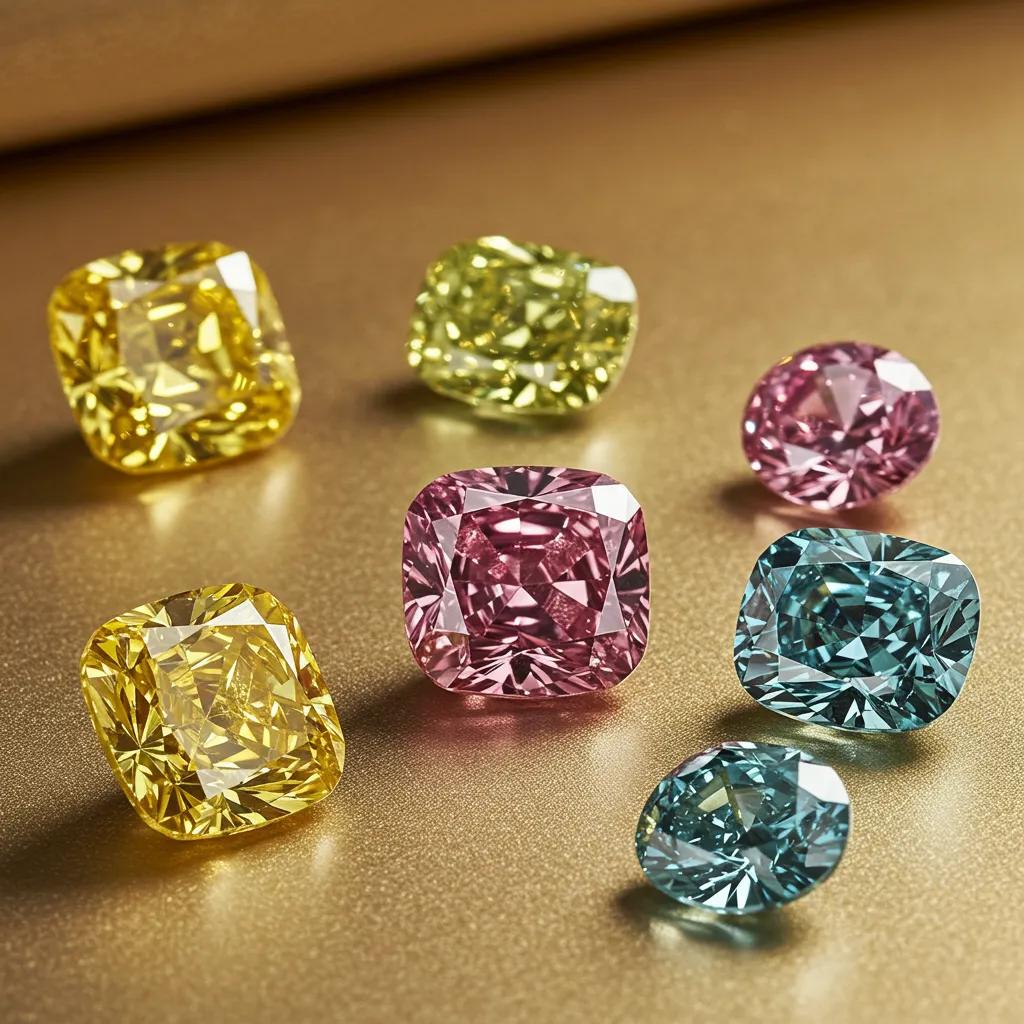
Fancy colour diamonds exhibit distinct hues such as yellow, pink, or blue, with an intensity that surpasses the standard D–Z scale. These remarkable gemstones are graded based on their hue, saturation, and tone. Their value is derived from their exceptional rarity and the vividness of their colour, often commanding significantly higher prices per carat than white diamonds. Understanding the nuances of fancy colour grading empowers collectors and connoisseurs to accurately assess hue quality and investment potential.
The face-up appearance is the primary criterion for grading diamonds that are very close to the colourless range but exhibit a slight hint of colour, determining if they fall within the D-to-Z scale or are considered fancy coloured.
Diamond ColourGrading: The D-to-Z Scale Versus Fancy ColoursAt the transition boundary between the D-to-Z scale and fancy colours, the face-up appearance becomes the primary criterion for grading. This means that for diamonds that are very close to the colourless range but exhibit a slight hint of colour, their appearance when viewed from the top is crucial in determining whether they fall within the D-to-Z scale or are considered fancy coloured.COLOR GRADING” D-TO-Z” DIAMONDS AT THE GIA LABORATORY., Unknown Author, 2008
What Are the Different Types of Fancy Colours Available (Yellow, Pink, Blue, Red, Green)?
Fancy colour diamonds are found in a captivating spectrum of hues:
- Yellow Ranging from subtle faint canary to intensely vivid fancy yellow.
- Pink From delicate blush tones to the most intense vivid pinks.
- Blue Spanning from light sky blue to the deep, rich hue of Royal Blue.
- Red Among the rarest and most highly valued of all fancy colours.
- Green Typically caused by natural radiation exposure while the diamond is within the earth.
A comprehensive study of natural-colour yellow diamonds includes a review of the literature, a description of characterization and grading methods, and a discussion of the results, along with information on their geologic history and diamond type.
Characterisation andGradingof Natural Yellow DiamondsAs with the previous GIA studies of blue and pink diamonds (King et al., 1998, 2002), this article presents a comprehensive study of natural-colour yellow diamonds. The study includes a review of the literature on yellow diamonds, a description of the methods used to characterise and grade them, and a discussion of the results. The study also provides information on the geologic history and diamond type of the yellow diamonds studied.CHARACTERIZATION AND GRADING OF NATURAL-COLOR YELLOW DIAMONDS., Unknown Author, 2005
How Are Fancy Colour Diamonds Graded by Hue, Saturation, and Tone?
The grading of fancy colour diamonds involves a detailed assessment of three key attributes: hue (the specific colour), saturation (the intensity of the colour), and tone (the lightness or darkness of the colour). Gemmologists assign grades, such as Fancy Light, Fancy, Fancy Intense, and Fancy Vivid, based on calibrated colourimetric analysis. For instance, a Fancy Vivid pink diamond combines a pure hue with strong saturation and a medium tone, representing the highest tier of value and desirability.
Why Are Fancy Colour Diamonds Exceptionally Rare and Valuable?
Fancy colour diamonds are formed under unique geological conditions that concentrate trace elements or create specific structural anomalies, making them exceptionally scarce. Their rarity increases dramatically with colour intensity; only a small fraction achieve the highly prized Fancy Intense or Fancy Vivid grades. Collectors and connoisseurs prize these unique stones for their distinctiveness and significant investment potential, driving market values far above those of white diamonds of comparable carat weight.
How Do Lab-Grown Fancy Colour Diamonds Compare in Colour and Value?
Lab-grown fancy colour diamonds are engineered to replicate the vibrant hues of their natural counterparts through controlled manufacturing processes, often resulting in stunning colours at more accessible price points. While they possess identical chemical and optical properties to natural diamonds, market recognition and long-term resale value typically remain higher for mined diamonds. Consumers may opt for lab-grown diamonds for greater budget flexibility and ethical considerations, balancing intense colour with potential future value.
Understanding Diamond Fluorescence and Its Effect on Colour
Diamond fluorescence refers to a diamond’s ability to emit visible light, usually a blue glow, when exposed to ultraviolet (UV) radiation. This property can subtly alter a diamond’s apparent colour under specific lighting conditions. It can enhance the perceived whiteness of near-colourless diamonds in daylight or, in cases of strong fluorescence, cause diamonds to appear hazy under UV light. Understanding fluorescence grades and their visual effects is essential for buyers seeking diamonds that perform optimally in everyday environments.
What Is Diamond Fluorescence, and How Is It Accurately Measured?
Fluorescence is assessed by exposing a diamond to a long-wave UV lamp and observing the strength and colour of the resulting glow. It is graded on a scale from None, Faint, Medium, Strong, to Very Strong. Graders meticulously record the effect under standardised lighting and viewing conditions. A Faint fluorescence grade indicates a minimal reaction to UV light, whereas a Strong grade signifies a pronounced glow that can influence the diamond’s perceived colour.
How Does Fluorescence Impact a Diamond’s Appearance Under Various Lighting Conditions?
In natural daylight, blue fluorescence can effectively counteract slight yellow tints in diamonds graded G–J, making them appear whiter and brighter. Conversely, under lighting sources rich in UV (such as black lights), strong fluorescence can manifest as a milky haze or an oily sheen. It is advisable for buyers to view diamonds under a variety of lighting conditions to accurately assess their real-world appearance and select a fluorescence grade that complements their intended setting and lifestyle.
What Are the Advantages and Disadvantages of Fluorescence for Diamond Value?
Fluorescence can offer potential benefits, such as softening warm tints and thereby improving the apparent colour grade of a diamond, often without any associated price increase. However, strong fluorescence can detract from a diamond’s clarity and brilliance, potentially leading to lower market valuations, especially for high-grade stones. Understanding this nuanced trade-off allows buyers to leverage beneficial fluorescence while avoiding any unintended visual compromises.
Utilising Diamond Colour Charts and Tools for Informed Selection
Interactive diamond colour charts and comparison tools provide buyers with the ability to visualise subtle tint differences side-by-side, fostering confidence in grade selection. Personalised quizzes that assess preferences, budget, and design aspirations further tailor recommendations. By effectively leveraging these resources, you can streamline the decision-making process and ensure your purchase aligns perfectly with both your aesthetic expectations and financial parameters.
If you would like to understand how colour fits into the broader grading framework, our diamond grading guide offers a clear explanation of how cut, clarity and carat weight are evaluated alongside colour to determine overall quality.
How Can You Effectively Read and Interpret the GIA Diamond Colour Chart?
The GIA colour chart presents master set diamonds, ranging from D to Z, in carefully gradated panels illuminated by standardised lighting. To read the chart, you match the colour of the diamond you are evaluating to the closest panel, paying close attention to the transitional zones between the Colourless, Near Colourless, and Faint categories. This direct visual comparison clarifies grade distinctions and provides a solid basis for pricing discussions.
What Are the Key Benefits of Using Interactive Colour Comparison Tools?
Interactive tools offer the advantage of real-time grade toggling, allowing you to precisely observe tint nuances that might be obscured in static images. Buyers can experience immediate visual feedback on how shifting from a G to an H grade, for example, affects the diamond’s warmth, enabling informed cost-benefit analyses. These tools enhance confidence by simulating in-person comparisons within a convenient online environment.
How Can Personalised Quizzes Guide You to Your Ideal Diamond Colour?
Tailored quizzes are designed to guide users through a series of questions covering aspects like metal setting preference, desired cut style, and budget constraints. Based on your answers, the quiz recommends suitable colour grade ranges. By mapping your responses to objective colour categories, these quizzes simplify the selection process and reduce decision fatigue. Ultimately, users receive personalised grade suggestions that align with both their visual priorities and financial parameters.
How Does ADC Seamlessly Connect Educational Content with Its Diamond Jewellery Offerings?
ADC integrates clear colour grade labels and detailed grading explanations directly onto each product page. This creates a direct, entity-based connection between our educational resources and our actual inventory. Visitors exploring recommendations for G–J near-colourless diamonds will find curated collections featuring precisely those grades, ensuring a smooth transition from gaining knowledge to making a purchase.
Mastering diamond colour empowers you to achieve a perfect balance of purity, sparkle and value in every jewellery acquisition. By thoroughly understanding the GIA scale, evaluating the impact of fluorescence and applying setting-specific guidance, you will confidently select diamonds that excel in both beauty and investment potential. Explore ADC’s expertly graded collections to experience transparent colour disclosures, and visit our diamond quality guide for deeper insight into how colour works alongside the other key factors that shape a stone’s appearance.


