
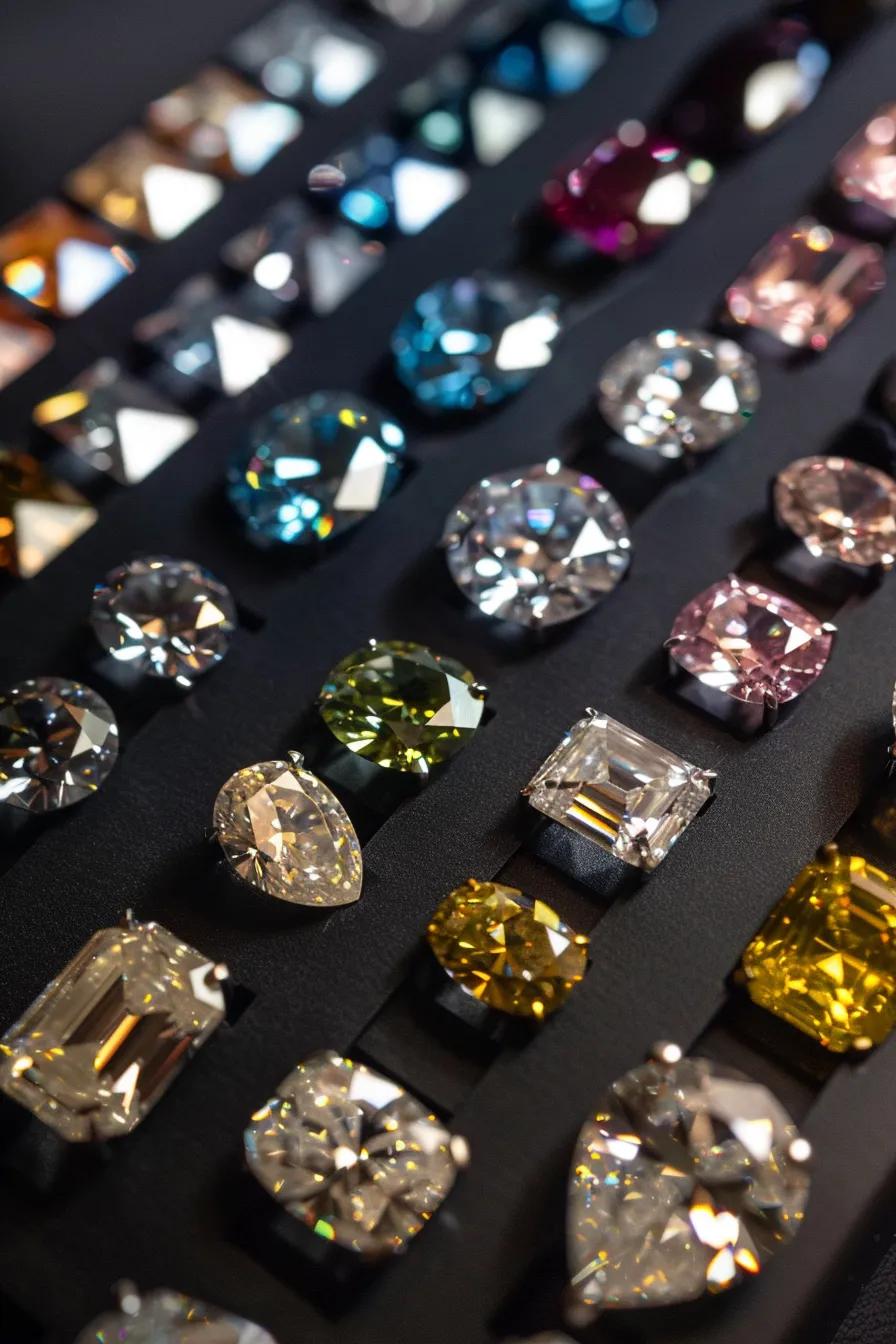
Discover Diamond Varieties & Traits at Australian Diamond Company
Each diamond possesses a singular blend of origin, colour, clarity, cut, and carat weight. Grasping these elements is your initial stride toward selecting a gem that truly mirrors your personal style and deeply held values. Within this comprehensive guide, you’ll delve into the primary diamond categories, understand how the renowned 4 Cs shape both quality and worth, contrast genuine earth-mined stones with those created in laboratories, explore the captivating allure of fancy coloured diamonds, review the most sought-after shapes, and discover how expert certification and practical advice can ensure your purchase is made with complete assurance. Throughout this journey, we’ll highlight how Australian Diamond Company’s exceptional craftsmanship, bespoke customisation possibilities, and unwavering commitment to ethical sourcing will support you in finding the ultimate engagement ring or exquisite diamond jewellery.
What Are the Principal Diamond Types and Their Unique Attributes?
Diamonds are broadly classified into several key groups: natural, lab-grown, fancy coloured, and the exceptionally rare Type IIa. Each category is defined by its unique formation process, chemical purity, and visual appeal. Identifying these distinctions will help you align rarity, sustainability, and budget with your personalised jewellery design.
What Characterises a Natural Diamond and How Is It Formed?
A natural diamond is essentially a crystallised form of carbon, meticulously crafted by immense heat and pressure deep within the Earth’s mantle over billions of years. This profound geological journey results in stones with distinctive growth patterns and occasional internal characteristics, known as inclusions, that serve as a testament to their ancient origins. Every rough diamond carries its own unique signature of minute mineral inclusions and growth lines, offering you the dual benefit of an authentic story and the enduring legacy of gemstones unearthed from the Earth. Embracing a natural diamond merges timeless romance with established value, a sentiment that Australian Diamond Company enhances through its responsibly sourced collections and transparent disclosure of stone origins.
Exploring the mechanics of their formation also underscores their geological rarity, naturally leading to options that artfully balance tradition with contemporary innovation.
How Are Lab-Grown Diamonds Produced and What Are Their Advantages?
Lab-Grown Diamonds: Their Creation and Properties
Lab-grown diamonds are meticulously created using either the High-Pressure High-Temperature (HPHT) or Chemical Vapour Deposition (CVD) techniques, both of which expertly replicate natural geological conditions. These advanced methods yield diamonds that are chemically and optically identical to their earth-mined counterparts, while simultaneously minimising environmental impact and offering significant cost savings compared to mined diamonds.
International Gemological Institute (IGI), Lab-Grown Diamond Certification (2024)
This reference supports the article’s detailed explanation of lab-grown diamonds, covering their creation processes and the benefits they offer, including economic and environmental advantages.
These sophisticated techniques produce diamonds that are chemically and optically indistinguishable from natural stones, all while reducing environmental impact and providing cost savings of approximately 30 percent compared to their earth-mined equivalents. As products of cutting-edge technology, lab-grown diamonds deliver exceptional brilliance, consistent quality, and an ethically sound footprint. By selecting a lab-grown option from Australian Diamond Company, you can seamlessly integrate advanced science with bespoke design, assured that each stone is accompanied by complete certification and traceable provenance.
Acknowledging these sustainable attributes naturally paves the way to appreciating the unique charm of fancy coloured diamonds.
What Are Fancy Coloured Diamonds and What Makes Them Unique?
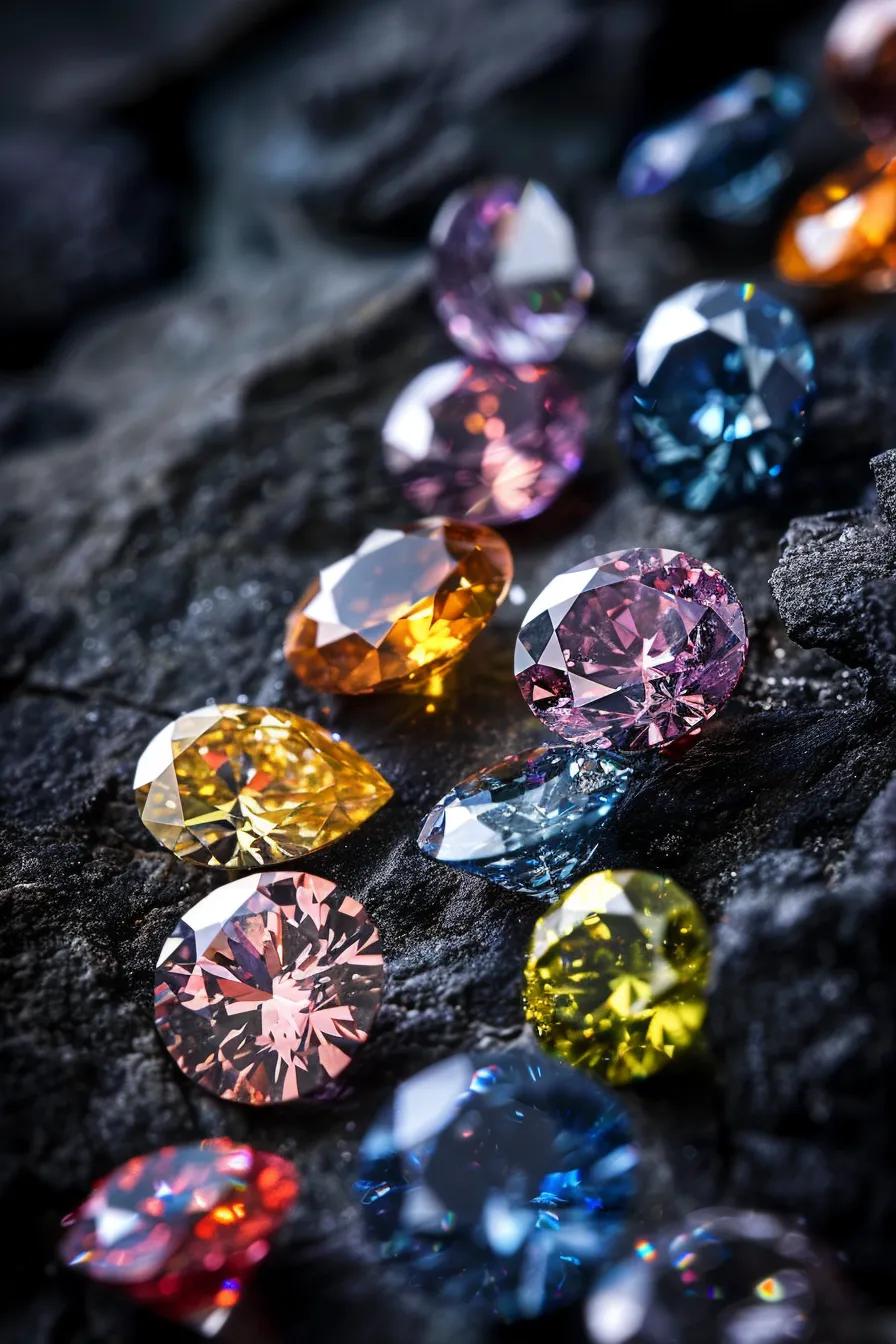
Fancy coloured diamonds exhibit a spectrum of hues that extend beyond the standard D–Z colourless scale, displaying captivating tints such as vivid yellow, green, pink, blue, or black. These remarkable colours are a result of trace elements or structural anomalies within the diamond’s crystal lattice boron imparts a blue hue, nitrogen creates yellow tones, and hydrogen clusters can result in black diamonds. Their intense saturation and inherent rarity make them highly coveted for distinctive, bespoke jewellery creations. Fancy coloured diamonds are typically assessed based on their hue, tone, and saturation, and they command premium valuations when they exhibit a strong, even colour. Understanding these specific characteristics will guide you toward selecting a truly statement piece that embodies both personality and prestige.
The captivating spectrum of fancy colours can be further explored through iconic varieties like pink, blue, and black diamonds.
How Do Black, Pink, and Blue Diamonds Differ in Appearance and Value?
- Black Diamonds (Carbonado) acquire their deep, dark tone from graphite inclusions and a unique polycrystalline structure, offering a bold, opaque aesthetic that is frequently chosen for contemporary jewellery settings.
- Pink Diamonds owe their delicate rosy glow to lattice distortions and fluorescence; the significant reduction in supply following the closure of the Argyle Mine in Western Australia has notably elevated their market value.
- Blue Diamonds derive their exceptionally rare azure hue from the presence of boron impurities; iconic examples such as the Hope Diamond powerfully illustrate both their striking visual beauty and their profound historical significance.
The intricate interplay of rarity, colour intensity, and market demand for each of these diamond types directly influences their pricing, making an informed selection absolutely crucial for both investment potential and personal satisfaction.
What Are Type IIa Diamonds and Why Are They Considered So Rare?
Type IIa diamonds are distinguished by their exceptional chemical purity, being entirely free of nitrogen impurities, and they constitute less than 2 percent of all gem-quality diamonds. Their remarkable transparency and colourlessness, often graded as D or E produce unparalleled brilliance and fire. As the purest natural form of carbon, Type IIa stones are highly sought after by discerning collectors and innovative designers alike. Australian Diamond Company proudly features a curated selection of these exceptionally rare gems, providing you with the opportunity to showcase unparalleled clarity and carat weight within a setting that reflects superior craftsmanship.
A solid understanding of these fundamental diamond categories lays the essential groundwork for evaluating quality and value through the universally recognised 4 Cs.
How Do the 4 Cs Define Diamond Quality and Value?
The 4 Cs of Diamond Grading – A Comprehensive Overview
The 4 Cs, Cut, Colour, Clarity, and Carat represent the globally accepted standards for assessing a diamond’s quality and determining its value. These factors significantly influence a diamond’s optical performance, its hue, its internal purity, and its overall weight. Mastering these criteria is key to effectively balancing visual brilliance with your budget and design aspirations.
Gemological Institute of America (GIA), Diamond Grading Reports (2024)
This authoritative source provides the foundational knowledge for understanding the 4 Cs, which are central to the article’s discussion on diamond quality assessment.
Below, you will find a detailed overview of each C and its specific impact on a diamond’s appearance and price:
What Is Diamond Cut and How Does It Influence Brilliance?
Diamond cut is a critical assessment of the precision of its proportions, its symmetry, and the quality of its polish. An excellently cut diamond reflects and refracts light with the utmost efficiency, thereby maximising its brilliance, fire (the dispersion of light into rainbow colours), and scintillation (the play of light and shadow that creates sparkle). Stones that are expertly cut exhibit dynamic contrasts between light and dark facets, ensuring a lively visual performance that significantly enhances any jewellery design.
A thorough understanding of cut mechanics naturally leads to valuable insights into the nuances of colour grading.
How Is Diamond Colour Graded from Colourless to Fancy Hues?
The colour grading for traditional white diamonds spans from D (completely colourless) to Z (possessing a noticeable tint of yellow or brown). Expert gemologists meticulously compare diamonds under controlled lighting conditions, assigning grades that accurately reflect even the most subtle colour differences. Fancy coloured diamonds, such as yellow, pink, green, and blue are evaluated using a distinct scale that assesses hue, tone, and saturation, starting from Faint and progressing through Fancy Light, Fancy, Fancy Intense, and culminating in Fancy Vivid. Diamonds with rich saturation and pure hues command the highest premiums for colour.
Once colour is understood, clarity emerges as the next crucial focal point for quality assessment.
What Are Diamond Clarity Grades and How Do Inclusions Affect Appearance?
Clarity grades range from Flawless (containing no internal or external imperfections) down to I3 (containing obvious inclusions). Common types of inclusions include pinpoints (tiny dots), feathers (internal fractures), and crystals (other mineral inclusions), each varying in size, location, and visibility. While perfectly flawless stones are exceptionally rare and command very high prices, diamonds with VS1–SI2 clarity often appear “eye-clean,” meaning their inclusions are not visible to the naked eye, thus providing excellent value without compromising visual appeal.
Balancing clarity with the other Cs naturally leads to an understanding of how weight influences both size and price.
How Does Carat Weight Influence Diamond Size and Price?
Carat weight is the standard measure of a diamond’s mass; each incremental increase significantly raises both its size and market value in a non-linear fashion. For instance, a single 2-carat diamond is considerably rarer and consequently more expensive than two separate 1-carat diamonds of identical quality. When selecting a carat weight, it is essential to consider the wearer’s finger size, the chosen setting style, and your overall budget to achieve the desired visual impact without incurring excessive costs.
Integrating all four grading factors provides a complete and holistic perspective on a diamond’s overall quality.
How Do the 4 Cs Interact to Determine Overall Diamond Quality?
Each of the “Cs” interacts dynamically with the others: a superior cut can significantly enhance the perceived colour and clarity of a diamond, while a larger carat weight may make internal inclusions more apparent. An exceptional cut can effectively compensate for slightly lower colour or clarity grades by maximising sparkle, whereas a deeper hue might subtly mask certain inclusions. Prioritising the most visually impactful attribute often the cut for brilliance, allows you to achieve greater overall impact within your budget, guiding you toward the ideal balance for your bespoke jewellery design.
Transitioning to the topic of origin, we will now compare natural and lab-grown diamonds side by side.
What Are the Key Differences Between Natural and Lab-Grown Diamonds?
Natural and lab-grown diamonds share identical chemical structures and physical properties, yet they diverge significantly in their formation processes, ethical implications, pricing, and certification. Understanding these crucial distinctions empowers you to make an informed choice that aligns perfectly with your personal values and aesthetic preferences.
How Do Origin and Formation Affect Diamond Characteristics?
Natural diamonds are the product of geological processes that unfold over millions of years, imbuing them with unique inclusions and growth structures that tell a story of their ancient origins. Lab-grown diamonds, conversely, are formed within weeks in controlled laboratory environments, resulting in fewer structural impurities and often exhibiting more consistent clarity. While both types display identical optical and physical properties, their distinct formation narratives one born from the Earth’s ancient mantle, the other a product of high-tech synthesis, resonate differently with buyers who value heritage versus those who prioritise sustainability.
Examining the ethical and environmental implications of each type provides further clarity on responsible sourcing practices.
What Are the Ethical and Environmental Implications of Each Type?
The extraction of natural diamonds through mining can sometimes involve significant ecosystem disturbance and energy-intensive operations. In contrast, the production of lab-grown diamonds substantially reduces land impact and guarantees traceable, conflict-free origins. Approximately 77 percent of Australian consumers actively consider sustainability when making purchasing decisions, making lab-grown options a particularly compelling choice for the environmentally conscious jewellery buyer. Australian Diamond Company is committed to upholding rigorous sourcing standards for all natural stones and collaborates with leading laboratories for eco-responsible lab-grown gems, ensuring complete peace of mind regardless of your selection.
How Do Price and Market Value Compare for Natural and Lab-Grown Diamonds?
Lab-grown diamonds are generally priced around 30 percent lower than comparable natural diamonds, a difference attributed to their lower production costs and streamlined supply chains. Natural diamonds retain their appeal as long-term investments due to their finite geological supply, whereas lab-grown stones offer accessible luxury with stable pricing. Carefully balancing initial savings against potential future resale value is a key consideration for a strategic purchase.
What Certification Standards Apply to Both Diamond Types?
Both the Gemological Institute of America (GIA) and the International Gemological Institute (IGI) provide comprehensive grading reports for both natural and lab-grown diamonds. GIA is widely recognised for its stringent consistency across all 4 Cs, while IGI often specialises in detailed lab-grown diamond certification. Each certificate meticulously details the diamond’s cut, colour, clarity, carat weight, and includes specific origin notes, enabling transparent and reliable comparison.
How Can Consumers Verify Authenticity and Quality?
To confirm a diamond’s authenticity, it is essential to review the laser inscription number on the certificate, verify the issuing laboratory’s grading authority, and examine the detailed analysis of the 4 Cs. Requesting high-resolution images or 360-degree videos allows for a thorough inspection of clarity and cut. Partnering with reputable retailers such as Australian Diamond Company ensures you receive stones with full traceability and backed by robust customer satisfaction guarantees.
How Are Fancy Coloured Diamonds Graded and Valued?
Fancy coloured diamonds are subject to unique grading systems that are based on their hue, tone, and saturation, with rarity primarily driven by the intensity and even distribution of their colour. Understanding these critical factors will ensure you select a vividly coloured statement gem that perfectly aligns with both your budget and your design vision.
What Factors Determine the Rarity of Pink, Blue, and Black Diamonds?
Rarity is determined by a combination of factors including natural occurrence, global supply levels, and the concentration of colour within the stone. Pink diamonds graded above Fancy Intense are exceptionally scarce; blue diamonds possessing a pure tone require a precise presence of boron; and black carbonado diamonds, with their unique polycrystalline structure, are found only in specific deposits in Africa and Brazil. These significant supply constraints naturally drive intense collector interest and contribute to premium pricing.
How Did the Argyle Mine Influence Pink Diamond Supply?
The Argyle Mine in Western Australia was responsible for producing over 90 percent of the world’s pink diamonds until its closure in 2020. This closure drastically curtailed the supply of light to intense pink diamonds, effectively cementing the investment appeal of existing stones and leading to a steady increase in their value year after year.
What Are the Characteristics of Carbonado (Black) Diamonds?
Carbonado diamonds are characterised by a robust polycrystalline matrix interspersed with microscopic inclusions, which collectively create a uniform black or dark grey appearance. Their inherent structural robustness, demonstrating greater resistance to breakage makes them an ideal choice for creating striking and durable jewellery designs. The unique origin story of Carbonado adds a compelling narrative depth to bespoke creations.
How Do Colour Hue, Saturation, and Tone Affect Fancy Diamond Prices?
Prices for fancy coloured diamonds escalate significantly with greater hue purity, deeper saturation, and a medium to strong tone. Diamonds graded as Fancy Vivid command the highest premiums, followed closely by Fancy Intense. Any noticeable tints or uneven colour distribution tend to lower the value, making clear, bold hues the benchmark for collector-grade stones.
What Are Other Fancy Colours and Their Market Trends?
Beyond the popular pink, blue, and black varieties, diamonds also occur in yellow, green, and the exceptionally rare red hues. Fancy yellow diamonds, coloured by nitrogen, remain widely popular for their warm, sunlit appearance. Fancy green diamonds, coloured by natural radiation exposure, attract a niche but dedicated group of collectors. Red diamonds are the rarest of all, often commanding prices in the six-figure range per carat. Each unique hue’s distinct origin and limited availability significantly influence contemporary market trends and the possibilities for bespoke design.
What Are the Most Popular Diamond Shapes and Their Design Features?
A diamond’s shape profoundly influences its brilliance, its perceived size, and its overall stylistic expression. Variations such as the round brilliant, oval, emerald, and princess cuts each offer distinct optical effects and compatibility with various jewellery designs.
Why Is the Round Brilliant Cut the Most Favoured for Engagement Rings?
The round brilliant cut is meticulously engineered with 58 perfectly proportioned facets designed to maximise light return and scintillation. Its perfectly symmetrical outline complements both traditional and modern settings, delivering timeless elegance and optimal sparkle. Approximately 50 percent of engagement rings in Australia feature the round brilliant cut, a testament to its enduring combination of classic appeal and superior light performance.
This foundational popularity naturally paves the way for exploring other distinctive diamond shapes.
What Are the Benefits of Oval, Emerald, and Princess Cuts?
- Oval cuts create an elongated appearance, which is particularly flattering on slender fingers, and they offer a larger surface area relative to their carat weight.
- Emerald cuts feature distinctive step facets and a captivating hall-of-mirrors effect, which beautifully emphasises clarity and imparts an elegant, geometric aesthetic.
- Princess cuts offer a sharp, square profile with brilliant facets, effectively blending modern lines with dynamic fire and sparkle.
These diverse shapes enable a wide range of design statements, allowing each piece to reflect the wearer’s unique personal taste and individual style.
How Do Diamond Settings Influence Appearance and Security?
Various settings, such as prong, bezel, and halo styles, significantly affect how much light can enter the diamond, its overall silhouette, and the wearer’s comfort. Prong settings allow maximum light exposure and elevate the stone; bezel settings provide a sleek metal rim for enhanced protection; and halo settings encircle the centre stone with smaller pavé diamonds, intensifying the overall brilliance. Each setting style represents a careful balance between achieving aesthetic goals and ensuring practical security.
How Can You Customise Diamond Jewellery to Suit Personal Preferences?
The possibilities for customisation are vast, ranging from selecting the metal type and finish to incorporating intricate engraving and unique diamond combinations. Australian Diamond Company’s bespoke design service provides expert guidance throughout the process, assisting you with shape selection, setting style, and accent stones to craft an engagement ring or pendant that perfectly encapsulates your personal story and style, ensuring every detail, from a signature engraving to the ethical sourcing of materials aligns precisely with your vision.
What Are Current Trends in Australian Engagement Ring Designs?
Australian couples are increasingly favouring mixed-metal bands, vintage-inspired settings, and subtle hidden halo details to add a personal touch to their engagement rings. Sustainability is a central theme, with many opting for lab-grown centre stones paired with recycled precious metals. These evolving trends underscore a significant shift toward individuality, environmental responsibility, and artisanal craftsmanship in the realm of fine jewellery.
How Does Diamond Certification Ensure Quality and Buyer Confidence?
Certification from recognised gemological laboratories provides an objective and authoritative assessment of each diamond’s 4 Cs, its origin, and any treatments it may have undergone, forming the essential cornerstone of trust and value retention for your purchase.
What Is the Role of GIA in Diamond Grading and Certification?
The Gemological Institute of America (GIA) establishes the global benchmark for consistent, unbiased, and highly accurate diamond grading. GIA reports meticulously detail the cut, colour, clarity, and carat weight, and also include specific origin notes for both natural and lab-grown stones. This authoritative evaluation process assures accuracy and instils profound buyer confidence.
How Does IGI Certification Differ, Especially for Lab-Grown Diamonds?
The International Gemological Institute (IGI) offers specialised grading reports for both natural and lab-grown diamonds, often providing a rapid turnaround time for synthetic stones. IGI’s grading philosophy closely aligns with consumer needs for clear information regarding engineered origins, making it a preferred partner for cutting-edge lab-grown diamond collections.
How to Read and Understand a Diamond Certificate?
A certificate’s summary page typically presents a visual diagram and a detailed table outlining the 4 Cs, clearly clarifying each grade. Additional comments may note characteristics such as fluorescence, polish, and symmetry. Matching the inscribed report number found on the diamond’s girdle to the certificate is crucial for verifying authenticity. By focusing on these standardised details, you gain complete transparency into the stone’s precise attributes.
What Are Common Certification Terms and Their Meanings?
- Fluorescence: The glow a diamond emits under ultraviolet light; slight fluorescence rarely impacts its visible appearance but may influence its value.
- Polish & Symmetry: Refers to the quality of the diamond’s surface finish and the alignment of its facets; graded from Excellent to Poor.
- Inscription: A laser engraving of the report number onto the diamond’s girdle, serving as a unique identifier for traceability.
- Treatment: Indicates any enhancements applied to the diamond, such as high-pressure colour modification, which must be explicitly disclosed.
How Does Certification Affect Diamond Value and Resale?
Certified diamonds consistently command higher resale prices and facilitate easy verification within the marketplace. A diamond graded by GIA or IGI maintains its liquidity and buyer trust, ensuring your jewellery remains a valuable asset over time. Ensuring full certification through Australian Diamond Company protects both your aesthetic enjoyment and the long-term investment value of your diamond.
What Practical Tips Help You Choose the Right Diamond Based on Characteristics?
Selecting the ideal diamond involves a careful balancing act between the 4 Cs, your personal style, your budget, and your ethical priorities. Utilise these actionable guidelines to optimise both value and appearance.
How to Balance the 4 Cs for Best Value and Appearance?
Prioritise an excellent cut to achieve maximum brilliance, then strategically allocate your remaining budget toward carat weight. Consider accepting slight colour grades (G–H) and clarity grades (VS–SI) that remain visually “eye-clean,” and redirect any savings toward a larger size or ethically sourced options. This strategic trade-off ensures a visually stunning diamond without overspending.
What Should You Know About Diamond Inclusions and Their Visibility?
Diamond inclusions vary significantly in type and location; those situated near the girdle or positioned beneath the prongs of a setting often remain inconspicuous. Pinpoints and feathers located in peripheral areas rarely detract from a diamond’s beauty, whereas inclusions situated centrally can diminish its sparkle. It is advisable to inspect high-resolution images and request 360° videos to accurately assess the real-world impact of any inclusions.
How to Identify ‘Eye-Clean’ Diamonds for Quality and Affordability?
An “eye-clean” diamond is one that displays no visible inclusions to the naked eye when viewed from a normal viewing distance (approximately arm’s length). Focus on clarity grades within the VS2–SI1 range in well-cut stones, as these often deliver optimal sparkle at a mid-range price point. Australian Diamond Company’s intuitive interactive filters allow you to preview clarity grades and confidently select eye-clean options.
Why Is Ethical Sourcing Important for Australian Consumers?
With a significant 77 percent of Australians factoring sustainability into their purchasing decisions, transparency in mining practices and the origins of lab-grown diamonds is crucial for building consumer trust. Ethical sourcing supports fair labour standards, minimises environmental disruption, and ensures your purchase aligns with your personal values, a commitment that Australian Diamond Company upholds through rigorously verified supply chains and sustainable partnerships.
How Can Interactive Tools Enhance Your Diamond Selection Experience?
Online 360° viewing tools, detailed clarity charts, and carat comparison overlays empower you to visualise how different combinations of the 4 Cs appear in real time. Australian Diamond Company’s innovative custom-ring builder seamlessly integrates these powerful tools with professional expert guidance, enabling you to finalise a design that perfectly balances brilliance, size, setting, and sentimental value.
Every diamond type from natural earth-mined to lab-grown, and from colourless to vibrant fancy hues possesses distinct properties that significantly influence its brilliance, rarity, and price. Mastering the 4 Cs provides a robust framework for quality assessment, while a thorough understanding of origin, colour grading, and certification safeguards your purchasing confidence. By employing practical tips and utilising interactive tools, you can expertly customise and acquire a diamond that harmonises design, value, and ethical standards. Explore Australian Diamond Company’s meticulously curated collections and bespoke services to begin crafting a piece that truly captures both your personal story and the enduring, timeless allure of diamonds.


