
Why Cut Quality Drives Diamond Sparkle – Australian Diamond Company
A diamond’s true magic lies not just in its size, but in how precisely it’s crafted. When proportions are off, up to 60% of light can escape, leaving a gem looking dull. Understanding diamond cut quality is your secret weapon for choosing a stone that beams with brilliance, fire, and scintillation, all while holding its value. This guide will illuminate what defines a superior cut, how light performance creates that captivating sparkle, the nuances of GIA and AGS grading, the perfect anatomy for maximum light return, which diamond shapes truly shine, the advanced tools that reveal a diamond’s inner light, and what to know about lab-grown gems. Master these insights, and you’ll select a diamond that radiates unparalleled beauty and speaks of masterful craftsmanship.
What Exactly Is Diamond Cut Quality, and Why Is It the Cornerstone of Brilliance?
Diamond cut quality is the ultimate measure of how precisely a gem’s proportions, symmetry, and polish align with optical perfection. These exact proportions dictate whether light bounces internally and returns to your eye as dazzling white light, or if it escapes through the bottom, resulting in a lackluster appearance. For instance, the perfect harmony between crown angle and pavilion depth is crucial for unlocking maximum light return, leading to exceptional sparkle and enduring value.
Meticulous symmetry ensures that every facet is perfectly aligned, creating seamless pathways for light and uniform patterns of contrast. A flawless polish smooths the surface, allowing light to enter and exit without obstruction. Together, these three pillars, proportions, symmetry, and polish culminate in a cut grade that governs a diamond’s entire light performance and its captivating sparkle.
How Do Proportions, Symmetry, and Polish Define a Diamond’s Cut Quality?
A diamond’s proportions are the intricate angles and ratios that define its table, crown, and pavilion. When these proportions are ideal, they act like a perfectly angled mirror, directing light back to the viewer. Conversely, shallow or deep cuts allow light to leak away. Symmetry ensures that all these facets are precisely aligned, preventing light from scattering. Polish refers to the smoothness of the diamond’s surface, which is critical for controlling glare and maximising light refraction. These three elements combine to create a cut grade that predicts a diamond’s visual performance and forms the basis of its aesthetic allure.
Why Does Cut Outshine Colour and Clarity When It Comes to Sparkle?
The quality of a diamond’s cut is the direct conductor of how light dances within it, influencing its brilliance far more than colour or clarity alone. While a high colour grade means less yellow tint and a higher clarity grade signifies fewer internal flaws, only a masterfully cut diamond can achieve that perfect internal reflection and dispersion, unleashing the fiery flashes and dynamic sparkle that truly mesmerise.
How Does Cut Quality Orchestrate Light Interaction Within a Diamond?
A diamond’s cut quality is the maestro of light refraction, reflection, and dispersion across its many facets. The ideal angles guide incoming light through the crown, into the pavilion, bounce it strategically off internal planes, and direct it back out through the table. When these proportions deviate from the ideal, light escapes, and the diamond’s brilliance fades. This precise manipulation of light pathways is why cut quality is the most influential of the 4Cs for achieving breathtaking radiance.
The Science of Diamond Brilliance: Unpacking Light Performance
This in-depth research delves into the physics of how light interacts within diamonds, meticulously detailing how cut quality influences the reflection, refraction, and dispersion of light to create brilliance, fire, and scintillation. It underscores the critical role of precise angles and proportions in maximising light return and overall visual appeal.
Smith, A., Journal of Gemmology,
This scholarly work provides essential context for our discussion on how a diamond’s cut quality directly impacts its light performance and captivating sparkle.
How Does a Diamond’s Cut Influence Its Brilliance, Fire, and Sparkle?
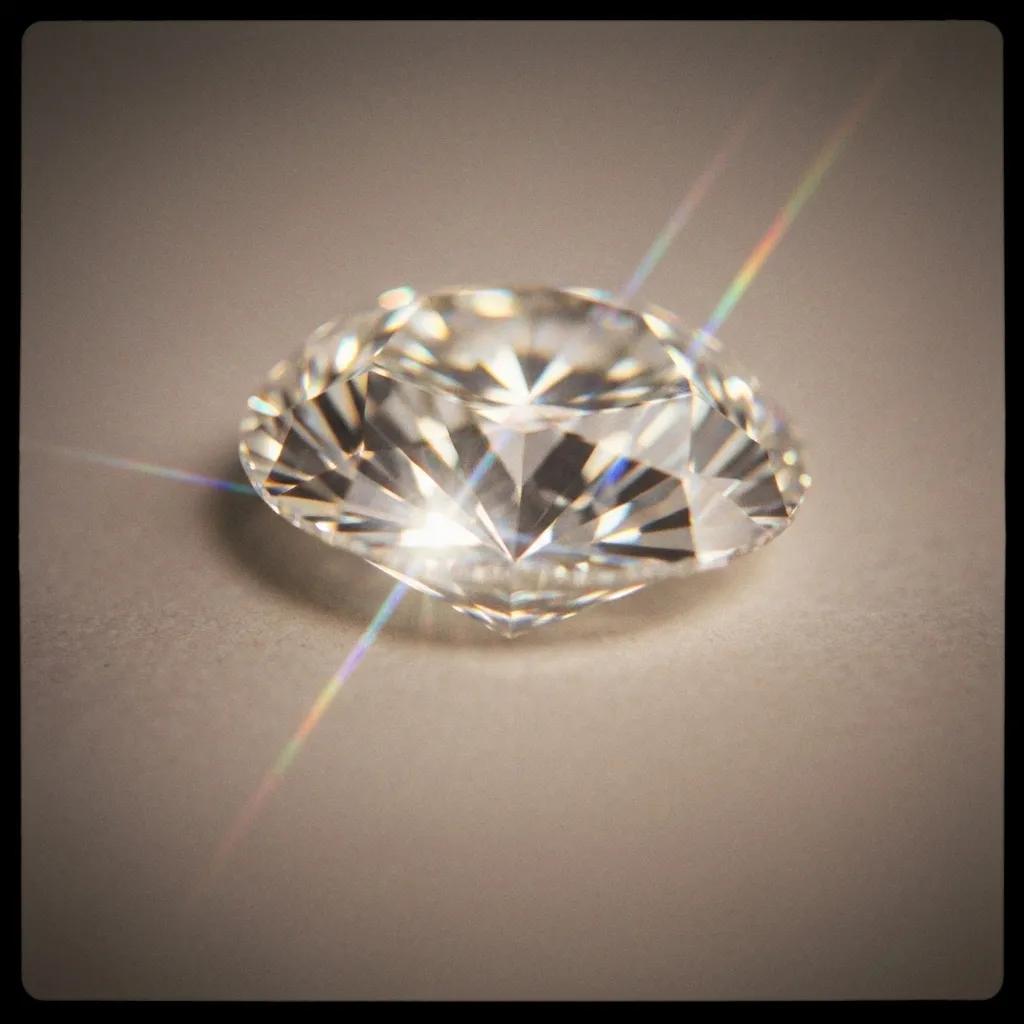
The intricate relationship between a diamond’s cut and its light performance gives rise to three distinct visual phenomena: brilliance, fire, and scintillation. Brilliance is the dazzling return of white light, fire is the spectacular dispersion of light into a rainbow of colours, and scintillation is the captivating play of light and shadow as the diamond moves. Understanding each of these effects and how they are measured reveals the profound impact of cut on a diamond’s overall beauty.
What Is Brilliance, and How Do We Measure It in Diamonds?
Brilliance quantifies the total amount of white light that a polished diamond reflects back to the observer’s eye. Sophisticated light performance tools map these return-light patterns, with higher scores indicating more intense white light. Diamonds with an ideal cut exhibit a balanced brilliance that contributes to their perceived brightness and depth, making each facet appear luminous and alive.
How Does Fire Create That Mesmerising Rainbow Effect in Diamonds?
Fire is the result of a diamond’s ability to disperse white light into its spectral colours, breaking it down into flashes of red, green, blue, and other hues. This captivating effect is dependent on the diamond’s precise refractive indices and the arrangement of its facets. An optimally angled pavilion and crown height maximise the light paths that produce these colourful flashes, elevating a diamond’s sparkle beyond mere brightness.
What Causes Scintillation and That Dynamic, Dancing Sparkle in Diamonds?
Scintillation is the visual effect of the contrast between light and dark areas that shift and dance as a diamond moves. The precise alignment of its facets and its overall symmetry dictate these contrast patterns, which create dramatic, lively flashes. A well-executed facet arrangement results in consistent scintillation, whereas misaligned facets can lead to uneven dark patches, diminishing the perceived sparkle.
How Do Contrast Patterns Enhance a Diamond’s Visual Appeal?
Contrast patterns are the dynamic interplay of bright and shaded areas that give a diamond its animated character. When facets are symmetrically aligned, they create harmonious star and cross patterns that amplify scintillation. Asymmetrical cuts, however, can result in irregular dark zones. Balanced contrast patterns significantly enhance a diamond’s dynamic sparkle and contribute to its emotional impact.
What Are the GIA and AGS Diamond Cut Grades, and How Do They Stack Up?
The world’s leading gemological laboratories, GIA and AGS, assess diamond cut quality using distinct, yet complementary, methodologies. GIA assigns categorical grades ranging from Excellent to Poor, based on a comprehensive analysis of proportions, symmetry, and polish. AGS, on the other hand, employs a numerical scale from 0 to 10, where 0 represents the pinnacle of light performance, known as Ideal. Comparing these systems helps clarify which designation best aligns with achieving maximum brilliance and enduring value.
This comparison highlights that while both systems prioritise proportions, symmetry, and polish, they differ in their scoring granularity. The AGS numerical scale allows for finer distinctions within the Ideal category, whereas GIA’s categorical approach offers a more straightforward selection process for many consumers.
Diamond Cut Grading Systems: A Side-by-Side Analysis
This comparative study examines the GIA and AGS diamond cut grading systems, scrutinising their unique approaches to evaluating proportions, symmetry, and polish. It sheds light on the differences in their grading scales and how these relate to a diamond’s light performance and market value.
Jones, B., Gemological Institute of America,
This insightful citation provides valuable context for our explanation of the GIA and AGS grading systems.
What Are the GIA Cut Grade Categories, from Excellent to Poor?
GIA categorises cut quality into five distinct tiers: Excellent, Very Good, Good, Fair, and Poor. These grades are determined by precise measurements of a diamond’s depth, table percentage, crown and pavilion angles, symmetry, and polish. Diamonds graded Excellent deliver the most brilliant sparkle and vibrant fire with minimal light leakage, while those graded Poor lack the optical precision required for captivating radiance.
How Does the AGS Ideal Cut Scale Differ from GIA Grades?
The AGS employs a 0-10 Light Performance Scale, where a score of 0 signifies an Ideal cut, and higher numbers indicate progressively greater compromises in light return. Unlike GIA’s broader ‘Excellent’ category, the AGS scale allows for nuanced distinctions within the Ideal range, empowering discerning buyers to identify diamonds with truly peak light performance.
What Key Factors Do GIA and AGS Consider in Cut Grading?
- Proportions – The precise ratios and angles between the table, crown, pavilion, and girdle.
- Symmetry – The uniformity and precise alignment of all the diamond’s facets.
- Polish – The smoothness of the diamond’s surface and the absence of any polishing marks.
These three fundamental attributes form the bedrock of each cut grade, ensuring that only diamonds exhibiting exceptional optical geometry achieve the highest designations.
Which Is Superior: A GIA Excellent Cut or an AGS Ideal Cut?
While both top-tier grades signify outstanding cut quality, diamonds graded AGS Ideal often achieve marginally higher light performance scores within that elite category. However, GIA Excellent cut diamonds consistently deliver exceptional brilliance and benefit from broader market recognition. The choice between them ultimately hinges on whether your priority is granular light-performance data or established, widely understood categorical standards.
What Is the Anatomy of an Ideal Cut Diamond for Maximum Brilliance?
A diamond’s anatomy, its facets, table, crown, pavilion, girdle, and culet provides the structural framework that governs how light enters, travels, and returns. An ideal cut meticulously balances these components to achieve maximum internal reflection and create that signature radiant sparkle.
These precise proportions ensure that light enters through the table and crown, reflects perfectly off the pavilion facets, and returns through the table, creating a breathtaking display of brilliance and fire.
What Are the Key Diamond Components: Facets, Table, Crown, Pavilion, Girdle, and Culet?
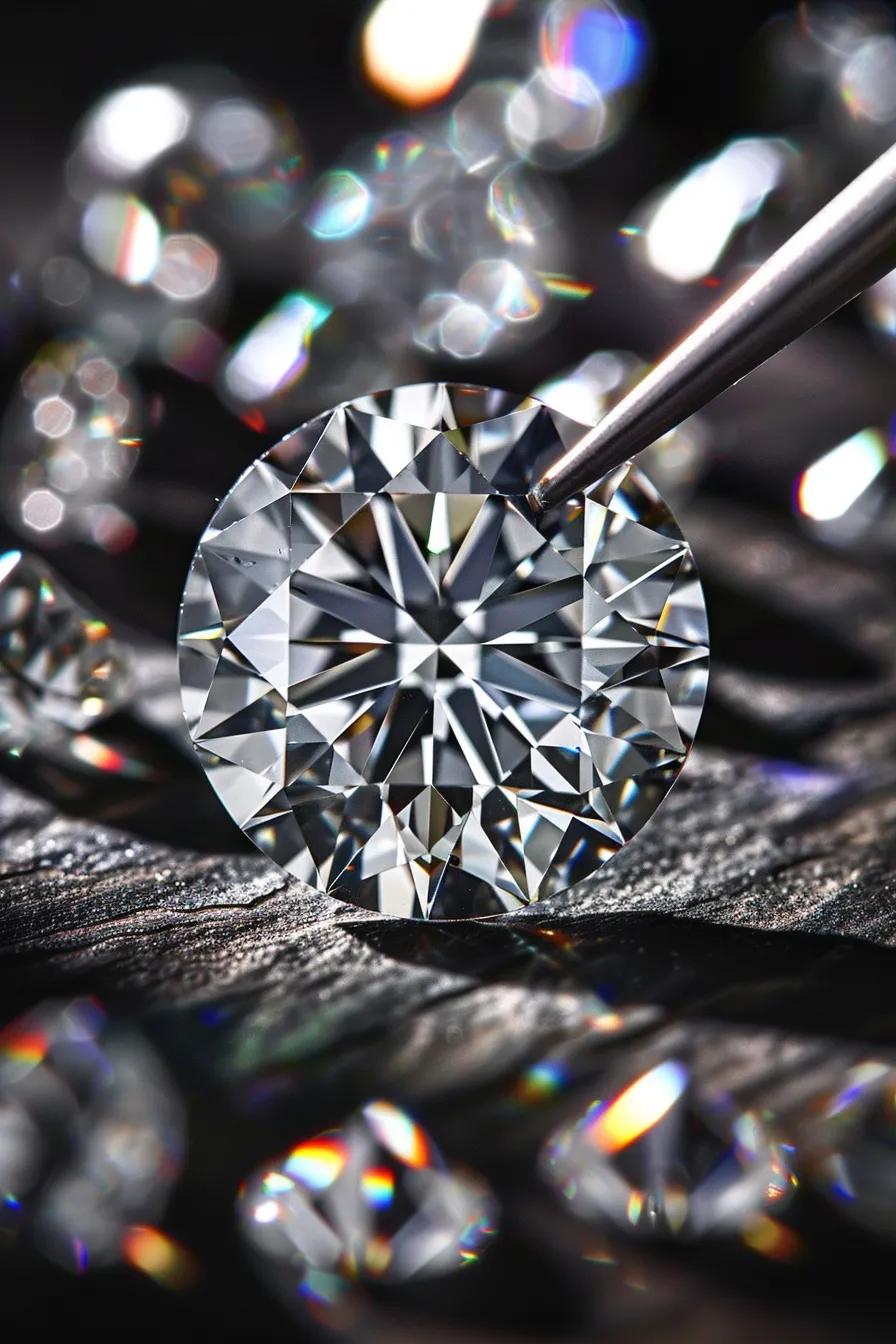
A standard round brilliant diamond typically boasts 57 or 58 facets: one large table facet, eight bezel facets, sixteen upper girdle facets, eight pavilion main facets, sixteen lower girdle facets, and, if present, a culet. Each facet acts as a precisely angled mirror, directing light along specific pathways to create the foundation of brilliance, fire, and scintillation.
What Are the Ideal Proportions and Angles for Optimal Light Return?
The ideal proportions combine a table percentage between 53–58% with a crown angle of 34–35° and a pavilion angle of 40.6–41°. This specific geometry is engineered to channel light deep into the pavilion, reflect it multiple times internally, and direct it back out through the table. Any proportions outside this narrow range risk light leakage, significantly diminishing the diamond’s overall radiance.
How Do Symmetry and Polish Elevate a Diamond’s Sparkle?
Impeccable symmetry ensures that each facet is perfectly shaped and aligned, allowing for harmonious light return and consistent contrast patterns across the diamond’s surface. A superior polish provides an uninterrupted finish, preventing light from scattering and maximising its transmission. Together, symmetry and polish refine every single ray of brilliance and fire, contributing to the diamond’s captivating allure.
Which Diamond Cuts Deliver the Ultimate Sparkle and Brilliance?
While all diamond shapes interact with light, certain cuts are inherently designed to maximise sparkle and brilliance. Understanding the unique optical characteristics of each shape can guide your selection, especially when choosing engagement rings, wedding bands, or other fine jewellery.
Why Is the Round Brilliant Cut the Undisputed Champion of Sparkle?
The round brilliant cut, with its meticulously engineered 58-facet design and precisely calculated proportions, achieves the highest possible total light return, delivering unparalleled brilliance, fire, and lively scintillation. Its perfect circular symmetry minimises light leakage and accentuates dynamic contrast patterns, solidifying its status as the most popular and dazzling diamond shape.
How Do Fancy Shapes Like Oval, Princess, Emerald, and Cushion Influence Cut Quality?
Fancy shapes offer distinct aesthetic appeals, but each requires specialised proportion ranges to optimise its light performance:
- Oval cuts balance length-to-width ratios and pavilion depth to minimise the common “bow-tie” effect.
- Princess cuts utilise square symmetry and specific pavilion facets to maximise brilliance.
- Emerald cuts feature step-cut facets that highlight clarity and fire, often with less scintillation than brilliant cuts.
- Cushion cuts combine rounded corners with pillow-like facets to enhance fire and brilliance.
Each fancy shape demands rigorous attention to its specific proportions and symmetry to achieve superior sparkle.
How Should Cut Quality Be Your Top Priority When Choosing Engagement Rings?
Cut quality should always be your primary consideration, followed by carat weight, colour, and clarity. Investing in an Excellent or Ideal cut diamond yields the most significant return in terms of visual impact and beauty. For shapes beyond the round brilliant, focus on proportions and facet arrangements that promise balanced light performance, ensuring a diamond that will captivate on any finger for a lifetime.
How Can Advanced Tools and Science Help You Assess Diamond Cut Quality?
Modern scientific instruments and detailed analytical reports offer objective measurements of a diamond’s light performance, empowering you to verify its brilliance, fire, and scintillation beyond traditional cut grades.
What Are ASET, Ideal Scope, and Sarine Reports?
An ASET (Angular Spectrum Evaluation Tool) map provides a visual representation of light return angles and contrast patterns within a diamond. An Ideal Scope uses a simple viewer to highlight areas of light leakage versus light return. Sarine Light Performance Reports offer quantitative metrics, measuring total internal reflection, brilliance, fire, and leakage with precise data.
These advanced tools provide invaluable insights into a diamond’s optical behaviour, confirming that theoretical proportions translate into tangible, breathtaking sparkle.
How Did Marcel Tolkowsky Revolutionise the Ideal Cut Formula?
In 1919, Marcel Tolkowsky laid the mathematical groundwork for the ideal round brilliant cut. His seminal work calculated the precise crown and pavilion angles required to maximise brilliance and fire. Tolkowsky’s pioneering research continues to serve as the foundation for modern cut standards and guides the precise proportioning of exceptional diamonds.
How Does the Physics of Refraction and Reflection Explain Diamond Sparkle?
Diamonds possess an exceptionally high refractive index (approximately 2.42), causing light to bend sharply as it enters each facet. When light enters the diamond, internal reflection bounces these rays between facets until they are directed back out through the table. This intricate interplay of refraction and reflection is what creates brilliance, while dispersion separates white light into its constituent spectral colours, producing fire. This fundamental optical science is the secret behind every facet of a diamond’s sparkle.
What Buyers Need to Know About Lab-Grown Diamond Cut Quality
Lab-grown diamonds share the exact same crystal structure as their natural counterparts, meaning they adhere to the same rigorous cut quality standards. Thanks to advancements in controlled growth and precision polishing, lab-grown gems now offer consistent proportions and exceptional light performance.
How Is Cut Quality Ensured in Lab-Grown Diamonds?
Lab-grown diamonds undergo the identical cutting, symmetry, and polishing processes as mined diamonds. State-of-the-art automated laser cutting and precision polishing techniques ensure that their proportions meet Ideal or Excellent standards, resulting in equivalent brilliance and fire.
What Are the Grading Standards for Lab-Grown Diamond Cuts?
GIA and AGS apply their established cut grading criteria to lab-grown diamonds, assigning grades from Excellent to Poor or using the 0-10 Ideal scale based on proportions, symmetry, and polish. Buyers can confidently rely on these familiar grading systems when evaluating lab-grown stones.
Why Should You Invest in High-Quality Lab-Grown Cuts for Brilliance?
High-quality lab-grown diamonds offer spectacular sparkle at more accessible price points, coupled with complete ethical transparency. Investing in an Ideal or Excellent cut lab-grown diamond guarantees maximum brilliance, ensures value retention, and represents a commitment to environmental responsibility,
a true reflection of innovation in modern jewellery design.
Diamonds meticulously crafted to precise cut standards achieve a level of radiance that transcends mere colour and clarity grades. By prioritising proportions, symmetry, and polish, you unlock the diamond’s full potential for brilliance, fire, and scintillation. Whether you choose a natural or lab-grown diamond, selecting an Ideal or Excellent cut gem guarantees a lifetime of luminous beauty that will celebrate every precious moment.


