
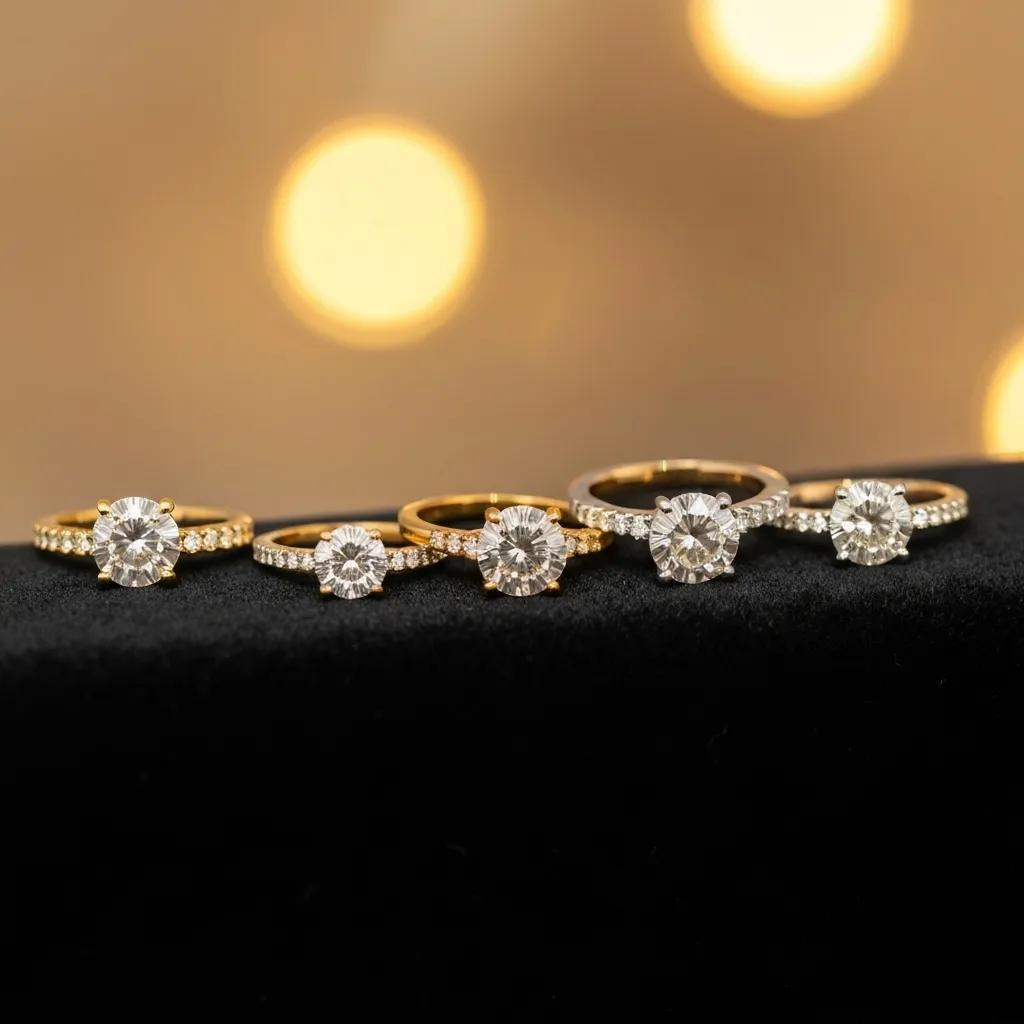
Yellow vs White Gold Engagement Rings: Australian Diamond Company
Choosing between gold vs white gold rings for an engagement is a pivotal decision that blends aesthetics, durability, cost, and care considerations into one meaningful purchase. Readers will discover the core distinctions, style factors, upkeep needs, cost comparisons, and when platinum may serve as an alternative—all in one concise guide. This article maps out:
- Key material properties and maintenance requirements
- Aesthetic influences like skin tone and diamond colour
- Cost, value retention, and long-term upkeep
- Platinum as an alternative metal
- Answers to the most common engagement-ring questions
By understanding these themes you can confidently navigate the gold vs. white gold engagement-ring choice and explore exquisite options at the Australian Diamond Company, renowned for its fine craftsmanship in Melbourne.
What Are the Key Differences Between Yellow Gold and White Gold Engagement Rings?
Yellow Gold and white gold differ in composition, appearance, hardness, care needs, and overall value for engagement rings. Gold alloys are naturally warm in tone, while white gold combines gold with white metals and a rhodium finish for a silvery look.
What Is Yellow Gold and What Are Its Properties?
Yellow gold is a gold-copper-silver alloy prized for its classic warmth and natural lustre, offering:
- Rich colour continuity over time
- Lower maintenance with no plating required
- Mohs hardness around 2.5–3
This warm hue complements vintage and traditional settings and transitions seamlessly into care advice for white gold plating.
What Is White Gold and How Is It Made?
White gold is an alloy of gold with nickel, palladium, or silver, then coated in rhodium to achieve a bright white finish. This plating:
- Provides scratch resistance and high reflectivity
- Wears off over time, revealing a faint yellow undertone
- Requires periodic re-plating to maintain its silvery sheen
Understanding plating mechanics sets the stage for comparing durability and maintenance next.
How Do Durability and Maintenance Compare Between Gold and White Gold?
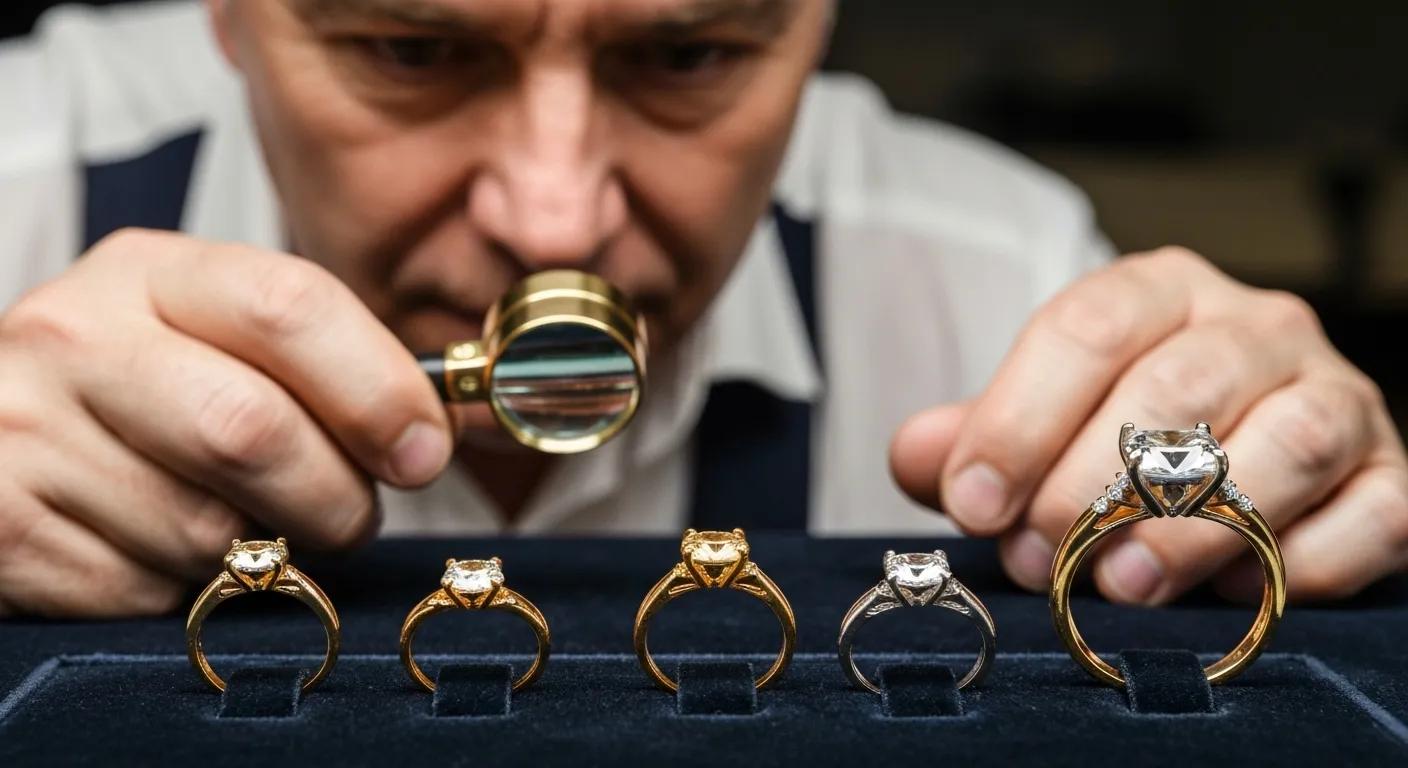
Gold and white gold share similar alloy strengths but differ in care:
Gold’s lower maintenance makes it ideal for active lifestyles, while white gold’s plating refresh keeps its modern look crisp.
How Do Cost and Long-Term Value Differ for Gold vs. White Gold Rings?
White gold typically costs 10–15% more upfront than yellow gold due to alloy composition and rhodium plating expenses. Over time:
- White gold incurs re-plating fees (~£80–£160 per cycle)
- Yellow gold retains intrinsic value with minimal upkeep
- Resale value depends on gold content and plating condition
Balancing initial investment against maintenance helps frame the overall budget decision.
Cost Comparison of Gold and White Gold
White gold typically has a higher initial cost than yellow gold due to the materials and processes involved, such as the rhodium plating. Over time, the need for re-plating adds to the overall cost of white gold, while yellow gold requires minimal upkeep, making it a more cost-effective option in the long run.
How Do Aesthetic Factors Influence the Choice Between Gold and White Gold Rings?
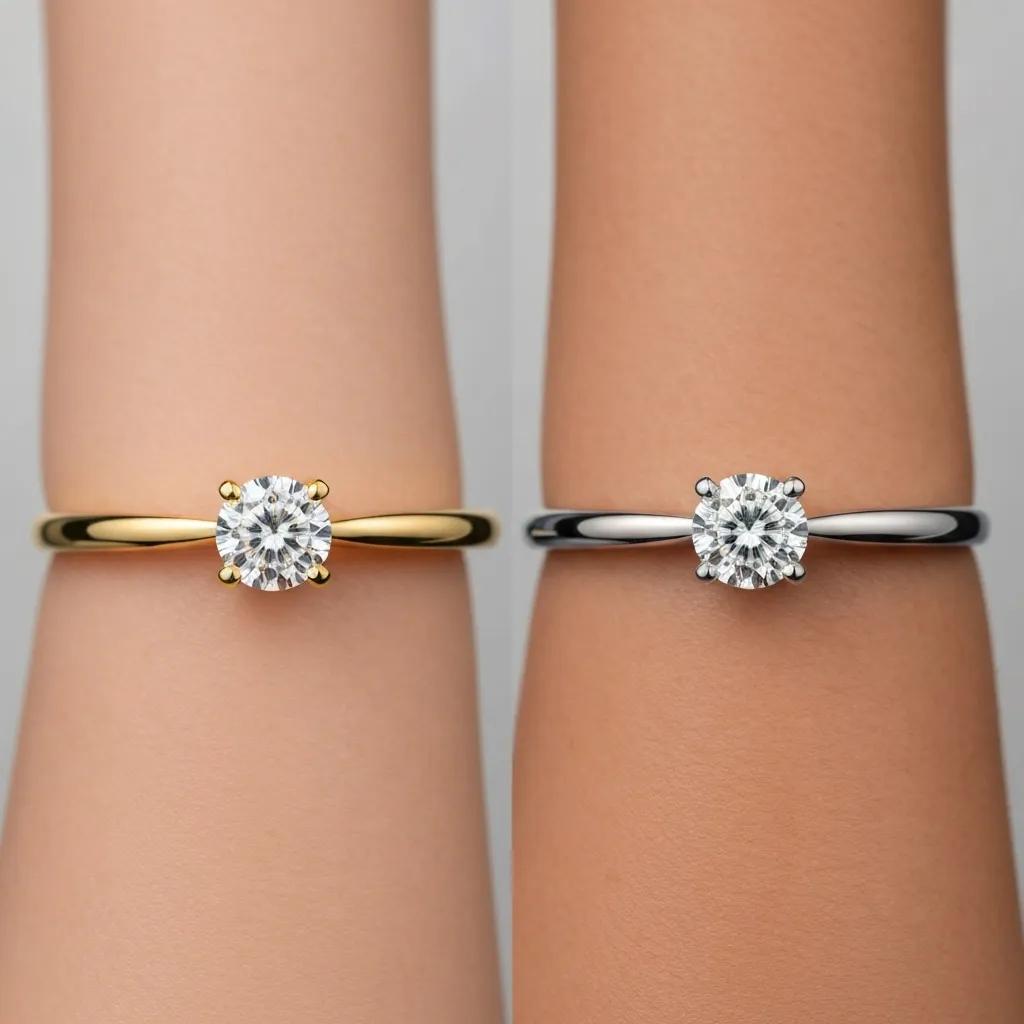
Beyond metal science, visual harmony shapes engagement-ring satisfaction by aligning metal tone with personal style and gemstone attributes.
Which Metal Best Complements Different Skin Tones?
Skin undertones guide metal selection:
- Warm or olive undertones pair beautifully with yellow gold’s richness
- Cool or pink undertones resonate with white gold’s silvery brilliance
Matching metal warmth to skin tone ensures the ring enhances natural colouring and transitions into diamond-metal pairing.
How Does Diamond Colour Affect Your Metal Choice?
Diamond grades influence metal harmony:
- Colourless (D–F) diamonds look brilliant in white gold’s cool contrast.
- Near-colourless (G–J) stones gain warmth in yellow gold settings.
- Fancy yellow or coloured diamonds shine uniquely in yellow gold.
Considering diamond colour alignment reveals ideal metal pairings for maximum sparkle.
What Are Popular Engagement Ring Styles for Gold and White Gold?
Elegant silhouettes vary by metal:
- Solitaire and vintage styles often use yellow gold for a timeless appeal
- Halo and modern designs favour white gold to accentuate diamond fire
- Mixed-metal settings combine yellow and white gold for a two-tone trend
Trend insights help select the style that best showcases both metal and gemstone features.
What Are the Maintenance Requirements for Gold and White Gold Engagement Rings?
Understanding care routines ensures lasting beauty and value for either metal choice.
How Often Does White Gold Need Rhodium Re-plating?
White gold’s rhodium coating typically requires re-plating every 12–24 months depending on wear. This process:
- Restores bright white finish
- Fills fine scratches and surface wear
- Costs between £80 and £160 per session
Re-plating cycles tie directly into long-term cost planning and ring longevity.
White Gold Maintenance
White gold, an alloy of gold, requires rhodium plating to maintain its bright white appearance. This plating, however, wears off over time, necessitating re-plating every 12–24 months to restore its original lustre and protect the underlying metal from scratches.
What Are Best Practices for Cleaning and Caring for Gold Rings?
Simple home care preserves gold’s lustre:
- Soak in warm soapy water and gently brush
- Rinse thoroughly and pat dry with a soft cloth
- Avoid harsh chemicals that can weaken alloys
These steps support low-maintenance ownership and segue into purity-based care.
How Does Metal Purity Affect Ring Longevity and Care?
Purity levels (10K, 14K, 18K) influence strength and colour:
- 10K offers high durability but a paler hue
- 14K balances hardness and rich colour in both alloys
- 18K delivers deeper colour but is softer and more prone to scratches
Selecting the right karat optimises durability, colour saturation, and care frequency.
When Should You Consider Alternatives Like Platinum Instead of Gold or White Gold?
Platinum emerges as a premium option when durability, hypoallergenic properties, and exclusivity matter most.
How Does Platinum Compare to White Gold in Durability and Cost?
Platinum is denser and more scratch-resistant than white gold but commands:
- 20–30% higher initial cost per gram
- No plating requirement for lifelong white finish
- Natural hypoallergenic properties
Cost-to-benefit analysis clarifies when platinum outweighs gold alloys.
What Are the Benefits and Drawbacks of Choosing Platinum?
Platinum offers:
- Unmatched durability and weighty feel
- Lifetime colour consistency without re-plating
- Higher investment and potential for surface patina
Understanding these pros and cons frames platinum as an informed alternative.
What Are the Most Common Questions About Gold vs. White Gold Engagement Rings?
Engagement-ring buyers often ask specific, practical questions about performance, cost, and care.
Is White Gold Better Than Yellow Gold for an Engagement Ring?
Neither metal is universally “better”; white gold enhances colourless diamonds and modern settings, while yellow gold delivers classic warmth and lower upkeep.
Does White Gold Turn Yellow Over Time?
Yes, fading rhodium reveals the yellowish gold alloy beneath. Regular re-plating preserves the bright white appearance.
Which Is More Expensive: White Gold or Yellow Gold?
White gold’s alloy blend and plating process typically cost 10–15% more than equivalent yellow gold rings.
Is White Gold High Maintenance Compared to Yellow Gold?
White gold demands moderate maintenance—rhodium re-plating every 12–24 months—whereas yellow gold needs only routine cleaning.
Engaging with these insights empowers a confident choice between gold vs white gold rings and guides you toward a ring that reflects personal style, lifestyle, and investment priorities.


